Archives


Satskhenisoba in Georgia: dates, meaning and how to experience it
Next dates
10 October 2027 (to be confirmed) · Satskhenisi, Gardabani municipality. See the full events calendar and Georgia today for roads and weather.
What it is
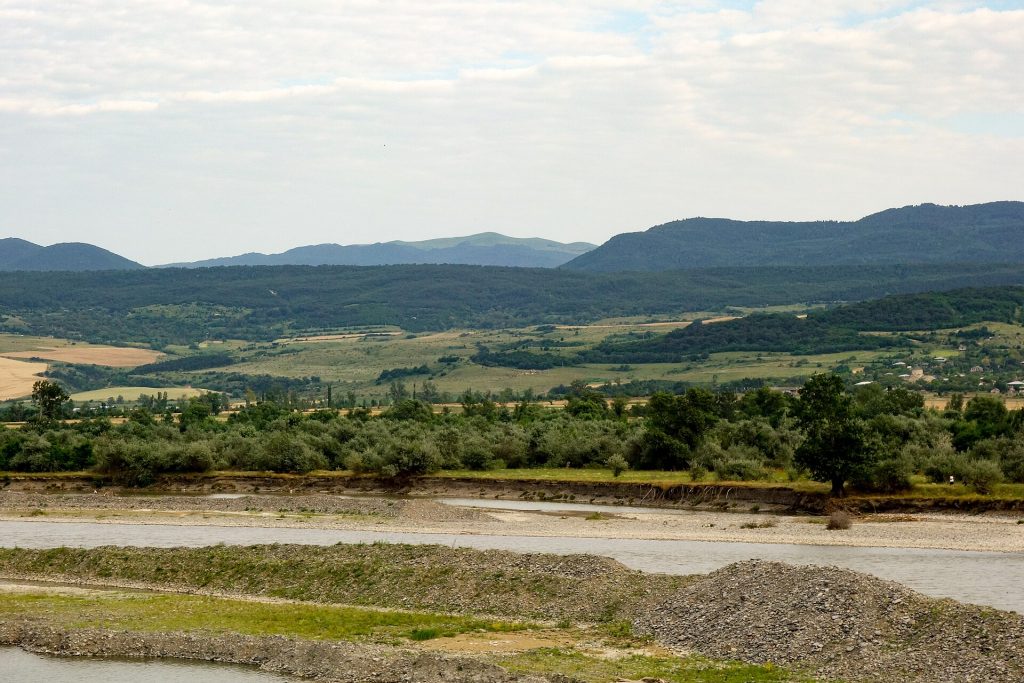
Satskhenisoba is the annual village festival of Satskhenisi, a farming settlement in Gardabani municipality on the lowland plain of Kvemo Kartli, roughly forty kilometres southeast of Tbilisi toward the Azerbaijani border. The name follows a pattern found across Georgia: a place name takes the suffix -oba, which turns it into an abstract noun meaning, loosely, “the being” or “the day” of that place — the same construction that gives Tbilisoba (“day of Tbilisi”), Alaverdoba and Mtskhetoba their names. Satskhenisoba therefore means, quite literally, “the feast of Satskhenisi.” According to local tradition, the village name itself derives from tskheni, the Georgian word for horse, though this toponymic reading is unverified and offered only as local lore rather than established etymology.
The festival is celebrated by the people of Satskhenisi and the wider Gardabani municipality: families who still farm the land, relatives who have moved to Tbilisi or abroad and return for the day, the local school, church community where one exists, and neighbouring villages drawn by the music and the table. It belongs to a much larger, living category of Georgian village and town days — dozens of local “obas” held every year, each marking a harvest, a patron saint, or simply the collective memory of a place. Satskhenisoba is one of the smaller, little-documented entries in that calendar, organised locally rather than promoted nationally, which is part of its appeal to visitors who want to see Georgian rural life as it is actually lived rather than staged for a festival circuit.
Historical background
- 4th century — According to tradition, King Mirian III of Kartli adopted Christianity following the preaching of St. Nino, a turning point that over subsequent centuries embedded saints’ days and village feast days into the Georgian calendar across Kartli, including its eastern lowlands. Patriarchate of Georgia
- 6th century — Monastic settlement began in the semi-desert of eastern Kvemo Kartli and Kakheti, including the David Gareja complex that borders present-day Gardabani municipality, part of the broader Christianisation of the region’s rural communities. National Agency for Cultural Heritage Preservation
- 18th century — The Kvemo Kartli lowlands, repeatedly depopulated and resettled after Persian and Ottoman incursions, were restored under the kings of Kartli-Kakheti, a period that shaped the villages, including Satskhenisi, that exist in the area today.
- 1801 — The Russian Empire annexed the Kingdom of Kartli-Kakheti and reorganised its lands into the Tiflis Governorate, folding the Gardabani district into new administrative structures that persisted into the 20th century.
- 1921–1930s — Sovietisation and collectivisation reorganised village lands into kolkhozes; church-linked saints’ days were officially discouraged, and many village “obas” were either suppressed or recast as secular agricultural or kolkhoz celebrations.
- 1991 — Following Georgian independence, villages across the country revived suppressed religious and communal festival traditions, with local “oba” days re-emerging as public celebrations rather than private or hidden observances.
- 2000s — Georgia’s local self-government reforms strengthened municipalities such as Gardabani, which today support village cultural calendars, including Satskhenisoba, as part of local community and tourism programming.
- 2020s — Satskhenisoba continues as an annual autumn gathering organised by the village and Gardabani municipal administration, with the precise date set and announced locally each year rather than fixed in advance.
Unlike Georgia’s great monastic feast days — Alaverdoba at the cathedral in Kakheti or Mtskhetoba-Svetitskhovloba at the mother church of the Georgian Orthodox faith — Satskhenisoba has left little trace in written chronicles or national archives. This is not unusual: most Georgian village days are oral, local institutions, remembered by residents and municipal councils rather than recorded by historians, and they rise and fall in visibility with population, migration and the energy of local organisers. What can be said with confidence is that Satskhenisoba sits within a continuous national pattern, documented since at least the medieval Christianisation of Kartli, in which a settlement’s identity is marked once a year with a shared meal, songs, and the return of those who have left.
The timing in October situates Satskhenisoba among the “closing” festivals of the Georgian agricultural year — after grain and vegetable harvests on the Kvemo Kartli plain are in, and before the onset of winter. This places it in the same broad seasonal family as the grape-harvest Rtveli celebrations of Kakheti, though Satskhenisoba is a general village day rather than a wine festival, reflecting Gardabani’s farming and livestock economy rather than viticulture.
Meaning and traditions
At the centre of the day is the supra, the Georgian ritual feast table, led by a tamada (toastmaster) who raises a sequence of formal toasts — to peace, to ancestors, to the village, to guests, to those no longer living — each answered with a sip rather than a gulp. Long wooden tables are typically set up outdoors, under canopy or tent, and villagers bring dishes from their own kitchens and gardens: bread, cheese, seasonal vegetables, grilled meat, and local wine or chacha (grape spirit) where it is made. Where the village maintains a chapel or church, the morning often opens with a short service or a memorial visit to the local saint or founders, after which the communal meal and entertainment follow.
Music is central: Georgian polyphonic (multi-voice) singing, performed without instruments by two or three interlocking vocal lines, is the backbone of any village feast, alongside regional dance performed by local ensembles or schoolchildren. Local sources describe the day as also including displays of farm produce and livestock, consistent with Kvemo Kartli’s agricultural character, and some accounts connect the village’s name and day to older equestrian customs, though this detail should be treated as local tradition rather than documented fact. Speeches by village elders and municipal representatives (from the sakrebulo, or municipal council) usually mark the formal part of proceedings before the afternoon turns informal, with music, dancing and, in recent years, entertainment for children and younger residents extending into the evening.
Regional variation is considerable: larger “obas,” such as Tbilisoba in the capital or Alaverdoba in Kakheti, have grown into multi-day public festivals with concerts and craft markets, while village days like Satskhenisoba remain modest, community-run gatherings without commercial infrastructure — closer in spirit to a extended family reunion than a tourist event.
When it happens
Satskhenisoba is not fixed to a specific saint’s feast day on the Georgian Orthodox calendar; instead, the village and Gardabani municipal administration select a convenient date each autumn, usually falling in early-to-mid October once the harvest is complete, often on a weekend to allow relatives to travel from Tbilisi or further afield. Because the date is set locally rather than nationally, it can shift by one or two weeks from year to year. The most recently announced date is 10 October 2027, described by organisers as provisional and subject to confirmation closer to the time; an edition is understood to have taken place earlier in October 2026, before the date of this page’s publication.
Satskhenisoba is not a public holiday in Georgia: government offices, banks and businesses nationwide operate normally, and the closures that occur are purely local — the village itself, and possibly the municipal office, may be quieter than usual as residents attend the festival. Travellers wishing to attend should confirm the exact date with Gardabani municipality or local news close to the event, since no fixed national calendar entry exists for it.
Where to experience it
The festival takes place in and around the village of Satskhenisi itself, within Gardabani municipality, Kvemo Kartli region. Activity is concentrated around the village centre, any local church or memorial site, and an open area used for the communal tables and performances — exact locations are set up by organisers on the day and are not signposted for tourists. Visitors are best advised to arrive by mid-morning to see any religious or memorial observance, staying through midday and into the afternoon for the supra, music and dancing. Gardabani municipality is also the gateway to the David Gareja monastic complex, a sixth-century cave monastery complex straddling the Kakheti–Kvemo Kartli border, which can be combined with a Satskhenisoba visit on the same day.
Etiquette follows standard Georgian norms: dress modestly for any church visit (covered shoulders and, for women, a headscarf is appreciated though not always required at small rural chapels); wait to be invited before joining a table, since these are community, not commercial, events; accept a toast with at least a symbolic sip if offered wine; and ask before photographing individuals closely, particularly at private family tables. As a small, locally organised event rather than a staged tourist festival, courtesy and a low profile are especially valued.
Travel with GTour
Since both routes begin in Tbilisi, a short detour east to Satskhenisi can be arranged around 10 October 2027 on either Georgia in 10 Days — Tbilisi to Svaneti to the Sea or Tbilisi & Mtskheta — The Essential First Day, once the village confirms the date. A GTour travel expert will design the itinerary around your dates, fitting the festival visit smoothly into your planned route.
Did you know
- The “-oba” suffix that names Satskhenisoba is the same grammatical construction behind Tbilisoba, Alaverdoba and Mtskhetoba, one of the most productive patterns in the Georgian festival calendar.
- Georgian polyphonic singing, commonly heard at village feasts such as Satskhenisoba, was proclaimed a Masterpiece of Intangible Cultural Heritage by UNESCO and later inscribed on its Representative List. UNESCO Intangible Cultural Heritage, Georgia
- The qvevri,
Sources
- Gardabani Municipality (2026)
- Satskhenisoba
- Satskhenisoba
- Satskhenisoba
- Satskhenisoba
- Satskhenisoba
- Satskhenisoba
- Satskhenisoba
Plan your GeorgiaWant to be in Georgia for Satskhenisoba? A GTour travel expert designs the itinerary around it and calls you back.
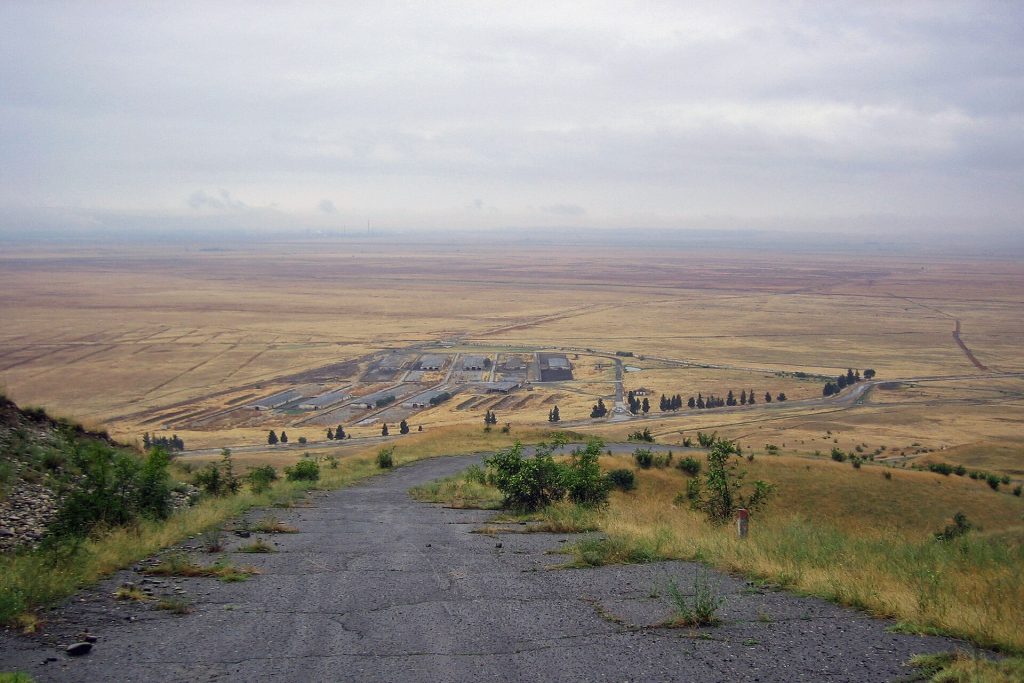
Rolling farmland beneath Mount Satskhenisi, the hill giving its name to the festival village. · Photo: Yasuhiro Kojima / Wikimedia Commons, CC BY-SA 4.0
This page in other languages: Русский
GTour conciergeAsk anything about Georgia · we reply within hours