Archives


Heretoba in Georgia: dates, meaning and how to experience it
Next dates
2 October 2027 – 3 October 2027 (to be confirmed) · Lagodekhi, Kakheti. See the full events calendar and Georgia today for roads and weather.
What it is
Heretoba means, literally, “the feast of Hereti.” The name is built the same way as Tbilisoba or Alaverdoba: a place name joined to the Georgian suffix -oba, which turns a noun into the name of a communal holiday or gathering. Here the place is not a town but an old historical region, Hereti, whose lowlands once stretched along the Alazani and Mtkvari river valleys in what is today southeastern Kakheti and, across the modern border, northwestern Azerbaijan.
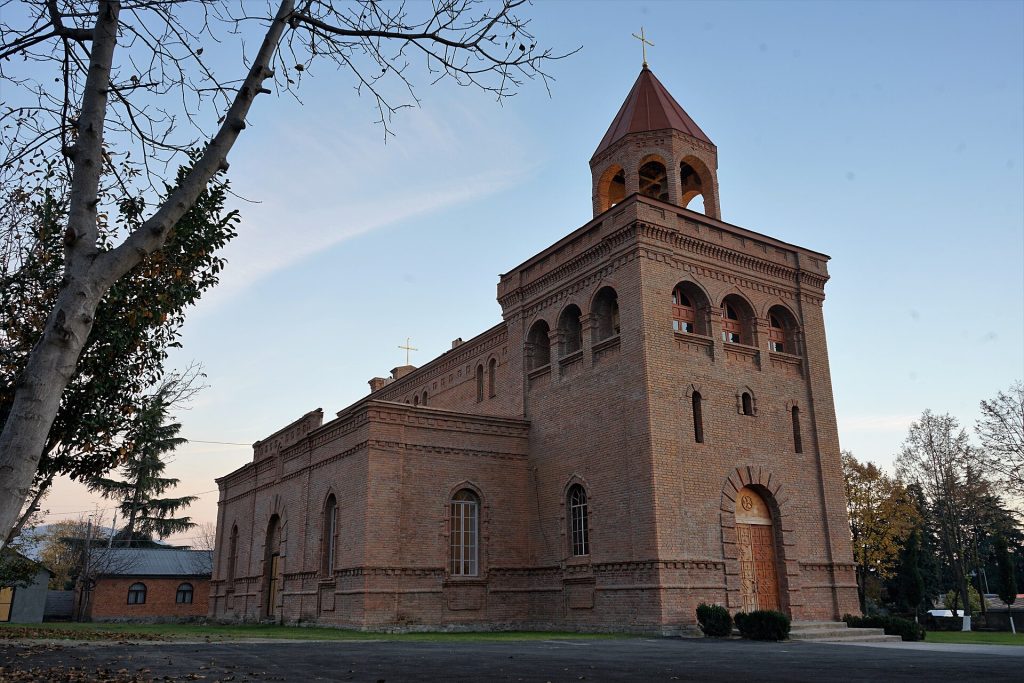
The festival is organized each autumn in and around Lagodekhi, the Kakhetian municipality that today occupies the Georgian-side heartland of ancient Hereti. It is a municipal and cultural event rather than a church feast day: local authorities, cultural centers, wine producers and folklore ensembles from Lagodekhi and neighboring villages take part, and it draws Kakhetians, Tbilisi day-trippers, and visitors with family roots in the old Hereti lands. Unlike Alaverdoba, which marks a saint’s day at a cathedral, Heretoba celebrates a vanished kingdom’s memory through secular public performance.
Historical background
- 1st century BCE–1st century CE — Classical geographers place the lowlands later known as Hereti within the orbit of the kingdom of Caucasian Albania, east of the Alazani river, among the loosely allied peoples of the eastern Caucasus (Britannica, Caucasian Albania).
- 6th–7th century — Hereti emerges in Georgian church sources as a distinct Christian principality on the southeastern frontier of Kakheti, with its own bishopric.
- 9th century — Hereti is attested as an independent kingdom, bordering the Kakhetian principality to the west and the shrinking Caucasian Albanian lands to the east.
- circa 1014 — King Kvirike III joins the crowns of Kakheti and Hereti, adopting the title “King of the Kakhetians and Hertians,” the first durable political union of the two lands.
- 12th century — Under David IV the Builder and his successors, the combined Kakheti-Hereti kingdom is absorbed into the unified Georgian monarchy.
- 1830 — Russian imperial forces establish the fortress-settlement of Lagodekhi on former Hereti borderland, traditionally said to be named for an officer who fell defending the site.
- 1912 — Lagodekhi Nature Reserve is founded, one of the oldest strictly protected areas in the Caucasus, predating Georgian independence by decades (Agency of Protected Areas of Georgia).
- 20th century — Hereti survives chiefly as a place name, in church ruins and ethnographic studies, as the region is administered within Soviet Kakheti.
- Early 21st century — Lagodekhi municipality revives Heretoba as an annual cultural festival on the first weekend of October, pairing folklore and wine with public memory of the old region.
Hereti’s history is that of a borderland repeatedly folded into larger neighbors. Its population, originally linked culturally to Caucasian Albania, was progressively Christianized and Georgianized over centuries, producing a hybrid identity visible in church ruins and place names scattered from Lagodekhi through Dedoplistsqaro toward the Alazani lowlands. The 11th-century royal title “King of the Kakhetians and Hertians” is itself evidence that medieval chroniclers still regarded Hereti as politically and ethnically distinct even after its union with Kakheti, a distinction that outlived the kingdom itself in local memory.
After the 12th-century absorption into the Georgian crown, and especially after the 1801 Russian annexation of eastern Georgia, Hereti ceased to exist as an administrative unit. The modern revival of Heretoba belongs to a broader pattern in post-Soviet Georgia, where municipalities and cultural institutes have revived or invented local -oba festivals to anchor civic identity in older regional history. Lagodekhi, sitting at the historical core of Hereti and already known for its 1912 nature reserve, became the natural home for a festival reclaiming that name.
Meaning and traditions
Heretoba brings together the ordinary building blocks of a Kakhetian public holiday: live performance, food, and wine, framed around the memory of Hereti. Folk ensembles perform Kakhetian polyphonic singing and dance to panduri and chonguri (long-necked folk lutes), sometimes alongside Kartuli, the formal couple’s dance. Craft stalls sell carpets, pottery and metalwork echoing medieval Hereti patterns, and local wineries pour from qvevri, the traditional clay vessels used for fermenting and aging Kakhetian wine.
Feasting follows the supra format common across Georgia: a long table led by a tamada (toastmaster), with toasts offered in set order to peace, ancestors, the region, and guests. Dishes typical of a Kakhetian supra appear widely — khinkali (dumplings), mtsvadi (skewered grilled meat), shotis puri (boat-shaped bread from a tone oven), churchkhela (grape-must-and-nut candy), and badrijani nigvzit (walnut-stuffed eggplant). Some years the festival has included reenactment elements — costumed riders, mock medieval games — evoking the lost kingdom rather than any fixed liturgical script, since Heretoba has no church calendar behind it.
Regional variation matters: Heretoba is smaller and more local than Tbilisoba (the capital’s autumn city festival) and more secular than Alaverdoba (a church feast tied to Alaverdi Cathedral’s patron saint). It functions closer to a heritage fair than a pilgrimage, drawing mainly Kakhetians and curious travelers rather than the national crowds that converge on Tbilisi or Alaverdi.
When it happens
Heretoba has no fixed date on the Georgian Orthodox church calendar; it is a municipal event, and Lagodekhi’s local administration sets the exact Saturday-Sunday each year, almost always on the first weekend of October. In 2026 the festival fell around the first weekend of the month (3–4 October); for 2027 organizers have indicated 2–3 October, described as “to be confirmed,” which is typical — the precise dates are usually finalized only a few weeks beforehand. It is not a national public holiday: government offices, banks, schools and most businesses in Georgia operate normally, with closures limited to Lagodekhi’s central square and a few streets for the event itself.
Where to experience it
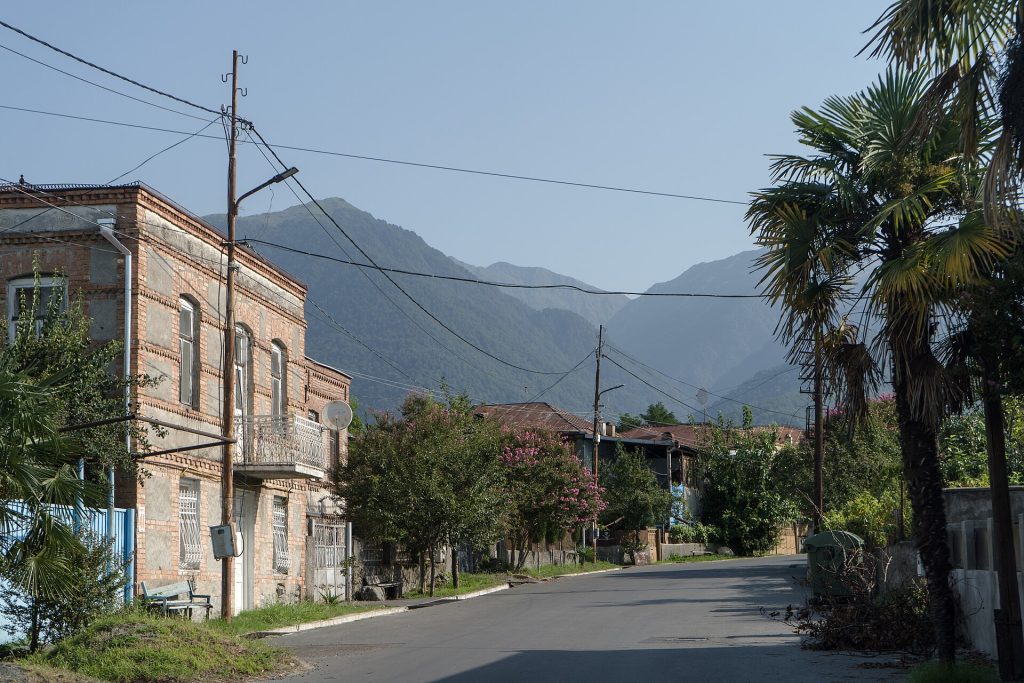
The festival centers on Lagodekhi’s main square and adjoining park, where a stage hosts folk ensembles and speeches through the afternoon, and surrounding stalls sell food, wine and crafts into the evening. The nearby Lagodekhi Protected Areas visitor center is worth combining with a visit, since the reserve’s forested gorges and waterfalls draw hikers independent of the festival calendar. Travelers interested in the historical Hereti churches scattered through the district should ask locally, as many sites are modest ruins without regular opening hours.
Etiquette is the same as elsewhere in rural Georgia: modest dress and quiet behavior are expected inside any functioning church, women are generally expected to cover their heads with a scarf at the threshold, and photography inside sanctuaries should be avoided unless clearly permitted. If invited to a private supra, it is customary to wait for the tamada’s toast before drinking and to reciprocate hospitality by accepting food offered, even in small amounts.
Travel with GTour
The Rtveli — Wine Harvest in Kakheti (3 Days, September–October) tour travels through Kakheti during the same early-October window, allowing a stop in Lagodekhi to coincide with Heretoba’s celebrations of the old Hereti region. A GTour travel expert will design the exact route and schedule around the guest’s chosen dates.
Did you know
- Historic Hereti straddled the Alazani and Mtkvari valleys and today lies partly inside Azerbaijan’s Qakh and Zaqatala districts, a legacy of the region’s mixed Georgian-Albanian Christian population.
- Lagodekhi Nature Reserve, founded in 1912, is among the oldest strictly protected nature areas in the Caucasus, predating Georgian statehood in its current form.
- Lagodekhi’s own name is traditionally traced to an officer who died during the 1830 founding of the fortress that became the town.
- The 11th-century royal title “King of the Kakhetians and Hertians” shows that medieval scribes still treated Hereti as a distinct land even after its union with Kakheti.
- The Georgian suffix -oba, used in Heretoba, also forms the names of Tbilisoba and Alaverdoba, a linguistic pattern unique to how Georgians name communal feast days.
Practical tips for visitors
Lagodekhi lies roughly 150 kilometers east of Tbilisi, about a two-and-a-half to three-hour drive via Gurjaani or Signagi; there is no direct rail service to the town. Early October weather in eastern Kakheti is usually mild by day and cool at night, so layered clothing is practical, along with sturdy shoes if combining the festival with a walk in the nature reserve. Accommodation in Lagodekhi is limited, so booking ahead for festival weekends is advisable, and visitors should confirm exact festival dates with the municipality close to the time, since they are set annually rather than fixed in advance. GTour arranges a private driver or guide for the day from Tbilisi or elsewhere in Kakheti.
Combine it with
Heretoba sits naturally within a wider visit to Kakheti, Georgia’s principal wine region, where Lagodekhi’s borderland history meets vineyards, qvevri cellars and medieval monasteries. Many visitors pair the festival with a base in Tbilisi, using the drive east as a day trip or overnight excursion.
Questions travellers ask
Is Heretoba a religious holiday?
No. It is a secular, municipally organized cultural festival celebrating the memory of the historical Hereti region, not a church feast tied to a saint’s day or liturgical calendar.
Do I need tickets to attend Heretoba?
No ticket is normally required; the festival takes place in public squares and parks in Lagodekhi and is free to attend, though food, wine and crafts are sold by individual vendors.
Is Heretoba a public holiday in Georgia?
No. Government offices, banks and most businesses across Georgia remain open as usual; only parts of central Lagodekhi close for the event itself.
How do I get to Lagodekhi from Tbilisi?
Lagodekhi is about 150 kilometers from Tbilisi, roughly a two-and-a-half to three-hour drive via Kakheti’s main roads; there is no direct train service, so private car, shared minivan (marshrutka) or a hired driver are the practical options.
What should I wear to visit a church near Lagodekhi?
Modest dress is expected: covered shoulders and knees for both men and women, and a headscarf for women at the entrance of an active church. Loud conversation and photography inside the sanctuary should be avoided.
Can the exact festival dates change from year to year?
Yes. Heretoba is not fixed to a calendar date; it is scheduled by Lagodekhi’s municipal administration, usually for the first weekend of October, and confirmed only a few weeks beforehand.
Is Heretoba connected to Lagodekhi’s nature reserve?
Not directly, but the two make a natural pairing: the reserve, founded in 1912, offers hiking trails near the town, and many visitors combine a festival day with a walk into its forested gorges.
What food and drink should I try at Heretoba?
Expect Kakhetian staples: qvevri-aged wine, khinkali dumplings, grilled mtsvadi, shotis puri bread and churchkhela, usually served at a long communal table led by a toastmaster, or tamada.
Sources
- Heretoba
- Heretoba celebrated in Lagodekhi
- Kakheti region cultural events
- Kvira.ge, regional news report
- Kvira.ge, regional news report
- Kvira.ge, regional news report
Plan your Georgia
Want to be in Georgia for Heretoba? A GTour travel expert designs the itinerary around it and calls you back.
Kazan Mother of God's Icon Church, a landmark in Lagodekhi, the town hosting Heretoba. · Photo: Yasuhiro Kojima / Wikimedia Commons, CC BY-SA 4.0
This page in other languages: Русский
GTour conciergeAsk anything about Georgia · we reply within hours