Archives


Dmanisoba in Georgia: dates, meaning and how to experience it
Next dates
25 September 2027 – 26 September 2027 (to be confirmed) · Dmanisi, Kvemo Kartli. See the full events calendar and Georgia today for roads and weather.
What it is
Dmanisoba takes its name from Dmanisi, the small town in Kvemo Kartli that gives the festival its subject, combined with the Georgian suffix “-oba,” which turns a proper name into the name of a feast day or commemorative occasion — the same pattern seen in Mariamoba or Giorgoba. Literally, Dmanisoba means “the day (or festival) of Dmanisi.” Unlike those two examples, it is not a fixed date on the Georgian Orthodox Church calendar but a secular cultural and heritage festival, organized by local authorities together with the Georgian National Museum, which manages the Dmanisi archaeological reserve.
The festival is celebrated by the residents of Dmanisi municipality, archaeologists and historians connected to the excavation, schoolchildren from the region, and a growing number of domestic and foreign visitors drawn by the site’s double claim to fame: it holds both the earliest hominin remains discovered outside Africa and the ruins of a fortified medieval town that once stood on a branch of the Silk Road. Dmanisoba is the day the town presents both layers of its past — prehistoric and medieval — to the public at once.
Historical background
- c. 1.8 million years ago — Early Pleistocene hominin individuals, now classified as Homo erectus georgicus, lived at the site that would become Dmanisi, leaving skeletal remains preserved in volcanic ash layers.
- 6th century — The original Dmanisi Sioni church is built on the promontory above the Mashavera and Pinezauri river gorges, marking the settlement as a Christian center.
- 9th–10th centuries — Dmanisi grows into a fortified town and becomes the seat of a bishopric within the Georgian ecclesiastical structure.
- 12th–13th centuries — Under the united Georgian kingdom, Dmanisi flourishes as a multi-ethnic trade town on a Silk Road route, with markets, baths, and a caravanserai; the Sioni church is rebuilt and enlarged.
- Late 14th century — Invasions associated with Timur’s campaigns in the South Caucasus devastate the town, which subsequently declines and is largely abandoned.
- 20th century — Systematic archaeological excavation of the medieval town ruins begins, uncovering the layout of streets, the citadel, and the church complex.
- 1991 — During excavation of the medieval layers, researchers uncover the first hominin fossil, a lower jawbone, in strata far older than the medieval town above it.
- 1999–2005 — Further excavation recovers several hominin skulls, including the well-preserved “Skull 5,” found in 2005 and described in detail in subsequent scientific publications, reshaping debate on early human dispersal from Africa.
- 21st century — The Dmanisi Museum-Reserve, under the Georgian National Museum, opens to the public over the excavation area, and the municipality and Ministry of Culture and Sport begin organizing an annual Dmanisoba festival each late September.
The two chronologies at Dmanisi rarely intersect in public memory, which is part of what makes the festival distinctive. For more than a century, the ruins on the hill were known chiefly as a medieval Georgian town destroyed in the late Middle Ages, its stone walls and the roofless Sioni church studied by historians interested in Silk Road trade and Bagrationi-era church architecture. The discovery of a human jawbone far beneath those medieval foundations in 1991 turned the site into a subject of international paleoanthropology almost overnight, as subsequent finds showed that hominins had left Africa and reached the Caucasus far earlier than previously thought.
Dmanisoba grew out of the need to present both stories to the public in one place. Rather than separating the prehistoric find from the medieval town, the festival treats Dmanisi as a single, continuously inhabited landscape — walked by hominins 1.8 million years ago and by Georgian merchants, clergy, and soldiers in the medieval centuries — and invites visitors to experience the span of that history during a single autumn weekend.
Meaning and traditions
On the day of Dmanisoba, the museum-reserve and the open ground around it host a program that blends scholarship with festivity. Archaeologists and museum staff give guided walks through the excavation trenches and the ruined town, explaining the stratigraphy that separates the hominin-bearing layers from the medieval remains above. Costumed reenactors stage scenes of medieval town life — craftsmen at work, mounted riders, market scenes — around the citadel and the Sioni church. Local ensembles perform folk songs and dances from Kvemo Kartli, often accompanied by the duduki (a double-reed wind instrument) and hand drum, and craft stalls sell pottery, woven textiles, and churchkhela (strings of walnuts dipped in grape-must paste).
Food at Dmanisoba follows the pattern of a Georgian outdoor supra (feast table): khinkali, mtsvadi (skewered grilled meat), fresh bread, and regional wine and fruit, shared at long tables rather than sold strictly as festival food. Because Kvemo Kartli has a mixed Georgian, Azerbaijani, and Armenian population, local organizers sometimes include performances or crafts reflecting that diversity, distinguishing Dmanisoba from festivals in more ethnically homogeneous Georgian regions. Unlike church feast days, there is no fixed liturgical service that defines the day, though a short commemorative prayer or blessing may be held at the Sioni church as part of the opening program.
When it happens
Dmanisoba does not follow the Georgian Orthodox Church calendar and has no fixed civil date; it is a municipally organized cultural festival, and its dates are confirmed each year by the Dmanisi municipal administration and the Ministry of Culture and Sport, usually in the final weeks of September. For 2027, provisional dates of 25–26 September have been indicated but are described as subject to confirmation closer to the event. Dmanisoba is not a national public holiday: government offices, schools, and businesses outside Dmanisi municipality operate normally, and the only closures are local, affecting roads and parking around the museum-reserve during the festival hours.
Where to experience it
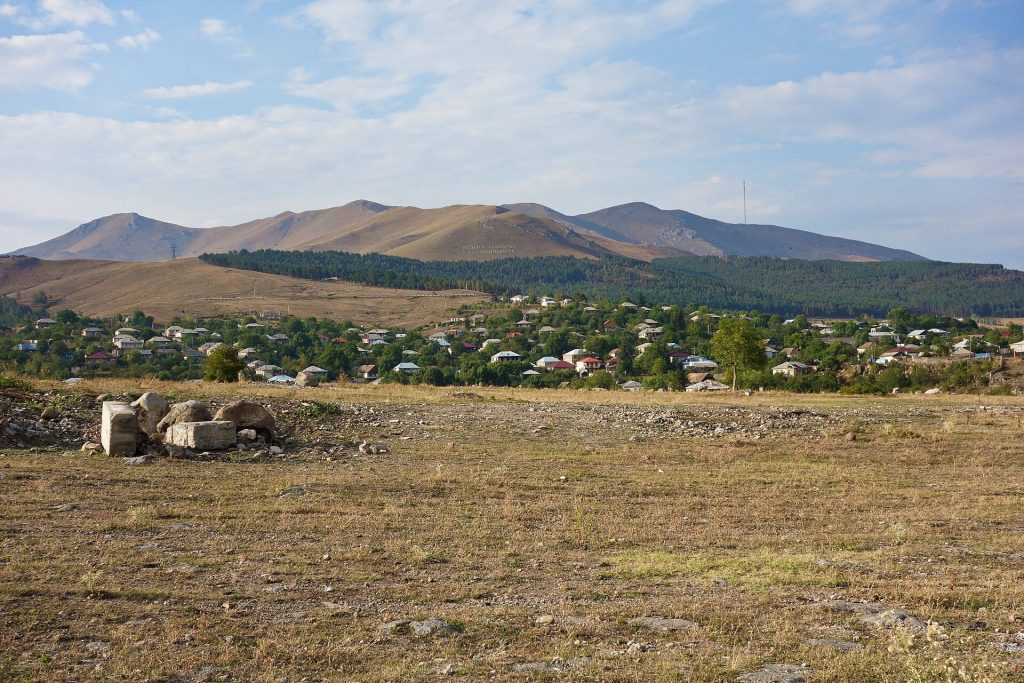
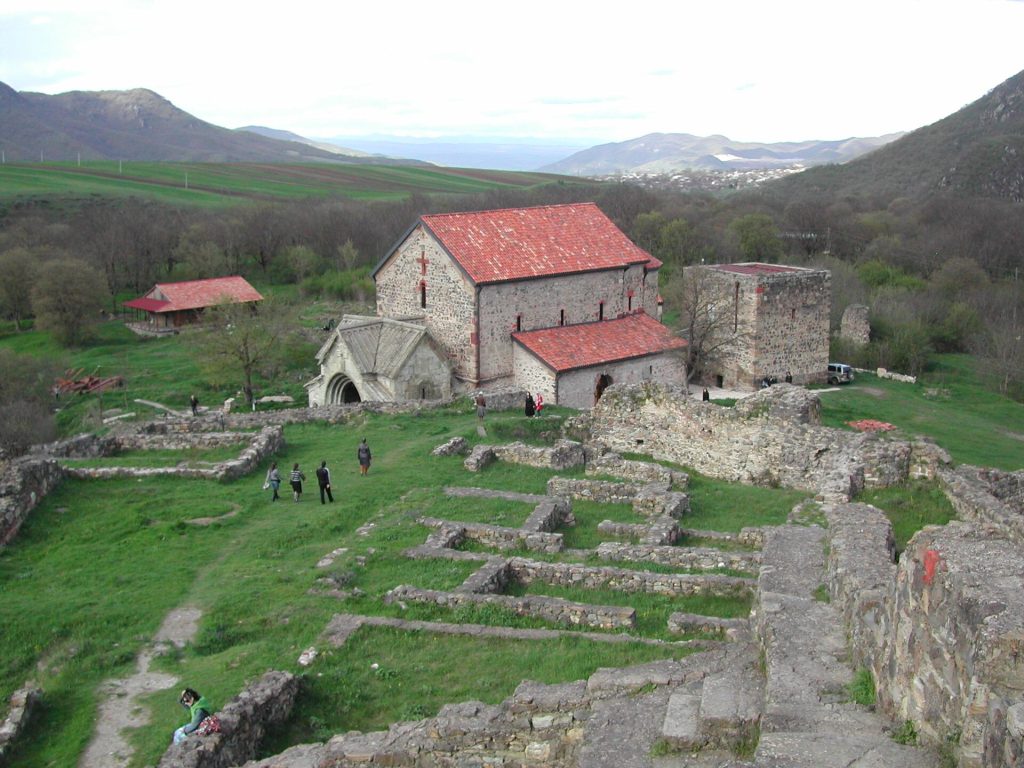
The festival takes place at and around the Dmanisi Museum-Reserve, built over the excavation site on a promontory above the confluence of the Mashavera and Pinezauri rivers, roughly 85 kilometers southwest of Tbilisi in Kvemo Kartli. Visitors can walk the excavated streets of the medieval town, see the roofless but still-standing Dmanisi Sioni church, and view the open-air display shelters protecting the hominin find spots, with explanatory panels and replica skulls (the originals are held in Tbilisi). The surrounding gorge offers sweeping views that make clear why the site was chosen, both as a defensible medieval stronghold and as a landscape attractive to early hominins near a water source.
Inside the Sioni church, visitors should dress modestly, with shoulders and knees covered; men are expected to remove hats, and women may choose to cover their heads, following general Georgian Orthodox church etiquette. Photography is usually permitted in the nave but should be avoided directly in front of the altar screen during any service. Most festival activity takes place outdoors from late morning into early evening, and arriving before midday allows time for both the historical walk and the craft and food stalls before the site gets crowded with day-trip groups from Tbilisi.
Travel with GTour
If late September dates align, Georgia in 10 Days — Tbilisi to Svaneti to the Sea can be adjusted to pass through Dmanisi in Kvemo Kartli during Dmanisoba, while Tbilisi & Mtskheta — The Essential First Day can extend from the capital to include the festival grounds. A GTour travel expert designs the route around the guest’s dates once the exact festival schedule is confirmed.
Did you know
- The Dmanisi hominin remains, dated to around 1.8 million years old, are the oldest hominin fossils discovered outside Africa.
- Five partial hominin skulls have been recovered at Dmanisi since 1991, including “Skull 5,” found in 2005 and notable for its small braincase paired with large teeth.
- Diversity among the Dmanisi skulls has fueled scientific debate over whether they represent a single variable early Homo population or several distinct species.
- The medieval town of Dmanisi sat on a branch of the Silk Road and supported a multi-faith population of Georgians, Armenians, and others before its decline after invasions in the late 14th century.
- The original hominin skulls and jawbones are kept and studied at the Georgian National Museum in Tbilisi, while replicas are displayed at the Dmanisi site itself.
Practical tips for visitors
Dmanisi is best reached by private car or organized transport, as public bus connections from Tbilisi are infrequent; the drive takes roughly 1.5 to 2 hours via Marneuli and Tetritsqaro, with the final approach partly on secondary roads. Late September weather in upland Kvemo Kartli can be cool in the morning and warm by afternoon, so layered clothing and comfortable walking shoes are advisable for the uneven excavation terrain. Because Dmanisi has very limited accommodation, most visitors base themselves in Tbilisi and travel to the festival as a day trip; exact festival dates should be confirmed shortly beforehand through the municipality or the Ministry of Culture and Sport. GTour arranges a private driver or guide for the day for visitors who prefer not to navigate the route independently.
Combine it with
A Dmanisoba visit pairs naturally with other historic and landscape stops in the wider south-central region: the cave towns and fortresses of Samtskhe-Javakheti, the churches and markets of Tbilisi, and the fortress towns and plains of Kartli, all reachable within a comfortable day’s driving radius of Dmanisi.
Questions travellers ask
Is Dmanisoba a public holiday in Georgia?
No. It is a local cultural festival organized in Dmanisi municipality, not a national public holiday, so government offices, schools, and businesses elsewhere in Georgia operate as usual.
Where exactly is Dmanisi?
Dmanisi is a town and archaeological site in the Kvemo Kartli region, about 85 kilometers southwest of Tbilisi, situated on a promontory above the Mashavera and Pinezauri river gorges.
Can visitors see the original hominin skulls at the Dmanisi site?
No. The original fossils are kept and studied at the Georgian National Museum in Tbilisi; the Dmanisi Museum-Reserve displays replicas alongside the actual excavation trenches and find locations.
How can I get to Dmanisi without my own car?
Public transport options are limited and infrequent, so most visitors arrange a private driver, join an organized day tour, or combine the trip with other Kvemo Kartli stops rather than relying on public buses alone.
Is Dmanisoba suitable for families with children?
Yes. The outdoor setting, costumed reenactments, music, and craft stalls make it accessible and engaging for children, though the archaeological terrain involves uneven ground and some walking.
What should I wear to visit the Dmanisi Sioni church?
Modest dress is expected, with shoulders and knees covered; men should remove hats, and women may choose to cover their heads, in keeping with general Georgian Orthodox church etiquette.
When will the exact 2027 festival dates be confirmed?
Organizers typically finalize the dates in the weeks before the event, usually by late summer, through announcements from the Dmanisi municipal administration and the Ministry of Culture and Sport.
Is a day trip to Dmanisi from Tbilisi manageable in one day?
Yes. The drive takes roughly 1.5 to 2 hours each way, and a full day allows time for the medieval town ruins, the hominin excavation site, the museum displays, and the festival program before returning to Tbilisi in the evening.
Sources
- Georgian National Museum
- Georgian National Tourism Administration
- UNESCO Tentative Lists
- Agenda.ge
- Georgia Today
- Kvira.ge, regional news report
- Kvira.ge, regional news report
Plan your Georgia
Want to be in Georgia for Dmanisoba? A GTour travel expert designs the itinerary around it and calls you back.
The medieval Dmanisi castle and Sioni Cathedral, heart of the town hosting Dmanisoba festivities. · Photo: Jonathan Cardy / Wikimedia Commons, CC BY-SA 3.0
This page in other languages: Русский
GTour conciergeAsk anything about Georgia · we reply within hours