Archives


Lanchkhutoba in Georgia: dates, meaning and how to experience it
Next dates
25 September 2027 – 26 September 2027 (to be confirmed) · Lanchkhuti, Guria. See the full events calendar and Georgia today for roads and weather.
What it is
Lanchkhutoba is the annual town festival of Lanchkhuti, the district centre of Guria in western Georgia. The name follows a common Georgian pattern: the suffix “-oba” is attached to a place or a saint’s name to create the word for the feast associated with it, so “Lanchkhutoba” means, roughly, “the day of Lanchkhuti” — the same construction that gives Georgian its Tbilisoba (the feast of Tbilisi), Alaverdoba and Mariamoba. It is a civic and cultural celebration rather than a church feast, held each autumn once the region’s maize, hazelnut and citrus harvests are in.
The festival is celebrated primarily by residents of Lanchkhuti town and the surrounding Gurian villages, together with relatives who return from Tbilisi, Batumi or abroad for the occasion. Visitors are welcome at every part of the programme, which is organised in the open air around the town’s central square and stadium rather than in a private or restricted setting.
Historical background
- 8th–9th century — Guria appears in medieval Georgian chronicles as an eristavate, a duchy of the Kingdom of Georgia, on the Black Sea side of the Rioni lowlands.
- 15th century — After the political fragmentation of the unified Georgian kingdom, Guria emerges as a separate principality under the Gurieli family, with Lanchkhuti among its market settlements.
- 1810 — The Principality of Guria is dissolved and absorbed into the Russian Empire, ending the formal rule of the Gurieli line.
- Late 19th century — Lanchkhuti grows as a trading town of the Kutaisi guberniya, linked to the coast and to Kutaisi by road and, later, rail.
- 1930 — Soviet administrative reform establishes Lanchkhuti district (raioni) as a formal unit of the Georgian SSR, with the town as its seat.
- 1979 — Tbilisoba, the autumn municipal festival of the capital, is inaugurated, setting the modern Georgian pattern of a civic “-oba” town day that district centres across the republic later adopted.
- 1990s — After independence, Lanchkhuti and other Gurian towns formalise their own autumn town festivals, including Lanchkhutoba, as public expressions of local identity.
- 2000s–present — Lanchkhuti municipality organises Lanchkhutoba each year in late September, combining a harvest fair, concerts of Gurian folk song and dance, and sporting contests.
Guria’s political history is distinct within Georgia: it survived as a semi-independent principality long after the central Georgian kingdom split into Kartli, Kakheti and Imereti, maintained its own court and clergy under the Gurieli dynasty, and was only brought under direct imperial Russian administration in the early nineteenth century. Lanchkhuti itself was never a princely capital — that role belonged to Ozurgeti and, earlier, to Bakhmaro‘s lowland predecessors — but it grew as a market town on the route between the coast and the inland hills, a position that shaped the agricultural fair character its festival still carries.
Unlike church feasts such as Mariamoba or Giorgoba, which rest on a fixed place in the Georgian Orthodox calendar, Lanchkhutoba belongs to a newer, twentieth-century layer of Georgian tradition: the municipal “town day,” built on the template of Tbilisoba and adapted to each district’s own harvest calendar, patron saints and folklore. This makes it a living rather than an archaic tradition — one that each generation of Lanchkhuti’s residents has reshaped, from Soviet-era collective-farm fairs to the independent municipality’s current programme of concerts and markets.
Meaning and traditions
The day centres on a public sufra, or feast table, set up in stalls and tents around the town’s main square, where households and farms sell the produce of the Gurian harvest: hazelnuts, late-season citrus, honey, churchkhela (strings of nuts dipped in grape-must paste), and dishes built on maize — ghomi, a thick cornmeal mush, and elarji, ghomi worked with melted Sulguni cheese until it stretches. Wine and chacha, the Georgian grape spirit, are poured generously, and any shared meal is led by a tamada, a toastmaster who structures the drinking with a sequence of toasts to family, the dead, the homeland and the guests at the table.
The musical centrepiece is Gurian polyphonic singing, famous within Georgia’s wider choral tradition for krimanchuli, a piercing, yodel-like high voice sung over a dense three- or four-part texture. Dance ensembles perform Gurian and wider Georgian repertoire, and local poets and theatre groups often recite in the Gurian dialect. Smaller versions of the same “-oba” pattern are held in neighbouring Gurian towns — Ozurgeti and Chokhatauri each keep their own autumn town day — so visitors who attend more than one will notice shared food, music and format with local variations in produce and programme.
When it happens
Lanchkhutoba has no fixed date in either the civil or the church calendar. The rule in practice is a weekend in late September, after the main harvest, chosen and announced by Lanchkhuti municipality a few weeks ahead of the event rather than fixed years in advance. In 2026 the festival fell in late September, with the exact day set by the town hall; the next edition is provisionally expected on 25–26 September 2027, to be confirmed closer to the date. Lanchkhutoba is not a national public holiday under Georgian law: banks, shops, schools and offices across the country operate normally, and only Lanchkhuti’s own municipal offices and the streets around the central square adjust their schedule for the festival itself.
Where to experience it
The festival unfolds in and around Lanchkhuti’s central square and the adjacent stadium or cultural house, where market stalls, a main stage for concerts, and areas for sporting contests are set up for the day. Events typically run from late morning through the evening, with the fair and food stalls busiest around midday and concerts building toward evening. Visitors who wish to see a church service connected to the day should ask locally, since timing and whether one is held varies by year; dress modestly for any church visit — women should cover their shoulders and, ideally, their heads, and men should remove hats before entering. At a private or shared sufra, it is polite to wait for the tamada’s toast before drinking and to accept food offered by hosts.
Travel with GTour
The Georgia in 10 Days — Tbilisi to Svaneti to the Sea route passes near Lanchkhuti on its way to the coast, allowing a stop in late September to coincide with Lanchkhutoba, while the Batumi & the Ajara Mountains — 2 Days tour can be extended northward from Batumi to reach the festival grounds in Guria. A GTour travel expert designs the route around the guest’s dates, adjusting the itinerary once the exact festival schedule is confirmed.
Did you know
- Guria gave Georgian music one of its most recognisable sounds, krimanchuli, the high falsetto voice heard in Gurian polyphonic singing.
- Guria was an independent principality ruled by the Gurieli family for roughly four centuries before its annexation by the Russian Empire in 1810.
- The “-oba” suffix that names Lanchkhutoba is the same grammatical device behind Tbilisoba, Georgia’s best-known town festival, first held in the capital in 1979.
- Guria is one of Georgia’s smallest regions by area but became known in the nineteenth and twentieth centuries for introduced crops such as tea and citrus alongside its older maize and hazelnut farming.
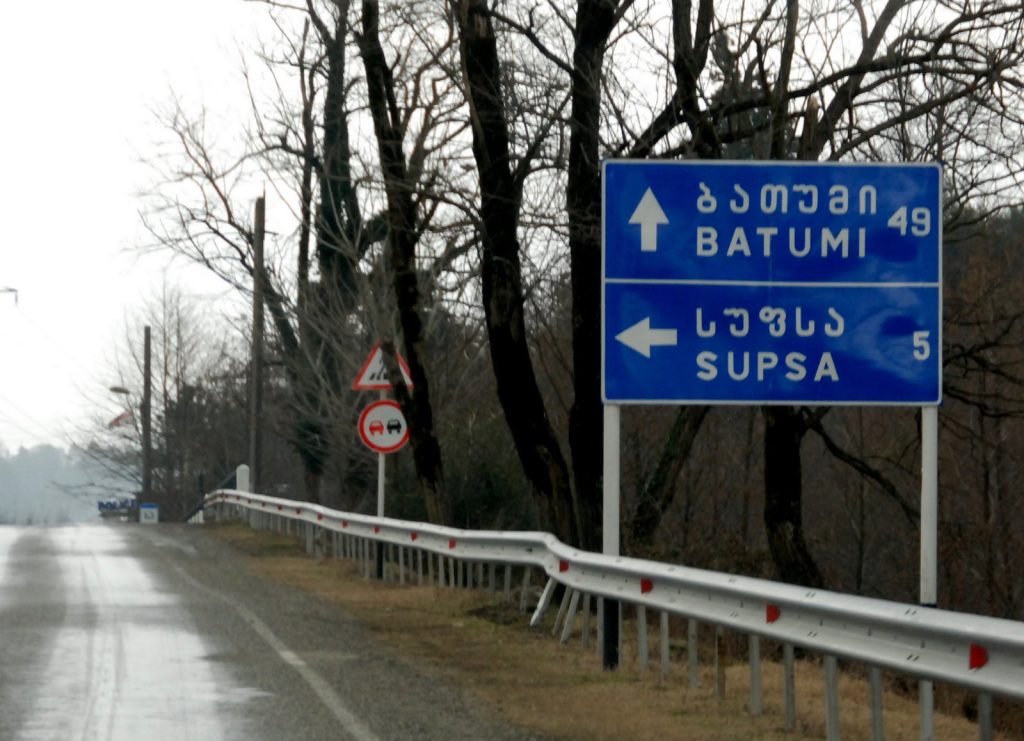
- Lanchkhuti sits near the Supsa River, close to the Black Sea coast where the Baku–Supsa pipeline reaches its export terminal, a reminder of Guria’s long role as a route between the inland hills and the sea.
Practical tips for visitors
Lanchkhuti is most easily reached by road from Kutaisi or Batumi, each roughly one to one and a half hours’ drive away; Kutaisi International Airport and Batumi International Airport are the nearest air gateways. Rail and bus connections run from Tbilisi toward Samtredia and the Guria coast, with a final stretch by road or taxi to Lanchkhuti itself. Accommodation in the town is limited, so visitors often base themselves in Ozurgeti or Batumi and travel in for the day. Late September on Georgia’s western coast is generally mild but can bring sudden showers, so a light rain layer is worth packing, and comfortable shoes suit a day spent largely outdoors and on foot. Exact festival dates are confirmed by Lanchkhuti municipality only weeks in advance, so travellers planning a trip specifically around Lanchkhutoba should check close to the date; GTour arranges a private driver or guide for the day for visitors who prefer not to navigate the schedule independently.
Combine it with
Lanchkhutoba pairs naturally with a wider tour of western Georgia. Adjara, immediately to the south, offers Batumi’s Black Sea waterfront and mountain villages within easy reach of Lanchkhuti. Imereti, Guria’s inland neighbour, adds Kutaisi’s cathedrals and the Prometheus and Sataplia karst caves to a Guria-based itinerary.
Questions travellers ask
Is Lanchkhutoba a public holiday in Georgia?
No. It is a local municipal festival, not a state holiday, so businesses, schools and transport across the country run on their normal schedule; only the festival area in Lanchkhuti itself adjusts for the day.
When exactly will Lanchkhutoba take place in 2027?
The provisional dates are 25–26 September 2027, but Lanchkhuti municipality confirms the exact weekend only a few weeks beforehand. Checking local Georgian press or the municipal office close to the date is the reliable way to confirm.
Is there an entrance fee?
The festival itself is a free, open-air public event. Individual food, drink and craft stalls charge their own prices, as at any market fair.
How do I get from Tbilisi to Lanchkhuti?
The drive from Tbilisi is around four to five hours by road via Kutaisi, or travellers can fly into Kutaisi International Airport and continue by road, cutting the journey to about an hour and a half.
What else is there to see in Guria besides the festival?
Guria’s main regional town, Ozurgeti, has a local museum and botanical garden, and the highland summer resort of Bakhmaro offers hiking in the Lesser Caucasus foothills. The Black Sea beaches near Ureki and Shekvetili are also within reach.
Is
Plan your Georgia
Want to be in Georgia for Lanchkhutoba? A GTour travel expert designs the itinerary around it and calls you back.
Want to be in Georgia for Lanchkhutoba? A GTour travel expert designs the itinerary around it and calls you back.
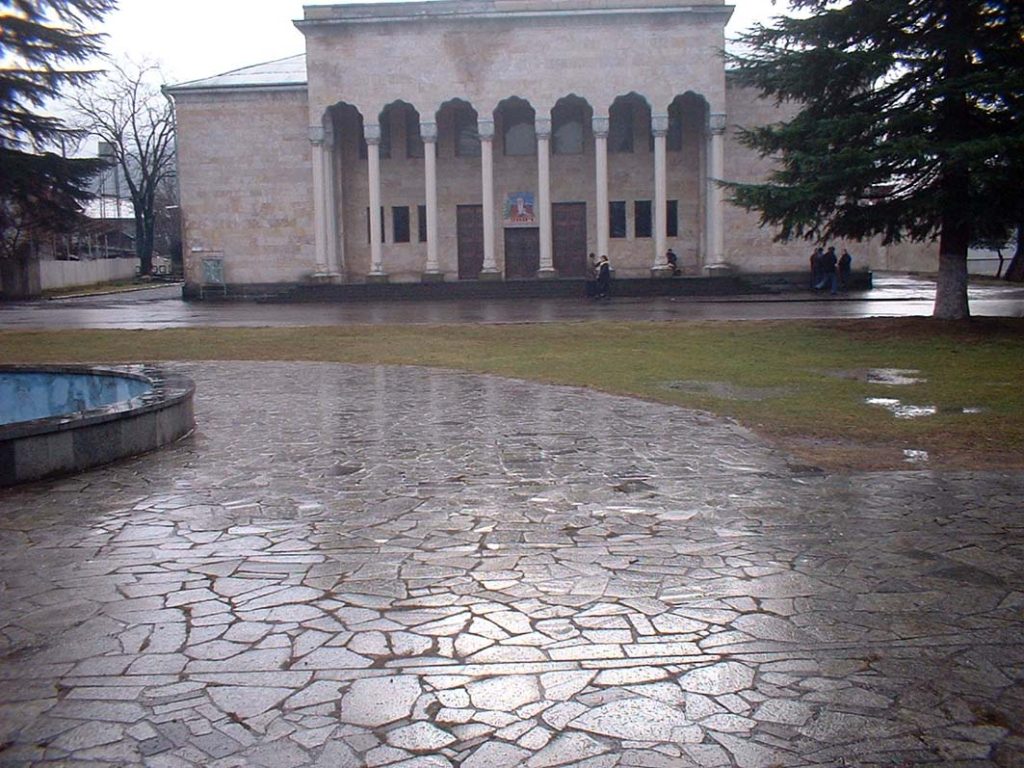
The Soviet-era monument on Lanchkhuti's main square, a central gathering point in town. · Photo: Daniel-tbs / Wikimedia Commons, CC BY-SA 4.0
This page in other languages: Русский
GTour conciergeAsk anything about Georgia · we reply within hours