Archives


Akhaltsikheloba in Georgia: dates, meaning and how to experience it
Next dates
30 June 2027 · Akhaltsikhe, Samtskhe-Javakheti. See the full events calendar and Georgia today for roads and weather.
What it is
Akhaltsikheloba is the official city day of Akhaltsikhe, the historic center of the Samtskhe-Javakheti region in southern Georgia. The name follows a common Georgian pattern: the suffix “-oba” attached to a place name means, roughly, “the day of” or “the festival of,” the same construction used for Tbilisoba, the day of Tbilisi. “Akhaltsikhe” itself is a compound of “akhali” (new) and “tsikhe” (fortress or castle), so the town’s name literally means “new fortress,” distinguishing it from older strongholds that once stood in the surrounding Meskheti highlands.
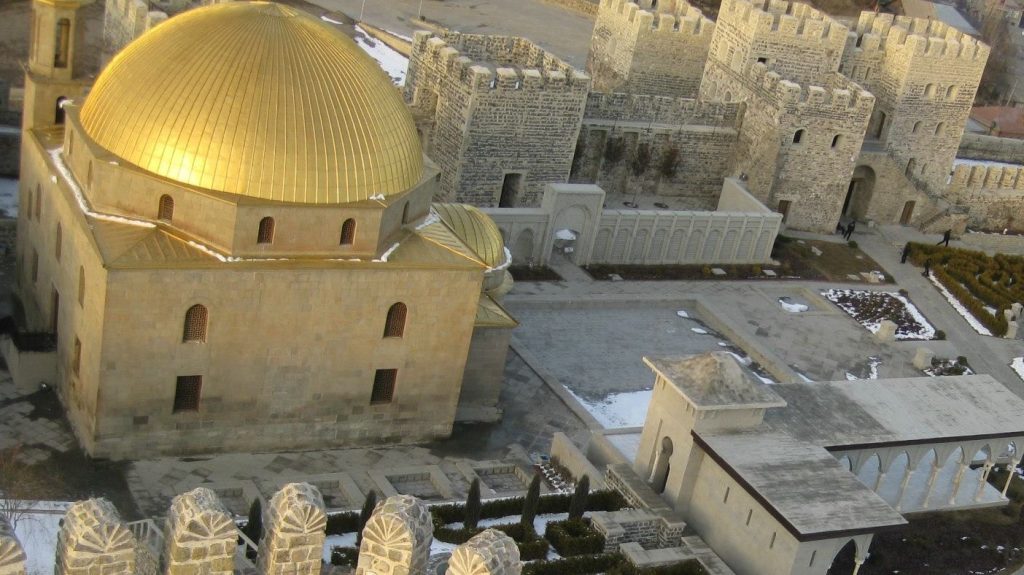
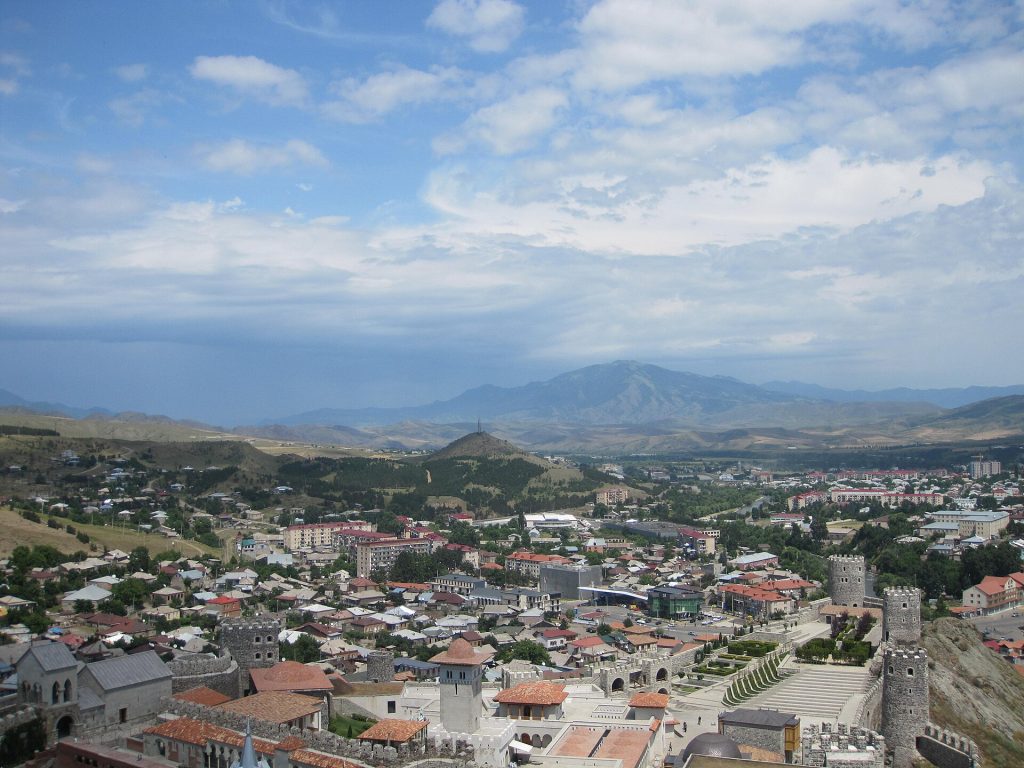
The holiday is celebrated by residents of Akhaltsikhe and the wider Samtskhe-Javakheti district, by Meskhetian families who return for the occasion, and by visitors drawn by the concerts held inside Rabati Fortress, the walled citadel complex that dominates the town. It combines a municipal civic celebration, of the kind many Georgian towns now hold on a fixed summer date, with a church commemoration tied to the local feast of St Shalva of Akhaltsikhe, observed on the same day.
Historical background
- 13th century — Akhaltsikhe is first securely attested as the seat of the Jakeli (Jaqeli) family, hereditary atabags (princes) of Samtskhe, who built the core fortifications later absorbed into what is now Rabati Fortress.
- 14th–16th centuries — under Jakeli rule Akhaltsikhe served as the political and ecclesiastical center of the Samtskhe principality, a semi-autonomous Georgian polity contested between larger regional powers.
- 1578 — Ottoman forces captured Akhaltsikhe, incorporating the town as the seat of the Childir (Akhaltsikhe) Eyalet.
- 1578–1828 — for roughly two and a half centuries Akhaltsikhe functioned as an Ottoman provincial capital, during which the citadel acquired a mosque and the town’s demographic and religious character changed considerably.
- 1828 — during the Russo-Turkish War, Russian Imperial forces besieged and took the Akhaltsikhe fortress.
- 1829 — the Treaty of Adrianople formally transferred Akhaltsikhe and its district from the Ottoman Empire to the Russian Empire.
- 19th–20th centuries — Akhaltsikhe developed as an administrative and garrison town, later becoming the administrative center of Akhaltsikhe municipality within Soviet, and then independent, Georgia’s Samtskhe-Javakheti region.
- 2011–2012 — the Rabati Fortress complex underwent a major reconstruction and reopened as a combined historical park containing the citadel, mosque, an Orthodox church and a museum, becoming the fixed stage for the city’s public festivities.
The layered history visible inside Rabati Fortress today — a Georgian citadel, an Ottoman-era mosque, an Orthodox church and later Russian-period structures standing within one set of walls — is itself a condensed record of Akhaltsikhe’s position on a long-contested frontier between Georgian, Ottoman and Russian spheres of control. Few towns in the Caucasus illustrate this layering as compactly, which is one reason the restored complex, overseen with support from Georgia’s Ministry of Culture, now functions as both a heritage site and the natural venue for civic celebration.
The attachment of the city day to 30 June and to the feast of St Shalva of Akhaltsikhe reflects a broader habit in Georgian town life of pairing a fixed calendar date with a locally venerated saint. According to local church tradition maintained by the Georgian Orthodox Church, Shalva is remembered as a prince of the Jakeli line associated with the defense of Christian life in Meskheti during a period of repeated foreign domination; the surviving hagiographic detail is considerably thinner than for nationally prominent saints, and clergy in Akhaltsikhe treat the day chiefly as a commemoration of the town’s long Christian continuity rather than as a fixed, widely circulated biography.
Meaning and traditions
Akhaltsikheloba follows the pattern familiar from other Georgian city days: a daytime program of craft fairs, folk ensembles and sporting exhibitions in the town center and around Rabati Fortress, followed by an evening concert inside the fortress walls featuring both traditional and contemporary Georgian performers. A morning liturgy is held in the town’s Orthodox churches in connection with the feast of St Shalva, attended by residents before the secular program begins.
Food and drink follow general Georgian festival custom rather than a dish unique to the day: households and vendors prepare khachapuri, khinkali, grilled meats and churchkhela, and wine is poured for toasts led by a tamada, the designated toastmaster whose role in structuring a Georgian feast, or supra, is itself a long-studied piece of local social custom. Choral groups frequently perform Georgian polyphonic songs, a tradition inscribed by UNESCO as Intangible Cultural Heritage, during the evening concerts. Regional variation is modest: Akhaltsikheloba is smaller and more locally focused than Tbilisoba in the capital, with the historic fortress setting, rather than scale, distinguishing it.
When it happens
Akhaltsikheloba falls on a fixed civil calendar date, 30 June, each year, rather than following the movable Orthodox Easter cycle. The most recent celebration took place on 30 June 2026; the next occurs on 30 June 2027. It is a municipal and local celebration rather than a nationwide public holiday, so banks, government offices and most shops across Georgia operate normally; in Akhaltsikhe itself, some municipal offices and schools adjust hours for the afternoon and evening program, and parking and some streets near Rabati Fortress are closed to traffic during the concert.
Where to experience it
The center of the celebration is Rabati Fortress, where the evening concert stage is set within the restored citadel walls, against the backdrop of the mosque, church and museum buildings. Daytime craft stalls and folk performances are typically arranged in the fortress courtyard and along the adjoining streets of the old town. Visitors attending the morning liturgy in an Orthodox church should dress modestly, with shoulders and knees covered and head coverings available for women at the entrance; photography inside the sanctuary during the service should be avoided unless explicitly permitted. The museum within the Rabati complex is open to visitors on an ordinary ticketed basis and provides useful background on the Jakeli, Ottoman and Russian layers of the town’s history before the evening program begins.
Travel with GTour
The Borjomi, Bakuriani & Rabati — 2 Days tour already stops at Rabati Fortress in Akhaltsikhe, so a late-June departure can be set to land on 30 June, when the fortress hosts concerts for the city’s patron feast, while the Vardzia Cave City — Day Trip passes through the same town en route south. A GTour travel expert will design the exact route and schedule around the guest’s travel dates.
Did you know
- “Akhaltsikhe” literally means “new fortress” in Georgian, a name that distinguished the Jakeli stronghold from older fortifications in the region.
- Rabati Fortress contains a mosque, an Orthodox church and a citadel within a single walled complex, a physical record of the town’s passage between Georgian, Ottoman and Russian control.
- Akhaltsikhe served as an Ottoman provincial capital for roughly 250 years, from 1578 until Russian annexation in 1828–1829.
- The 1829 Treaty of Adrianople, which ended a Russo-Ottoman war, formally transferred Akhaltsikhe from Ottoman to Russian rule.
- Georgian polyphonic singing, regularly performed at city-day concerts such as Akhaltsikheloba, is recognized by UNESCO as a form of Intangible Cultural Heritage.
Practical tips for visitors
Akhaltsikhe lies roughly three hours by road from Tbilisi via the Borjomi gorge, and can also be reached from Kutaisi or Batumi, with Kutaisi Airport generally the closer international gateway for travelers heading into Samtskhe-Javakheti; see Kutaisi International Airport for flight information. Late June weather is typically warm, so light clothing is appropriate for the daytime program, with a layer for the evening, when the fortress can feel cooler after sunset. Modest dress is expected for the morning church service. Because Akhaltsikhe is a small town, hotel capacity is limited during the festival and advance booking is advisable; some visitors prefer to base themselves in nearby Borjomi. GTour arranges a private driver or guide for the day for travelers wishing to combine the festival with a wider tour of the region.
Combine it with
Akhaltsikhe sits within easy reach of several of southern Georgia’s principal sights, making it straightforward to combine with a broader itinerary across Samtskhe-Javakheti, including the cave monastery of Vardzia and the spa town of Borjomi, with the route from the capital passing through Kartli, home to Gori and the cave city of Uplistsikhe, or onward toward Imereti and Kutaisi via the Borjomi-Kharagauli forest road.
Questions travellers ask
What does “Akhaltsikheloba” mean?
It combines “Akhaltsikhe,” the town’s name meaning “new fortress,” with the Georgian suffix “-oba,” meaning “day of” or “festival of,” the same construction used in Tbilisoba, the day of Tbilisi.
Is Akhaltsikheloba a public holiday across Georgia?
No. It is a municipal city-day celebration specific to Akhaltsikhe, not a nationwide public holiday, so banks, offices and most businesses elsewhere in Georgia operate normally on 30 June.
Who was St Shalva of Akhaltsikhe?
According to local church tradition, Shalva was a prince connected to the Jakeli line associated with defending Christian life in Meskheti; the surviving historical and hagiographic detail is limited compared with more widely documented Georgian saints.
How do I get to Akhaltsikhe for the festival?
Most visitors drive from Tbilisi, about three hours via the Borjomi gorge, or arrive from Kutaisi or Batumi; a private driver can be arranged for the day to avoid festival-day parking restrictions near Rabati Fortress.
What happens at Rabati Fortress during the festival?
The fortress hosts daytime craft stalls and folk performances in its courtyard, followed by an evening concert set against the citadel walls, mosque and church of the complex.
Can visitors attend the church service?
Yes, the morning liturgy connected to the feast of St Shalva is open to the public; visitors should dress modestly and remain respectful of the service in progress.
Is accommodation available in Akhaltsikhe during the festival?
Options exist but capacity is limited in this small town, so booking in advance is recommended; nearby Borjomi offers additional accommodation within a short drive.
What else can be combined with a visit to Akhaltsikhe?
The town is a natural base for visiting Vardzia and Borjomi within Samtskhe-Javakheti, and connects by road to Kartli toward Tbilisi and to Imereti toward Kutaisi through the Borjomi-Kharagauli forest.
Sources
- Georgian National Tourism Administration
- Georgian Orthodox Church, Patriarchate of Georgia
- Ministry of Culture of Georgia
- UNESCO Intangible Cultural Heritage Lists
- National Agency for Cultural Heritage Preservation
- National Parliamentary Library of Georgia
Plan your Georgia
Want to be in Georgia for Akhaltsikheloba? A GTour travel expert designs the itinerary around it and calls you back.
Icon of St Shalva of Akhaltsikhe, whose feast day gives Akhaltsikheloba its date, on a Rabati Fortress wall. · Photo: tjabeljan / Wikimedia Commons, CC BY 2.0
This page in other languages: Русский
GTour conciergeAsk anything about Georgia · we reply within hours