Archives


Georgian Bread Festival in Georgia: dates, meaning and how to experience it
Next dates
25 September 2027 – 26 September 2027 (to be confirmed) · National Botanical Garden, Tbilisi. See the full events calendar and Georgia today for roads and weather.
What it is
The Georgian Bread Festival celebrates puri (პური), the Georgian word for bread — a term so central to daily life that it is also used colloquially to mean “food” in general. The festival itself is a modern cultural gathering rather than a religious feast day, held each autumn in Tbilisi‘s National Botanical Garden, where bakers, millers, farmers and home cooks from Georgia’s different regions set up open-air clay ovens and stalls to demonstrate how bread has been made, shaped and shared across the country for generations.
It is celebrated by anyone with an interest in Georgian food culture: professional and village bakers who travel to Tbilisi to represent their region’s loaf, agricultural cooperatives and small mills promoting heritage grain varieties, folk ensembles who perform at the event, and residents and visitors who come to taste, watch and learn. Unlike Georgia’s church feasts, the Bread Festival carries no liturgical calendar and no state status; it is a public, family-oriented event built around craft, regional identity and hospitality.
Historical background
- 6th–5th millennium BC — Archaeobotanical evidence from sites in the South Caucasus, including present-day Georgia, points to early cultivation of wheat and barley, placing the region among the early grain-growing areas of the Near East, as documented through the collections and research of the Georgian National Museum.
- 1st millennium BC — Classical Greek and Roman writers describe the fertile grain-growing lowlands of ancient Colchis and Iberia, the predecessor kingdoms on the territory of modern Georgia, as noted in general historical surveys such as Britannica’s entry on Georgia.
- Medieval period — Georgian ecclesiastical and monastic writings refer to bread as a staple of both monastic and lay diet, baked in clay ovens called tone, a technology shared with neighbouring Caucasian, Persian and Anatolian baking traditions.
- Byzantine-rite practice — The Georgian Orthodox Church, like other Orthodox churches, uses leavened bread (prosphora) for the Eucharist, a liturgical distinction described in the teaching materials of the Georgian Patriarchate.
- 19th century — Ethnographers and travellers recorded the regional diversity of Georgian bread shapes and ovens, from the canoe-shaped loaf of eastern Georgia to the round household breads of the west.
- 1921–1991 — During the Soviet period, state bakeries and collectivised agriculture reshaped large-scale bread production, though home and village tone ovens survived in many rural areas.
- 2013 — UNESCO inscribed the ancient Georgian qvevri wine-making method on its Representative List of Intangible Cultural Heritage, cited here because bread and wine together form the backbone of Georgia’s table culture, as recorded by UNESCO’s Intangible Cultural Heritage list.
- 2010s to present — The Georgian Bread Festival was established at the National Botanical Garden of Tbilisi, bringing bakers from Kakheti, Imereti, Guria, Samegrelo, Svaneti and other regions together in one place; it is now held annually, with dates confirmed by organisers each year through channels such as Georgia’s national tourism administration.
Georgia’s relationship with bread is older than any single festival. The country sits within a broad zone of early agriculture in the South Caucasus, where wheat and barley were cultivated millennia before written history, and where the clay oven — known locally as the tone — became the standard method of baking long before it appeared in neighbouring culinary traditions. Through medieval kingdoms, Ottoman and Persian-influenced eras, and the Russian and Soviet periods that followed, bread remained a constant at the Georgian table, central to both daily meals and the ritual hospitality of the supra, the traditional feast.
The Bread Festival itself is a comparatively recent addition to Georgia’s cultural calendar, created to document and celebrate this older food heritage at a moment when industrial bakeries risked displacing regional recipes and wood-fired ovens. By bringing bakers from different corners of the country to a single public venue in the capital, the festival functions as both a culinary showcase and an informal archive of regional technique, allowing visitors to see, in one afternoon, breads that would otherwise require a journey the length of the country to compare.
Meaning and traditions
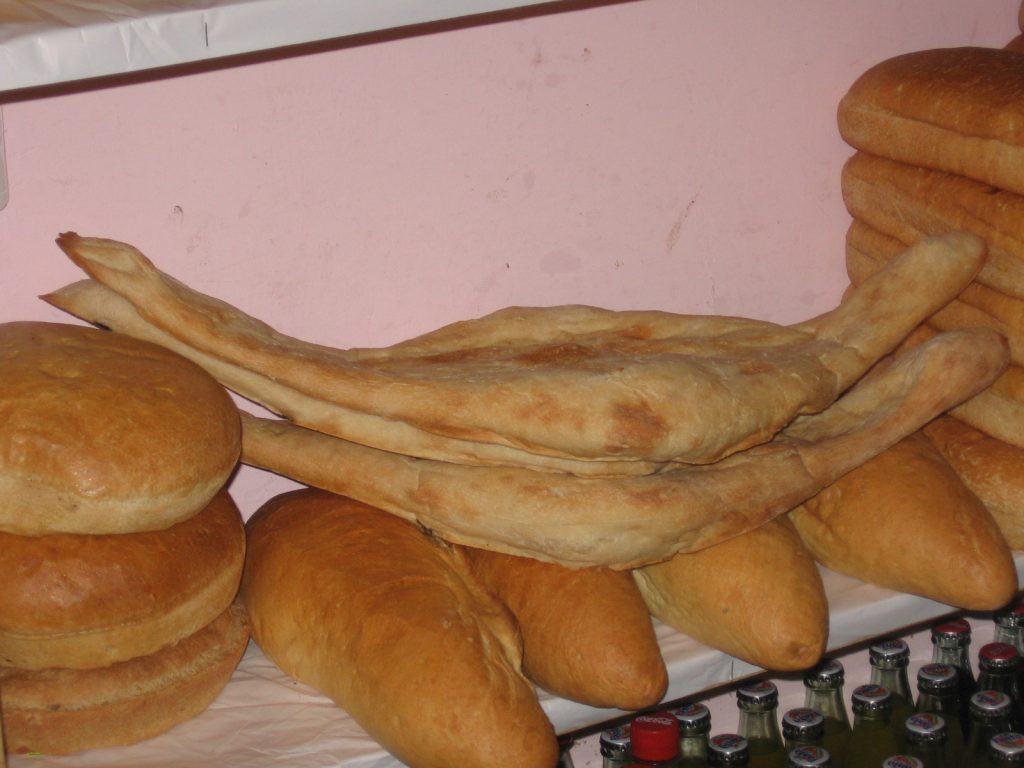
At the festival, visitors watch bakers work tone ovens — cylindrical clay ovens, often sunk partly into the ground, heated by a wood or charcoal fire at the base — slapping dough onto the hot inner walls, where it bakes in minutes. The best-known shape produced this way is shoti puri, a long, boat- or canoe-shaped loaf associated with eastern Georgia and Tbilisi, prized for its crisp crust and soft interior. Stalls typically display regional variants: rounder household loaves sometimes called tonis puri or, in some areas, affectionately referred to as deda’s puri (“mother’s bread”), alongside breads from Kakheti, Imereti, Guria and Samegrelo, each shaped and scored differently according to local custom.
Because western Georgia’s historically wetter climate favoured maize over wheat, visitors will also encounter mchadi, flat cornbread traditionally eaten there with cheese — a reminder that “bread” in Georgia has never meant one single grain or shape. Folk ensembles often perform at the event, including Georgian polyphonic singing, recognised internationally as an outstanding example of vocal tradition; table songs and toasts referencing bread and the harvest are common. Visitors can expect tastings, demonstrations of dough-shaping and oven-firing, children’s activities, and stalls selling flour, honey, cheese and other foods that accompany bread at a Georgian table.
When it happens
The Georgian Bread Festival is not fixed to a specific date each year; it is held on the last weekend of September, with exact dates confirmed by organisers closer to the time. In 2026 the festival took place on a weekend in late September; the next edition is expected on 25–26 September 2027, though this remains to be confirmed. It is not a public holiday — government offices, banks and most businesses operate normally on festival weekends, and the event does not affect national transport schedules, though the Botanical Garden itself is naturally busier than usual.
Where to experience it
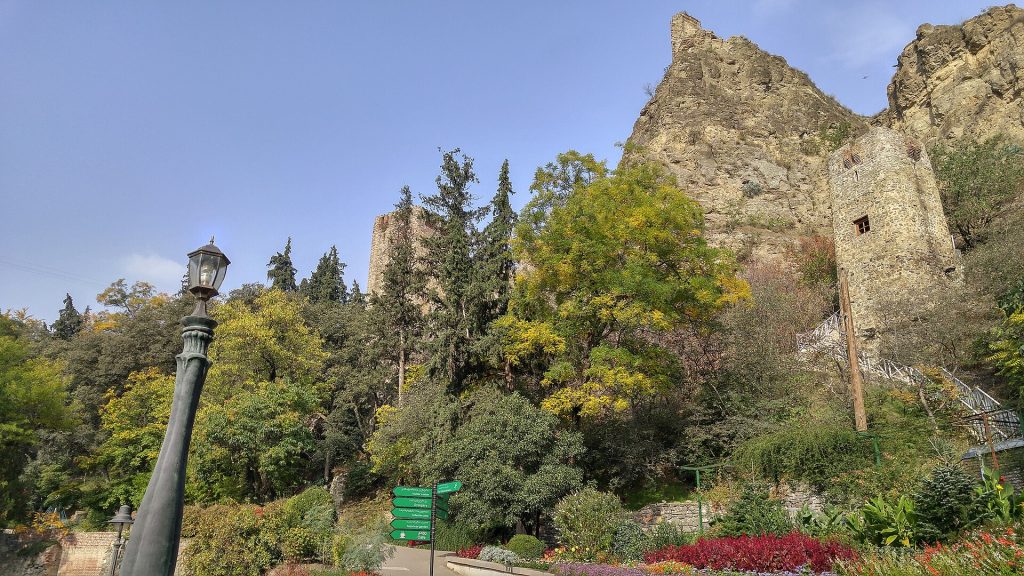
The festival is held at the National Botanical Garden of Tbilisi, in the Leghvtakhevi gorge below Narikala Fortress in the Old Town. Stalls and ovens are typically set up along the garden’s lower paths, with activity concentrated through the day on both Saturday and Sunday. Visitors should expect normal garden admission to apply; comfortable footwear is advisable, as the garden includes slopes, stairs and a waterfall walk. No specific church or religious etiquette is required, as the festival is a secular cultural event, though general courtesy toward the garden’s plantings and toward demonstrating bakers — asking before taking close photographs of their work — is appreciated.
Travel with GTour
The Tbilisi & Mtskheta — The Essential First Day tour can begin with a morning at the National Botanical Garden on 25–26 September, when regional bakers gather to show shoti and other breads before the city and Mtskheta sightseeing continues, while Georgia in 10 Days — Tbilisi to Svaneti to the Sea passes through Tbilisi at the start or end of its route and can be arranged around the same weekend. A GTour travel expert designs the route around the guest’s dates.
Did you know
- The South Caucasus, including Georgia’s territory, is considered one of the early centres of wheat and barley cultivation, alongside its renowned role in the early history of wine.
- In everyday Georgian speech, puri can mean “bread” or, more broadly, “food” — reflecting how central the loaf is to the idea of a meal itself.
- The cylindrical clay tone oven used for Georgian bread shares its basic design with tandoor-style ovens found from the Caucasus to Central Asia and South Asia.
- The elongated shape of shoti puri is practical as well as traditional: its long, flattened form bakes evenly against the curved inner wall of the tone in only a few minutes.
- Georgian Orthodox liturgical practice uses leavened bread for the Eucharist, a point of continuity with wider Orthodox Christian tradition rather than the unleavened host used in the Western church.
Practical tips for visitors
The National Botanical Garden is reachable on foot from Metekhi or the Old Town, or via a short taxi ride; the nearest metro station is Avlabari, followed by a walk across the bridge and up through Narikala. Late September in Tbilisi is generally mild but can turn cool in the evening, so light layers are advisable. There is no need to book tickets to the festival itself in advance, though garden admission may apply; confirm exact dates on official event listings close to the time, as they are set annually rather than fixed in a civil calendar. GTour can arrange a private driver or guide for the day, which is useful given the garden’s size and the festival’s spread across multiple paths and oven stations.
Combine it with
A visit pairs naturally with time in Tbilisi itself, given the festival’s location in the Old Town. For visitors interested in the wider food and wine culture that bread accompanies, Kakheti offers vineyards and traditional supra hospitality, while Imereti is known for its own bread and khachapuri traditions distinct from those of the capital.
Questions travellers ask
Is the Georgian Bread Festival a public holiday?
No. It is a cultural and culinary event, not a state or religious holiday, so businesses, banks and government offices operate as normal during the festival weekend.
Do I need to buy a ticket in advance?
Advance tickets are not typically required for the festival itself, though standard admission to the National Botanical Garden may apply. Checking current details closer to the confirmed dates is recommended.
Is the bread free to taste?
Many stalls offer small samples, while full loaves and accompanying products such as cheese and honey are usually sold. Policies can vary by vendor and by year.
Is the festival suitable for children?
Yes. The open-air garden setting, baking demonstrations and folk music performances make it an accessible, family-friendly event.
What is the difference between shoti puri and other Georgian breads?
Shoti puri is the long, boat-shaped loaf associated with eastern Georgia, baked quickly against the walls of a tone oven. Other regions produce rounder or flatter loaves, and western Georgia traditionally favours cornbread, mchadi, over wheat bread.
Will the 2027 dates definitely be 25–26 September?
These dates are provisional. Organisers confirm the exact weekend closer to the event, following the established pattern of the last weekend of September.
Will festival signage and vendors speak English?
Signage is primarily in Georgian, and English proficiency among vendors varies. A guide or driver can help with translation and context, which is useful for visitors wanting to understand regional distinctions between the breads on display.
What else is there to see at the National Botanical Garden on festival days?
Beyond the festival stalls, the garden includes a waterfall, historic city walls above the gorge, and extensive plant collections, making it worth allowing a half-day visit beyond the festival activities themselves.
Sources
- Georgia National Tourism Administration
- Georgian National Museum
- UNESCO Intangible Cultural Heritage – Qvevri wine-making
- Georgian Patriarchate
- Ministry of Culture of Georgia
- Tbilisi City Hall
- Agenda.ge
Plan your Georgia
Want to be in Georgia for Georgian Bread Festival? A GTour travel expert designs the itinerary around it and calls you back.
Fresh shoti bread baked in a traditional tone oven, the festival's signature Georgian bread. · Photo: Stolbovsky / Wikimedia Commons, CC BY-SA 3.0
This page in other languages: Русский
GTour conciergeAsk anything about Georgia · we reply within hours