Archives


Tkhiloba in Georgia: dates, meaning and how to experience it
Next dates
5 September 2027 (to be confirmed) · Dadiani Palace garden, Zugdidi, Samegrelo. See the full events calendar and Georgia today for roads and weather.
What it is
Tkhiloba takes its name from the Georgian word tkhili, meaning hazelnut, combined with the suffix -oba, which turns a noun into the name of a feast or collective occasion — the same pattern that gives Georgian its Tbilisoba (feast of Tbilisi) and Giorgoba (feast of Saint George). Unlike most Georgian days ending in -oba, Tkhiloba is not tied to a saint’s day on the church calendar; it is a secular agricultural festival marking the hazelnut harvest in the western Georgian region of Samegrelo, of which Zugdidi is the historic capital.
The festival is organized by and for hazelnut growers, cooperatives and exporters of Samegrelo, together with local authorities, museum staff and regional tourism promoters. It draws farming families from the surrounding villages, craftspeople, folk ensembles and a growing number of domestic and foreign visitors curious about one of Georgia’s most important export crops and about Mingrelian regional culture more broadly.
Historical background
- 1st century CE — Roman writers, including Pliny the Elder, describe “Pontic nuts” gathered along the forested Black Sea littoral that included ancient Colchis, the region corresponding to present-day western Georgia; the hazelnut’s long association with this coast predates any modern festival.
- 16th century — Samegrelo emerges as a separate principality ruled by the House of Dadiani, nominally vassal to the Kingdom of Imereti, as the medieval Kingdom of Georgia fragments into smaller polities.
- 1838–1840s — The Dadiani family builds its palace complex in Zugdidi, later enlarged with a garden combining European and local plantings, under Prince Levan II Dadiani and Princess Ekaterine Chavchavadze-Dadiani.
- 1867 — The Russian Empire abolishes the autonomous Principality of Samegrelo and annexes it directly, ending formal Dadiani rule over the region.
- Early 20th century — The Dadiani Palace and its grounds pass into public and museum use, preserving the family’s library, portraits and foreign relics gathered through dynastic marriages.
- Soviet period — State and collective farms expand hazelnut orchards across Samegrelo and neighbouring Guria as a commercial crop for domestic and export markets.
- 1990s–2010s — Georgia’s hazelnut sector recovers after post-Soviet disruption and grows into a major export industry, with Samegrelo among the leading growing regions.
- 2010s — Tkhiloba is established as an annual early-autumn harvest festival in the garden of the Dadiani Palace Museum in Zugdidi, supported by regional authorities and tourism bodies.
The hazelnut’s presence in western Georgia is older than any written festival calendar: the region’s humid subtropical valleys, long associated by classical geographers with the forests of Colchis, have supported wild and cultivated nut trees for millennia. What has changed is the crop’s economic weight. Over the past two decades Georgia has become one of the world’s leading hazelnut exporters, shipping largely to European processors, and Samegrelo’s smallholders and cooperatives are central to that trade, as documented by national tourism and agricultural promotion bodies.
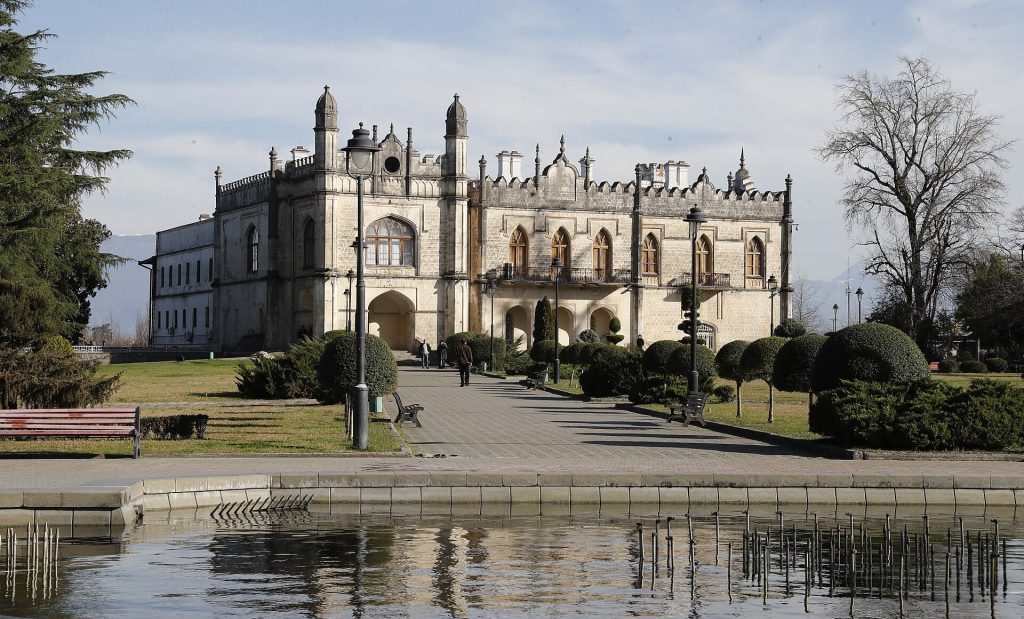
Zugdidi’s role as host reflects both geography and history. As the former seat of the Dadiani princes, the town preserves a palace and botanical garden built with 19th-century ambition, and it sits at the heart of the hazelnut-growing lowlands. Pairing a modern harvest fair with a historic aristocratic residence gives Tkhiloba a setting unusual among Georgia’s rural festivals: produce stalls and folk performances unfold beneath trees planted generations before the crop they now celebrate became a national export.
Meaning and traditions
At its core Tkhiloba is a harvest market and open-air fair. Growers bring baskets of fresh and dried hazelnuts, known in Georgian as tkhili, from orchards called tkhilis baghi, for sale and for judging in informal competitions for the largest or finest harvest. Stalls offer Megrelian specialties alongside the nuts themselves: elarji (a cornmeal and cheese dish stretched with a wooden spoon), gebzhalia (soft cheese rolled with mint in whey), and churchkhela, the candle-shaped sweet of nuts dipped repeatedly in thickened grape must, traditionally made with walnuts but often adapted to hazelnuts in this region.
Music and dance accompany the stalls: Megrelian polyphonic singing, the plucked panduri and chonguri, and round dances known as perkhuli performed by local ensembles. Toasts follow the customary Georgian pattern, with gaumarjos (“to victory,” used as “cheers”) raised to the harvest, to the growers and to guests. Because the festival is agricultural rather than ecclesiastical, there is no liturgy or fast associated with it, though many attendees will have observed the autumn church calendar’s saints’ days in the same season.
Regional variation is modest, since Tkhiloba is specific to Samegrelo, but neighbouring Guria — Georgia’s other major hazelnut-growing area — holds its own harvest markets with similar produce and dishes, without using the same festival name.
When it happens
Tkhiloba has no fixed civil date. It is set each year by organizers for early September, timed to the hazelnut harvest, and confirmed only weeks in advance depending on the ripening season and local scheduling. As of this writing the 2026 edition has already taken place; the next edition is provisionally expected around 5 September 2027, subject to confirmation by the organizers closer to the date. Travellers planning a visit around that window should check with the Zugdidi municipality or national tourism channels for the confirmed date before booking.
Tkhiloba is not a national public holiday. Government offices, schools, banks and most businesses operate normally throughout Georgia on the day, including in Zugdidi itself; only the Dadiani Palace garden and its immediate surroundings are given over to the festival.
Where to experience it
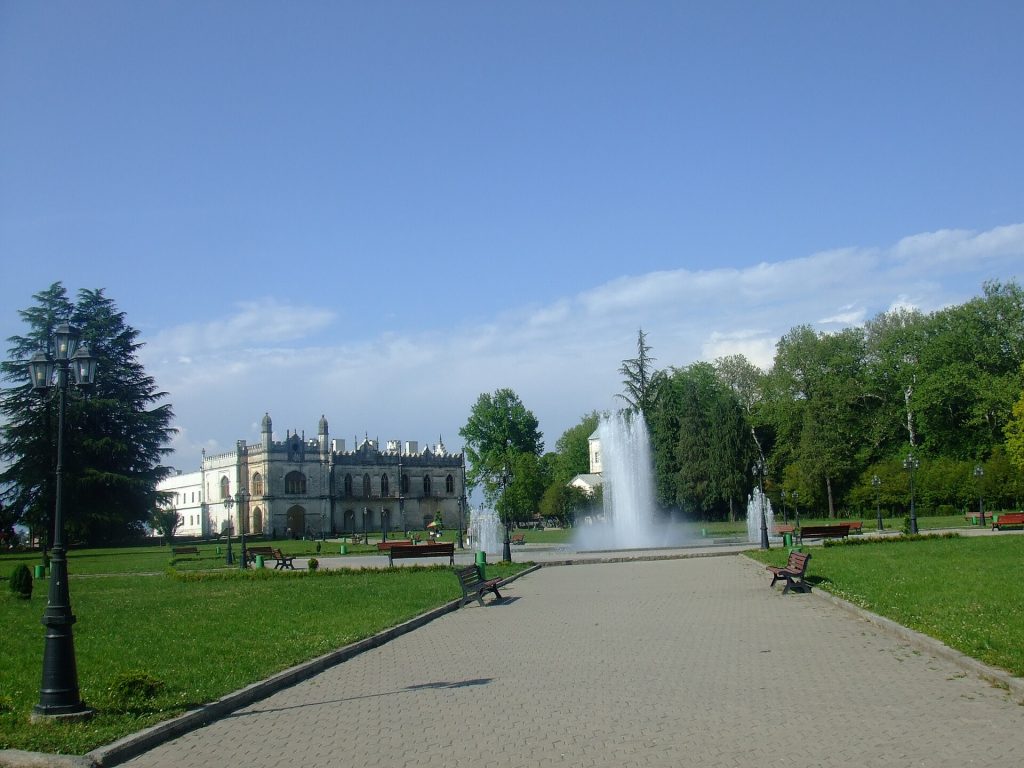
The festival takes place in the garden of the Dadiani Palace Museum in Zugdidi, the former residence of the Dadiani princely family, now a museum holding portraits, archives and relics connected to the family’s 19th-century ties to the Murat family of France. Visitors arriving in the late morning will find rows of stalls under the garden’s mature trees, tastings of fresh and roasted hazelnuts, cooking demonstrations of Megrelian dishes, and folk performances through the afternoon. The adjoining palace museum is usually open on festival days and worth combining with the fair; standard church and museum etiquette applies inside — modest dress, no loud conversation during any religious observance nearby, and photography permission checked at the entrance for interior exhibits.
Travel with GTour
The Racha — Khvanchkara Wine & Mountain Lakes (2 Days) route can be extended westward toward Zugdidi, allowing travelers to pass through the Dadiani Palace garden if their dates align with early September, when Tkhiloba takes place. A GTour travel expert will design the exact route and schedule, including Rtveli — Wine Harvest in Kakheti (3 Days, September–October), around the guest’s own dates.
Did you know
- Classical writers linked the hazelnut to the Black Sea coast long before Georgia existed as a modern state, using the term “Pontic nut” for varieties gathered near ancient Colchis.
- Georgia ranks among the world’s leading hazelnut exporters, with Samegrelo and neighbouring Guria supplying much of the crop shipped to European processors.
- The Dadiani Palace in Zugdidi holds relics connected to Napoleon Bonaparte, brought to Georgia through the 19th-century marriage of a Dadiani princess into the Murat family.
- The palace garden in Zugdidi includes a botanical collection begun in the 19th century, combining local Colchic flora with species introduced from abroad.
- Samegrelo retains its own distinct language, Mingrelian, still spoken alongside Georgian in the region where Tkhiloba is held.
Practical tips for visitors
Zugdidi is reached from Tbilisi by train or minibus (around four to five hours), or by road via the E60 highway; the nearest airport is Kutaisi, roughly a two-hour drive away. Early September in Samegrelo is warm and humid, so light clothing and sun protection are advisable, with a light layer for evenings. No advance ticket is generally required for the open-air fair, but accommodation in Zugdidi is limited, so booking ahead is recommended once the date is confirmed. Dress modestly if visiting the palace museum’s interiors, and confirm the exact festival date with local tourism offices shortly before travelling, since it is set only a few weeks in advance.
Combine it with
Zugdidi is the natural gateway to the high mountains of Svaneti, reachable by road from the town, and lies within easy reach of the Black Sea beaches of Adjara and the historic sites of Imereti, making a Tkhiloba visit easy to extend into a wider western Georgia itinerary.
Questions travellers ask
Is Tkhiloba a public holiday in Georgia?
No. It is a regional harvest festival rather than a state holiday, so schools, offices and businesses across the country, including in Zugdidi, operate as usual on the day.
How do I get to Zugdidi for the festival?
Direct trains and minibuses run from Tbilisi to Zugdidi, taking roughly four to five hours; drivers can use the E60 highway, and travellers flying in can use Kutaisi International Airport, about two hours away by road.
Is there an entry fee for Tkhiloba?
The open-air festival in the palace garden is typically free to attend, though the adjoining Dadiani Palace Museum charges a separate admission for its exhibition halls.
Can visitors buy hazelnuts directly from growers?
Yes. Stalls run by local growers and cooperatives sell fresh, dried and processed hazelnuts, along with regional sweets and dishes, directly to visitors during the festival.
Is the festival suitable for children and families?
Yes. It is an outdoor market-style event with music, food stalls and open garden space, with no religious ceremony or restrictions that would limit family attendance.
Why is Georgia associated with hazelnuts historically?
Western Georgia’s Black Sea-facing valleys, part of the region classical writers called Colchis, have long supported nut-bearing forests, and the hazelnut later became a major commercial export crop for Samegrelo and Guria.
What else is there to see in Zugdidi besides the festival?
The Dadiani Palace Museum itself, with its 19th-century architecture, botanical garden and Napoleonic-era relics, is the main attraction and can easily be combined with a festival visit.
How do I find the confirmed date for next year’s festival?
Because Tkhiloba’s date is set annually close to the harvest, travellers should check with Zugdidi municipal channels or national tourism sources a few weeks beforehand rather than relying on a fixed calendar date.
Sources
- Georgian National Tourism Administration
- Ministry of Culture, Sport and Youth of Georgia
- National Museum portal
- National Parliamentary Library of Georgia
- Agenda.ge
- Georgia Today
- State Representative in Samegrelo-Zemo Svaneti
- Ministry of Environmental Protection and Agriculture
Plan your Georgia
Want to be in Georgia for Tkhiloba? A GTour travel expert designs the itinerary around it and calls you back.
The Dadiani Palace gardens in Zugdidi, host venue of the Tkhiloba hazelnut festival. · Photo: Zugdidi Municipal City hall / Wikimedia Commons, CC BY-SA 4.0
This page in other languages: Русский
GTour conciergeAsk anything about Georgia · we reply within hours