Archives


Gemo Fest Samegrelo in Georgia: dates, meaning and how to experience it
Next dates
4 September 2027 – 5 September 2027 (to be confirmed) · Botanical Garden, Zugdidi. See the full events calendar and Georgia today for roads and weather.
What it is
Gemo Fest Samegrelo takes its name from the Georgian word gemo (გემო), meaning “taste” or “flavor,” combined with the borrowed word “fest” and the name of the western Georgian region of Samegrelo, historically known as Mingrelia. The event is not a religious feast day but a modern culinary and cultural festival: a public celebration of the distinct food culture of the Megrelians, a Georgian-speaking community with its own Kartvelian language, Megrelian, still spoken alongside standard Georgian throughout the region.
The festival draws home cooks, restaurateurs, winemakers and folk performers from Samegrelo’s municipalities — Zugdidi, Martvili, Senaki, Khobi, Abasha, Chkhorotsku, Tsalenjikha and the port town of Poti — along with visitors from across Georgia and abroad. It belongs to a wider, recent movement in Georgia of regional gastronomic festivals that give each province a platform to present dishes rarely found on menus in Tbilisi, reinforcing the idea that Georgian cuisine is not one national tradition but a federation of distinct regional ones, of which Samegrelo’s is among the most recognizable for its heat, its corn-based staples and its abundant fresh cheese.
Historical background
- 8th–6th century BC — Samegrelo lies within ancient Colchis, the kingdom on Georgia’s western coast known to Greek sources for grain cultivation, viticulture and metalwork, later mythologized as the destination of the Argonauts.
- 13th–19th century — the region is governed for centuries as the semi-autonomous Principality of Mingrelia (Samegrelo) under the House of Dadiani, with Zugdidi as its princely seat.
- 1840s — the Dadiani rulers lay out the palace and botanical garden at Zugdidi, planting subtropical and exotic species that still shape the grounds used for the festival today.
- 1867 — the Russian Empire abolishes the princely autonomy of Mingrelia, absorbing the territory into the Kutaisi guberniya.
- late 19th–20th century — Georgian ethnographers and folklorists record Megrelian dishes such as elarji, ghomi and gebzhalia as a distinct regional cuisine within the wider Georgian table.
- 1991 — Georgian independence renews interest in regional identity, dialects and local food traditions as markers of cultural heritage.
- 2010s — national and municipal tourism bodies begin actively supporting regional gastronomic festivals across Georgia as part of destination branding, following the model of established wine and food events in Kakheti and elsewhere.
- recent years — Gemo Fest Samegrelo is established as an annual event at the Zugdidi Botanical Garden, held on the first weekend of September and organized with local authorities and tourism partners; exact dates are confirmed each year.
The deep layer beneath the festival is geological and agricultural as much as political: the humid, well-watered lowlands of Samegrelo, fed by the Enguri and Rioni river systems, have supported intensive maize cultivation since long before wheat bread became common in the Georgian lowlands further east. This is the root of the region’s signature starches, ghomi and elarji, which use a particular variety of corn rather than the wheat flour of a typical khachapuri dough. The princely Dadiani court, cosmopolitan and wealthy from Black Sea trade, added refinement — porcelain, French furniture, and famously a death mask of Napoleon Bonaparte now held in Zugdidi, a result of the family’s marriage ties to the Bonapartes — without displacing the plain, intensely flavored peasant cooking that the festival now celebrates.
Gemo Fest Samegrelo is therefore best understood as a recent institution built on an old foundation: the festival itself has no medieval or ecclesiastical origin, but the dishes, dialect, and garden setting it showcases carry centuries of regional continuity, from Colchian farming through princely Mingrelia to the present municipality of Zugdidi.
Meaning and traditions
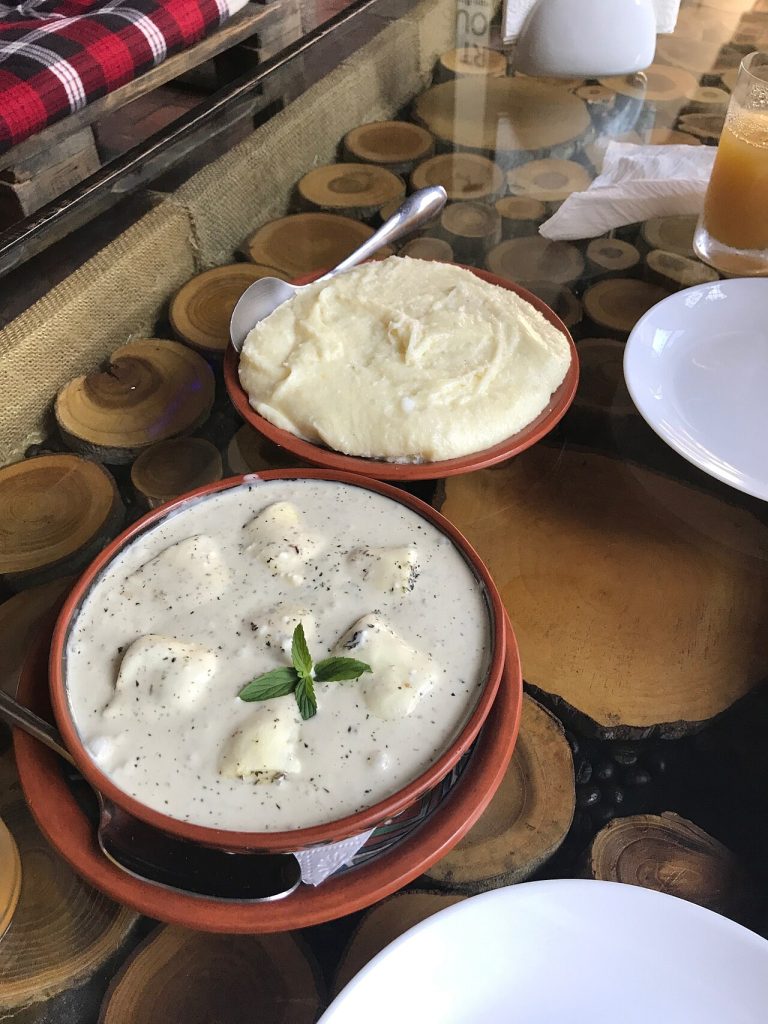
At the center of the festival is a trio of dishes considered the signature of Samegrelo. Ghomi (ღომი) is a thick, unsalted porridge made from a fine cornmeal distinct from the coarser grind used for mchadi bread elsewhere in Georgia; it is normally eaten plain, as a neutral base for spicy or salty accompaniments. Elarji (ელარჯი) is ghomi vigorously stirred together with fresh sulguni cheese over heat until the two become a single elastic mass — a good elarji should stretch into a long, unbroken thread when lifted on a fork. Gebzhalia (გებჟალია) is a cold dish of fresh, mild cheese rolled into cylinders and served in a tangy sauce of matsoni (Georgian yogurt) infused with fresh mint and garlic.
Around these three staples, stalls typically offer Megrelian khachapuri (baked with extra cheese both inside and on top), kuchmachi (spiced offal), walnut-based sauces, and the fiery, raw spice paste ajika, made from hot red pepper, garlic, walnut and herbs rather than imported black pepper, which historically never reached this part of Georgia in quantity. Wine from the native Ojaleshi grape, a semi-sweet red grown almost nowhere outside Samegrelo, is poured alongside chacha, the grape or fruit spirit distilled in most Georgian households. Toasting customs follow the broader Georgian supra tradition, with a tamada, or toastmaster, leading rounds of toasts to peace, ancestors and guests; Megrelian table songs and round dances are performed by local folk ensembles through the afternoon and evening.
Regional variation within the festival itself reflects the differences among Samegrelo’s municipalities: coastal Poti contributes more fish-based dishes, while inland Martvili and Chkhorotsku lean on dairy and corn. Visitors will also hear Megrelian spoken casually among stallholders and performers, a reminder that the festival doubles as a showcase for a living regional identity, not only a menu.
When it happens
Gemo Fest Samegrelo is held on the first weekend of September each year, a pattern tied to the end of the summer harvest rather than to any fixed church or state calendar. Because it is organized locally rather than nationally, exact dates are confirmed by the organizers only a few months in advance and can shift slightly within early September. This year’s edition took place on the first weekend of September 2026; the following edition is provisionally set for 4–5 September 2027, to be confirmed closer to the date.
The festival is not a public holiday. Government offices, schools, shops and transport in Zugdidi and across Georgia operate on their normal schedule on festival days; only the Botanical Garden grounds themselves are given over to the event.
Where to experience it
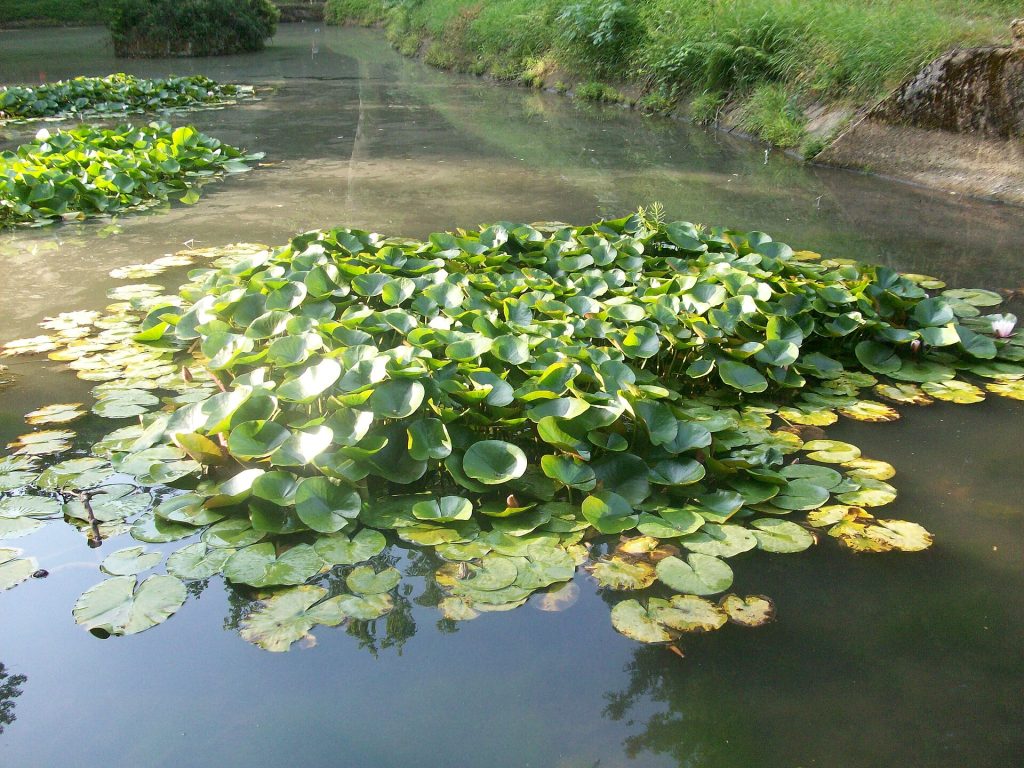
The festival takes place in and around the historic Botanical Garden of Zugdidi, laid out in the nineteenth century by the Dadiani family and adjoining the Dadiani Palace, now a museum. Cooking demonstrations and competitions, including contests for the best elarji, typically run through the late morning and early afternoon, with tastings, craft stalls and children’s activities continuing into the afternoon and folk performances in the early evening as the heat eases.
Visitors can combine a festival visit with the Dadiani Palace Museum itself, home to the Napoleon death mask and the Dadiani family’s porcelain and library collections; modest, respectful dress is appropriate inside, as it is at the nearby Zugdidi Nativity of the Virgin church and at any working monastery in the region, such as Martvili Monastery a short drive away. Photographing stallholders and performers is normally welcomed if asked first, and sampling food at a stall is generally understood as an invitation to also buy a small amount to take home.
Travel with GTour
Georgia in 10 Days — Tbilisi to Svaneti to the Sea passes through Zugdidi on its way toward Svaneti, allowing an early-September departure to coincide with the Gemo Fest Samegrelo weekend at the Botanical Garden, while Tbilisi & Mtskheta — The Essential First Day can serve as a quiet opening stretch beforehand. A GTour travel expert will design the exact route and pace around the guest’s own dates.
Did you know
- Elarji is sometimes compared to fondue for its stretchy texture, though it is made only from corn flour and sulguni cheese, with no wine or wheat involved.
- Ojaleshi, the native grape of Samegrelo, is one of the few grapes in Georgia traditionally used to make a naturally semi-sweet red wine without fortification.
- Megrelian is a distinct, unwritten-standard Kartvelian language still spoken at home across Samegrelo alongside Georgian, related to but not mutually intelligible with Georgian.
- The Dadiani Palace Museum in Zugdidi holds a death mask of Napoleon Bonaparte, acquired through the Dadiani family’s nineteenth-century marriage ties to the Bonapartes.
- Samegrelo’s cuisine is often cited as the spiciest in Georgia, relying on raw chili-and-walnut ajika rather than imported pepper for its characteristic heat.
Practical tips for visitors
Zugdidi is reached from Tbilisi by rail, including an overnight train service, or by minibus; it also functions as the main gateway town for road travel into Svaneti, so many visitors combine the two. The nearest airport is Kutaisi, roughly two hours away by road. September in Samegrelo, Georgia’s wettest region, can bring sudden showers even in warm weather, so a light rain layer and comfortable, closed shoes for the garden’s paths are advisable. Entry to the festival grounds is typically free, with individual food and drink tastings paid for separately; accommodation in Zugdidi is limited, and booking ahead is recommended, especially given overlapping demand from travelers heading on to Svaneti in early autumn.
Combine it with
Zugdidi is the natural gateway to the high mountains of Svaneti, reachable by the same road north from the Botanical Garden. A festival visit also pairs well with the wine villages, canyons and museums of Imereti to the east, and with the smaller wine-producing valleys of Racha further into the mountains.
Questions travellers ask
Is Gemo Fest Samegrelo free to attend?
Entry to the Botanical Garden grounds during the festival is typically free; individual dishes, wine and craft items are purchased separately at stalls.
What is the difference between ghomi and elarji?
Ghomi is plain cornmeal porridge served as a neutral base; elarji is the same porridge worked together with melted sulguni cheese until it forms a single stretchy mass.
Can vegetarians eat Megrelian food?
Yes. Ghomi, elarji, gebzhalia, khachapuri and most sauces are vegetarian, though some stalls also sell meat-based dishes such as kuchmachi.
How do I get from Tbilisi to Zugdidi for the festival?
Overnight trains and daytime minibuses run between Tbilisi and Zugdidi; travelers continuing to Svaneti often route through Zugdidi in either direction.
Is the festival suitable for children?
Yes, the open-air garden setting, craft stalls and folk performances make it an easy outing for families, though the midday heat and crowds are worth planning around.
What should I wear?
Casual, comfortable clothing and closed shoes suit the garden paths; modest dress is appropriate if combining the visit with the nearby church or palace museum.
Is English spoken at the festival?
Some stallholders and organizers speak English, but Georgian and Megrelian predominate; simple greetings and patience go a long way.
What else can I see in Zugdidi besides the festival?
The Dadiani Palace Museum, the surrounding botanical garden itself outside festival days, and day trips to Martvili Monastery and Canyon are the main nearby attractions.
Plan your Georgia
Want to be in Georgia for Gemo Fest Samegrelo? A GTour travel expert designs the itinerary around it and calls you back.
Gebzhalia with matsoni, a cheese-and-herb dish typical of Megrelian cuisine festivals. · Photo: Georgian Recipes at Georgia About / Wikimedia Commons, CC BY 3.0
This page in other languages: Русский
GTour conciergeAsk anything about Georgia · we reply within hours