Archives


Tsinandali Festival in Georgia: dates, meaning and how to experience it
Next dates
3 September 2027 – 13 September 2027 (to be confirmed) · Tsinandali Estate, Telavi municipality, Kakheti. See the full events calendar and Georgia today for roads and weather.
What it is
The Tsinandali Festival is an annual classical music festival held at the Tsinandali Estate, the restored country house and vineyard of the Chavchavadze princely family in Telavi municipality, Kakheti. Unlike Georgia’s church feasts and agricultural holidays, the festival is a modern cultural institution rather than an inherited folk tradition, and its name is simply the toponym of the village in which it takes place. The origin of the place name Tsinandali is not conclusively established by scholars; it is generally associated with the Georgian root tsin-, meaning “front” or “before,” though this remains a matter of local tradition rather than settled etymology.
The festival is celebrated by an international and domestic audience of classical music lovers, wine tourists, and residents of Kakheti, and it centres on the Pan-Caucasian Youth Orchestra, an ensemble of young musicians drawn from Georgia, Armenia, Azerbaijan and other countries of the wider region. Visitors come for orchestral and chamber concerts, masterclasses, and open rehearsals set against the Alazani Valley backdrop, making the event as much a showcase of Kakhetian hospitality and winemaking as of music.
Historical background
- early 19th century — Prince Alexander Chavchavadze, Georgian romantic poet and military officer, establishes his family estate at Tsinandali and plants vineyards using methods observed in Europe, laying the ground for Georgia’s modern commercial winemaking.
- 1828 — Chavchavadze’s daughter Nino marries the Russian writer and diplomat Alexander Griboyedov at a church in Tbilisi, an event that linked the Tsinandali household to the wider literary world of the Caucasus.
- 1854 — During the Caucasian War, forces under Imam Shamil raid the Tsinandali estate, damaging the house and taking members of the Chavchavadze family captive for several months.
- Soviet period — the estate and its surrounding vineyard are nationalised and the main house is maintained as a museum dedicated to Alexander Chavchavadze and Georgian wine history.
- 2000s — the Tsinandali Estate undergoes restoration of its historic buildings, English-style garden, and wine cellar as part of a wider programme to develop Kakheti’s cultural tourism infrastructure.
- 2019 — the first Tsinandali Festival is launched, pairing the Georgian National Tourism Administration with international partners and founding the Pan-Caucasian Youth Orchestra as its resident ensemble.
- 2020 — the festival programme is adapted in response to pandemic-related travel restrictions, with reduced live attendance.
- 2021–2025 — the festival resumes an annual late-August to mid-September schedule, expanding its programme of orchestral concerts, chamber recitals, and youth training sessions.
- 2026 — the festival runs from 3 to 13 September at the Tsinandali Estate amphitheatre.
Tsinandali’s connection to music and the arts predates the festival by nearly two centuries. Alexander Chavchavadze’s house was a salon for poets, diplomats, and travellers passing through Kakheti, and the family’s European-influenced tastes — in wine, architecture, and music — made the estate an unusual meeting point between Georgian aristocratic life and the wider Russian and European world of the early nineteenth century. The 1854 raid by Shamil’s forces, during which several Chavchavadze women and children were taken captive, remains one of the most documented episodes of the Caucasian War precisely because of the estate’s prominence.
The modern festival draws deliberately on this history of cultural exchange. By bringing together young musicians from across the Caucasus, including countries with closed borders and unresolved political tensions, the organisers present the orchestra itself as a continuation of Tsinandali’s older role as a crossing point of cultures. The Pan-Caucasian Youth Orchestra, supported by an international artistic team, has become the festival’s defining feature, distinguishing it from most of Georgia’s other cultural events, which tend to be rooted in church calendars or agricultural cycles. Details of each year’s programme and dates are published by the festival’s official site and promoted through the Georgian National Tourism Administration.
Meaning and traditions
The festival’s core event is the symphonic concert, performed in a purpose-built open-air amphitheatre set into the estate’s historic garden, where the Pan-Caucasian Youth Orchestra performs alongside guest soloists and conductors. Alongside the main concerts, the programme typically includes chamber music recitals inside the Chavchavadze house museum, open rehearsals, youth masterclasses, and panel discussions on music and cultural diplomacy. Attendance is by ticket, and the atmosphere combines formal concert etiquette with the informality of an outdoor Kakhetian evening.
Food and drink are inseparable from the experience. Tsinandali gives its name to a protected appellation of Georgian white wine made chiefly from Rkatsiteli and Mtsvane grapes, and the estate’s own marani (wine cellar) and vineyards are open for tastings before and after concerts. Visitors typically pair the music with Kakhetian dishes such as mtsvadi (skewered grilled meat), badrijani nigvzit (eggplant with walnut paste), and bread baked in a tone clay oven, often accompanied by toasts led by a tamada (toastmaster) in the Georgian supra tradition. While the festival itself has no fixed liturgical songs or sayings, its setting within Kakheti’s wine culture means that visiting choirs occasionally perform Georgian polyphonic pieces, recognised by UNESCO as an element of intangible cultural heritage, as part of the wider cultural programme.
When it happens
The Tsinandali Festival does not follow a fixed date in the way church feasts do; instead, organisers set a window in late August or early September each year, depending on orchestra scheduling, guest artists’ availability, and the Kakhetian grape harvest calendar, which the festival often coincides with. In 2026 the festival ran from 3 to 13 September. For 2027 the festival is expected to take place from approximately 3 to 13 September, though dates are confirmed by the organisers closer to the season and may shift by a week in either direction.
The festival is not a public holiday, and it does not affect the opening hours of government offices, banks, or transport across Georgia. The Tsinandali Estate itself, including the museum and wine cellar, remains open to day visitors outside festival dates, though concert tickets and some estate areas require separate booking once the festival begins.

Where to experience it
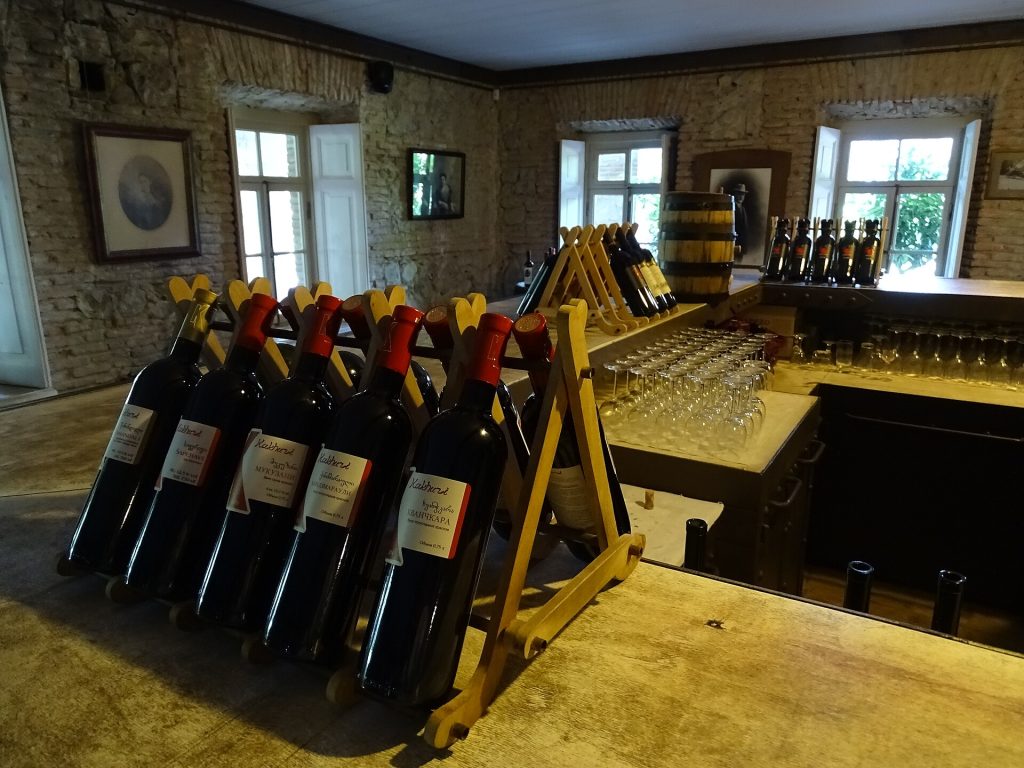
All festival events take place at the Tsinandali Estate, roughly two kilometres from the town of Telavi and about 100 kilometres east of Tbilisi. The main amphitheatre, built into a terraced slope of the historic garden, hosts the large orchestral evenings, usually beginning after sunset. Smaller recitals are staged inside the Chavchavadze house museum itself, where visitors walk through rooms furnished with period furniture, portraits, and the library once used by the Chavchavadze family. The estate’s wine cellar, with its rows of old clay qvevri and oak barrels, hosts tastings that are often timed around concert intervals.
Visitors to the house museum are expected to follow standard etiquette for historic interiors: no food or drink inside the exhibition rooms, modest behaviour, and permission before using flash photography. Evening concerts in the garden are generally smart-casual, though many attendees dress more formally for the opening and closing nights. As with any cultural site in Georgia, punctuality is appreciated, and mobile phones are expected to be silenced during performances.
Travel with GTour
The Rtveli — Wine Harvest in Kakheti (3 Days, September–October) tour passes through Telavi municipality and can be scheduled to include an evening at Tsinandali Estate during the festival dates, combining harvest visits with the concert program. For travelers wishing to time their arrival precisely around the performances, a GTour travel expert designs the route around the guest’s dates, adjusting the itinerary of either this tour or the Racha — Khvanchkara Wine & Mountain Lakes (2 Days) tour accordingly.
Did you know
- The Tsinandali Estate gives its name to one of Georgia’s oldest and best-known wine appellations, still protected today.
- Alexander Chavchavadze is credited as one of the first Georgian nobles to apply European winemaking methods alongside traditional qvevri fermentation.
- The 1854 raid on Tsinandali, during which family members were taken hostage, is among the most thoroughly documented civilian episodes of the nineteenth-century Caucasian War.
- The Pan-Caucasian Youth Orchestra brings together musicians from countries that do not maintain open diplomatic relations with one another, making rehearsals as much a diplomatic exercise as a musical one.
- Georgian polyphonic singing, sometimes featured in the festival’s wider cultural programme, is recognised by UNESCO as a Masterpiece of the Oral and Intangible Heritage of Humanity.
Practical tips for visitors
Tsinandali is most easily reached by car or organised transfer from Tbilisi, a journey of roughly two hours along the Kakheti highway; minibuses to Telavi also run from Tbilisi’s Samgori-area bus stations, with a short taxi ride onward to the estate. Early September in Kakheti is generally warm by day and noticeably cool after sunset, so a light jacket for evening concerts is advisable. Accommodation in Telavi and nearby villages books quickly during the festival, and advance reservation is recommended, as is early ticket purchase through the festival’s official channels. The estate and its museum remain accessible on non-concert days, but some areas are reserved for ticket holders once performances begin.
Combine it with
The festival sits naturally within a wider visit to Kakheti, Georgia’s principal wine region, with its monasteries, vineyards, and the walled town of Sighnaghi nearby. Many visitors combine Tsinandali with time in Tbilisi, using the capital as a base for day trips, or extend their journey north toward Mtskheta-Mtianeti for its ancient churches and mountain scenery.
Questions travellers ask
Is the Tsinandali Festival a Georgian national holiday?
No. It is a privately and institutionally organised cultural event, not a public holiday, and it has no effect on national working hours or closures.
Do I need to buy tickets in advance?
Yes. Concerts, particularly the opening and closing nights, sell out, and tickets are released through the festival’s official website ahead of the season.
Can I visit the Tsinandali Estate outside festival dates?
Yes. The house museum, garden, and wine cellar operate as a year-round visitor attraction with regular opening hours independent of the festival calendar.
What kind of music is performed?
The core programme is Western classical orchestral and chamber music, performed primarily by the Pan-Caucasian Youth Orchestra together with guest soloists and conductors, occasionally supplemented by Georgian vocal or folk elements.
Is the festival suitable for children?
Evening orchestral concerts tend to run late and favour an adult audience, but daytime events, open rehearsals, and the estate’s gardens and museum are family-friendly.
What should I wear to an evening concert?
Smart-casual attire is appropriate for most performances, with a light jacket recommended, as Kakhetian evenings cool quickly even in early September.
How far is Tsinandali from Tbilisi?
The estate is approximately 100 kilometres from Tbilisi, roughly a two-hour drive along the Kakheti highway, making it a feasible day trip as well as an overnight destination.
Is wine tasting included in festival tickets?
Wine tastings at the estate’s cellar are generally offered separately from concert tickets, though festival packages sometimes bundle tastings with performance access; details vary by year and should be confirmed with the organisers.
Sources
- Tsinandali Festival official site
- Georgian National Tourism Administration
- Ministry of Culture of Georgia
- National Wine Agency of Georgia
- UNESCO Intangible Cultural Heritage – Georgian polyphonic singing
- Georgian National Museum
Plan your Georgia
Want to be in Georgia for Tsinandali Festival? A GTour travel expert designs the itinerary around it and calls you back.
The Chavchavadze family estate mansion at Tsinandali, venue of the music festival. · Photo: Adam Jones from Kelowna, BC, Canada / Wikimedia Commons, CC BY-SA 2.0
This page in other languages: Русский
GTour conciergeAsk anything about Georgia · we reply within hours