Archives


Georgian Tea Festival in Georgia: dates, meaning and how to experience it
Next dates
24 July 2027 – 25 July 2027 (to be confirmed) · Musicians' Park, Ozurgeti, Guria. See the full events calendar and Georgia today for roads and weather.
What it is
The Georgian Tea Festival (in Georgian, chais festivali, from chai, “tea,” and the borrowed word festivali, “festival”) is a modern agricultural and cultural event rather than an ancient folk or church holiday. It takes place in Ozurgeti, the main town of Guria, the region most closely associated with the birth of commercial tea growing in Georgia. The festival exists to showcase the leaf, the growers and the processing craft of a crop that once made western Georgia the tea-growing heartland of the Soviet Union.
The people who mark the day are tea farmers and small processors from Guria and neighbouring Adjara, local officials, craftspeople and musicians, together with visitors who come to taste. Unlike the feast days of the Georgian Orthodox calendar, the festival follows the agricultural season rather than a fixed liturgical date, and it has no religious content. It is best understood as a harvest showcase, similar in spirit to the wine festivals of Kakheti but built around a crop that is far less widely known abroad, despite its distinctive place in Georgian economic history.
Historical background
- 1847 — According to Georgian horticultural accounts, early tea bushes were planted experimentally on the Black Sea coast near Ozurgeti, among the first attempts to grow tea in the Russian Empire.
- 1893 — The Russian Imperial administration brought the Chinese tea specialist remembered in Georgia as Lau Jan Jau to Chakva, in neighbouring Adjara, to establish plantations and processing methods suited to the humid coastal climate.
- 1900 — Tea produced on the Chakva plantation was shown at the Paris World Exhibition, an early milestone in the recognition of Georgian-grown tea.
- 1920s–1930s — Soviet agricultural planning expanded plantations across Guria, Adjara and Samegrelo, converting much of the humid western lowlands into state and collective tea farms.
- 1980s — At peak output, Georgian plantations, with Guria among the largest producing districts, supplied the great majority of tea consumed across the Soviet Union.
- 1991 — The end of the centrally planned Soviet market left most plantations without buyers; large areas of Gurian tea garden fell out of cultivation within a decade.
- 2010s — State agencies and development programmes supported the replanting of old gardens and the growth of small, quality-focused producers, part of a broader effort documented by Georgia’s agriculture ministry to rebuild the sector around terroir rather than volume.
- 2010s–present — Ozurgeti’s municipal administration and local growers began organising an annual tea festival in Musicians’ Park, bringing Gurian and Adjaran producers together each summer for tastings and sales.
Guria’s tea story begins later than the country’s wine or grain traditions, but it became, within a single Soviet generation, one of the defining features of the regional economy. Entire villages around Ozurgeti, Lanchkhuti and Chokhatauri were built around plantation work, and tea processing factories operated on an industrial scale unknown elsewhere in the Caucasus. The abrupt loss of the Soviet market after 1991 hit these communities hard, and visitors driving through Guria today still pass overgrown terraces that were once carefully tended rows of bushes.
The festival in Ozurgeti reflects a deliberate, still-modest effort to recover something of that heritage: not the bulk production of the Soviet decades, but a smaller, higher-quality industry built on local varieties, traditional hand-processing and direct sales to visitors. Reliable national statistics on current tea area and output are compiled by Georgia’s statistics office, and agricultural support programmes are overseen by the ministry responsible for agriculture, both useful starting points for readers who want figures behind the story told at the festival.

Meaning and traditions
At its core, the festival is a market and a demonstration. Growers set up stalls with dried leaf for sale and for tasting, ranging from shavi chai (black tea) to smaller quantities of mtsvane chai (green tea). Processors often demonstrate the stages of hand-rolling and firing leaf, and visitors are invited to compare the taste of tea grown on different hillsides and picked at different times in the season. Folk music, craft stalls and local food accompany the tastings, giving the event the relaxed, open-air character typical of Georgian regional festivals rather than the solemnity of a church feast.
There is no fixed liturgy, prayer or toast specific to the day, since it is not a religious observance; conversation instead centres on growing conditions, soil, altitude and the revival of varieties once grown across Guria and Adjara. Regional variation matters here more than ritual: Gurian producers, working on gentler inland slopes, and Adjaran growers, working in the humid coastal belt around Chakva and Chaisubani, each describe their tea’s character slightly differently, and comparing the two is part of the appeal for visitors.
When it happens
The festival does not follow a church calendar date; it is set each year by the organisers according to the tea harvest and local scheduling, typically on a weekend in late July. Next date, to be confirmed by the organisers, is 24–25 July 2027. It is not a national public holiday, so government offices, schools and most businesses operate normally; only Musicians’ Park in Ozurgeti and its immediate surroundings are reorganised for the event, with the usual park use suspended for the festival days. Readers should check with the Ozurgeti municipal administration or Guria’s regional authorities closer to the date for the confirmed programme.
Where to experience it
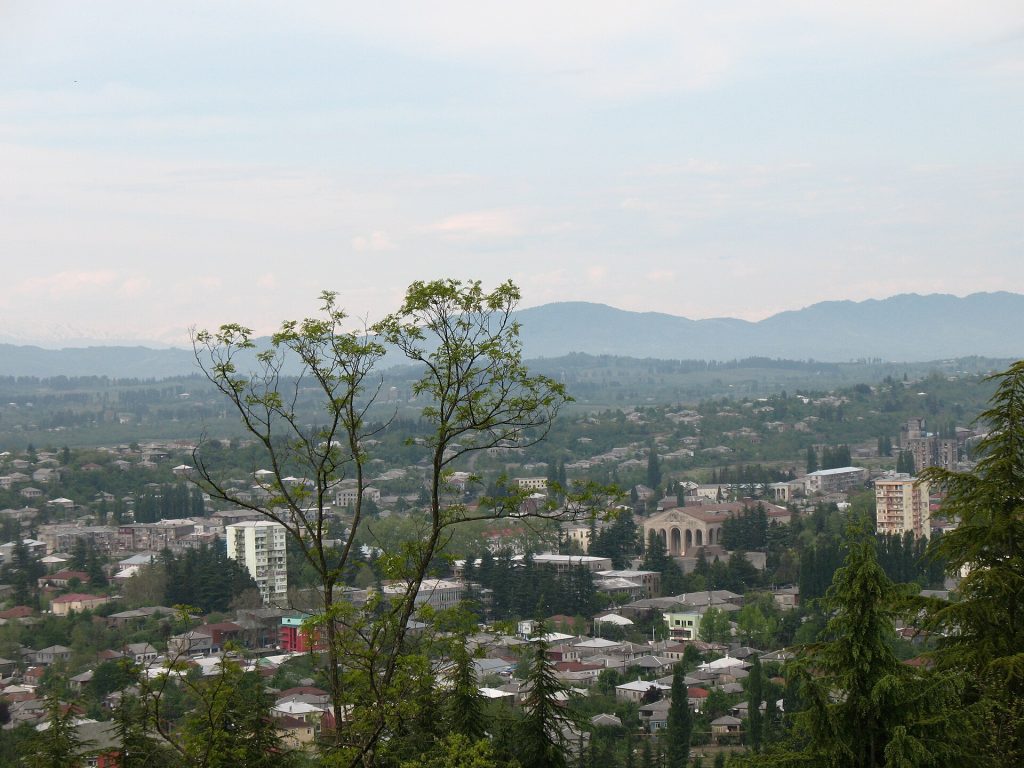
The festival is held in Musicians’ Park in the centre of Ozurgeti, an easy walk from the town’s main square. A visitor can expect rows of stalls from individual growers and small companies, tasting tables, a stage with regional musicians, and craft vendors selling items connected to tea and local produce. The event runs mainly in the afternoon and early evening, when temperatures ease after the heat of the Gurian summer day. There is no specific dress code or religious etiquette, since the festival is secular, though modest, comfortable clothing suited to a warm outdoor market is sensible.
Visitors with more time can extend the trip into Adjara to see the historic tea landscape itself: the plantation and experimental station at Chakva, near Batumi, where the earliest commercial Georgian tea was grown, and the tea terraces within the Batumi Botanical Garden, which preserve plantings from the same era. Both make a logical day-trip pairing with the Ozurgeti festival.
Travel with GTour
The Batumi & the Ajara Mountains — 2 Days tour passes within easy reach of Ozurgeti, allowing a short detour to Musicians’ Park if dates align with the late-July tea festival, while Georgia in 10 Days — Tbilisi to Svaneti to the Sea can be adjusted to include Guria on its route toward the coast. A GTour travel expert designs the exact route around the guest’s dates.
Did you know
- By the 1980s, Georgian plantations supplied the great majority of tea consumed across the entire Soviet Union, an output later remembered mainly for quantity rather than refinement.
- The Chinese specialist remembered in Georgia as Lau Jan Jau helped establish plantations at Chakva in 1893, introducing processing methods still referenced by growers today.
- Guria and Adjara lie near the northern limit of latitudes where tea is grown commercially anywhere in the world.
- Many Soviet-era tea terraces across Guria were abandoned within a decade of 1991, when the centrally planned market for Georgian tea disappeared almost overnight.
- Recent small-batch Georgian teas, grown on reclaimed gardens, are increasingly marketed on quality and single-estate character rather than the bulk standards of the Soviet period.
Practical tips for visitors
Ozurgeti is most easily reached from Batumi or Kutaisi by road, with marshrutka minibuses and taxis covering the roughly one- to two-hour journeys; travellers flying in should use Batumi or Kutaisi airports as the nearest gateways. Late July on the Black Sea coast and in the Gurian lowlands is hot and humid, with a chance of short afternoon downpours, so light clothing, sun protection and a compact rain layer are worth packing. Festival entry to the park is typically free, while tastings and purchases are paid directly to the growers; confirm the exact festival dates and programme with the Ozurgeti municipal administration shortly before travelling, since the schedule is set annually rather than fixed in advance. Accommodation in Ozurgeti itself is limited to guesthouses and small hotels, so many visitors prefer to base themselves in Batumi and make the festival a day trip.
Combine it with
The tea festival pairs naturally with a visit to the historic plantations and botanical gardens of Adjara, Guria’s coastal neighbour and partner in the same tea-growing tradition, and with a wider loop through Imereti, the inland region through which most road and rail routes between Tbilisi and the west pass.
Questions travellers ask
Is the Georgian Tea Festival a public holiday?
No. It is a local cultural and agricultural event, not a state holiday, so government offices, schools and businesses across Georgia operate normally during the festival days.
Why is the festival held in Guria rather than elsewhere in Georgia?
Guria, together with neighbouring Adjara, is where commercial tea growing in Georgia began in the late nineteenth century, and the region remains closely identified with the country’s tea heritage.
When exactly will the 2027 festival take place?
Organisers typically hold the festival on a weekend in late July; the proposed 2027 dates are 24–25 July, but these are to be confirmed closer to the time by the Ozurgeti municipal administration.
Is entrance to the festival free?
Walking through Musicians’ Park and browsing the stalls is generally free; individual tastings, tea purchases and some food or craft items are paid for separately.
Can I visit Georgian tea gardens outside the festival dates?
Yes. Historic plantations such as Chakva, near Batumi, and the tea terraces within the Batumi Botanical Garden can be visited year-round, independent of the festival schedule.
What is the difference between Gurian and Adjaran tea?
Both regions share the same tea-growing tradition, but Adjara’s coastal plantations around Chakva sit in a more humid microclimate than Guria’s inland slopes, and growers describe subtle differences in leaf character between the two areas.
How do I get to Ozurgeti from Tbilisi?
The most common options are a direct marshrutka minibus or a private transfer, with the journey taking roughly four to five hours by road; travellers can also fly into Kutaisi or Batumi and continue overland in a shorter trip.
What should visitors buy as a souvenir?
Locally grown and processed black or green tea sold directly by Gurian or Adjaran producers is the natural souvenir, along with small craft items typically available at the festival’s market stalls.
Sources
- Georgian National Tourism Administration
- Ministry of Culture and Sport of Georgia
- Ministry of Environmental Protection and Agriculture of Georgia
- National Statistics Office of Georgia
- Agenda.ge
- Georgia Today
Plan your Georgia
Want to be in Georgia for Georgian Tea Festival? A GTour travel expert designs the itinerary around it and calls you back.
A tea picker works among lush tea bushes on a plantation in Guria, the region's historic tea country. · Photo: Giorgi Abdaladze / Wikimedia Commons, CC BY-SA 4.0
This page in other languages: Русский
GTour conciergeAsk anything about Georgia · we reply within hours