Archives


Ice Cream Festival in Georgia: dates, meaning and how to experience it
Next dates
17 July 2027 (to be confirmed) · Mtatsminda Park, Tbilisi. See the full events calendar and Georgia today for roads and weather.
What it is
The Ice Cream Festival, known locally as Naq’inis Pestivali (ნაყინის ფესტივალი), is a modern, secular, family-oriented summer event held in Mtatsminda Park, the hilltop amusement park above central Tbilisi. The Georgian word naq’ini means “ice cream”; it derives from q’inuli, meaning “ice” or “frost,” so the festival’s name translates literally as something close to “the ice-thing festival” — a plain, functional name for what is in practice an afternoon of sampling, music and play rather than a solemn observance.
Unlike Georgia’s church feasts and saints’ days, this festival carries no religious calendar and no fixed date rooted in antiquity. It is celebrated by Tbilisi residents, suburban families, and visitors who happen to be in the city in mid-July, drawing on Georgia’s long dairy tradition — most notably matsoni, the fermented milk that underlies much of the country’s frozen-dessert culture — while presenting it in a thoroughly contemporary, municipally organised format aimed chiefly at children and young families.
Historical background
- Medieval period — Georgian highland and lowland communities developed fermented dairy products, above all matsoni, as a staple of the rural diet; the practice is described in later travellers’ accounts and ethnographic records rather than in a single founding text.
- 1905 — the Mtatsminda funicular opens, carrying passengers from the lower city to the plateau and creating Tbilisi’s principal hilltop leisure ground, the site where the modern park and its festivals now stand.
- Early-to-mid 20th century — the plateau park is developed with fairground attractions, pavilions and viewing terraces, becoming a fixture of Tbilisi civic and family life through the Soviet period.
- 1990s — the funicular and park fall into disrepair amid the economic hardship that followed Georgian independence.
- 2000s–2010s — the funicular and Mtatsminda Park undergo renovation under Tbilisi City Hall, restoring rides, a Ferris wheel and public spaces for city-sponsored events.
- 2010s — the park begins hosting themed seasonal festivals as part of Tbilisi’s municipal summer events calendar; an ice-cream-themed family day becomes one of the recurring warm-weather fixtures.
- 2020s — the festival continues on an annual, organiser-confirmed basis each July, typically listed on Tbilisi City Hall’s and national tourism bodies’ event calendars.
- 2026–2027 — organisers indicate the next edition for mid-July 2027, with the exact date to be confirmed closer to the season.
Mtatsminda (“Holy Mountain”) has carried religious and literary significance for centuries, home to the Church of St David and, later, the Pantheon of Writers and Public Figures. The park that now hosts the Ice Cream Festival sits on this same historic ridge, a setting that long predates the event itself and that gives the festival an unusually scenic backdrop — the city of Tbilisi laid out below the funicular terminus — even though the festival’s own history is recent and administrative rather than ancient.
The festival should be understood as part of a broader pattern in Tbilisi’s post-2000s civic life: the municipal government and national tourism authorities have increasingly used renovated public spaces, including Mtatsminda Park, Rike Park and the Old Town squares, to stage recurring themed events — jazz weekends, open-air cinema, wine festivals, and family days such as this one — as a way of drawing both residents and visitors into restored public infrastructure during the warmer months.
Meaning and traditions
There is no liturgy, fasting rule or formal ritual attached to the Ice Cream Festival. What visitors encounter instead is a cluster of stalls — typically run by Georgian dairies, artisan ice-cream makers and local cafés — offering tastings and sales of naq’ini in flavours ranging from classic vanilla and chocolate to versions built on matsoni or fresh regional fruit. Children’s entertainment, face painting, live music and sometimes a sampling or “biggest sundae” competition round out the programme, alongside the park’s permanent attractions: the Ferris wheel, carousel rides and the panoramic terrace overlooking the Mtkvari valley.
Georgian terms worth knowing: naq’ini (ice cream), matsoni (a tangy, home-fermented yogurt central to Georgian cuisine), and parki (park). There are no significant regional variations of this particular festival, since it is specific to Mtatsminda Park in Tbilisi; smaller cities occasionally stage their own summer dairy or sweets events, but none carries the same scale or the funicular-and-hilltop setting that defines the Tbilisi edition.
When it happens
The festival is scheduled in mid-July each year, usually on a single weekend day, but it has no fixed civil date — organisers (typically Tbilisi City Hall in coordination with Mtatsminda Park management) confirm the exact day only a few weeks in advance, depending on weather, park maintenance schedules and the broader summer events calendar. It is not a public holiday: government offices, banks, churches and shops in Tbilisi operate on normal hours regardless of the festival.
The 2026 edition has already taken place by the time of writing (25 October 2026), though its precise date was not widely archived outside municipal listings. The next edition is provisionally set for 17 July 2027, to be confirmed. Travellers planning a visit around that date should check the current listings on Georgia’s national tourism portal or Tbilisi City Hall’s website closer to the time, since the date can shift by a week or more.
Where to experience it
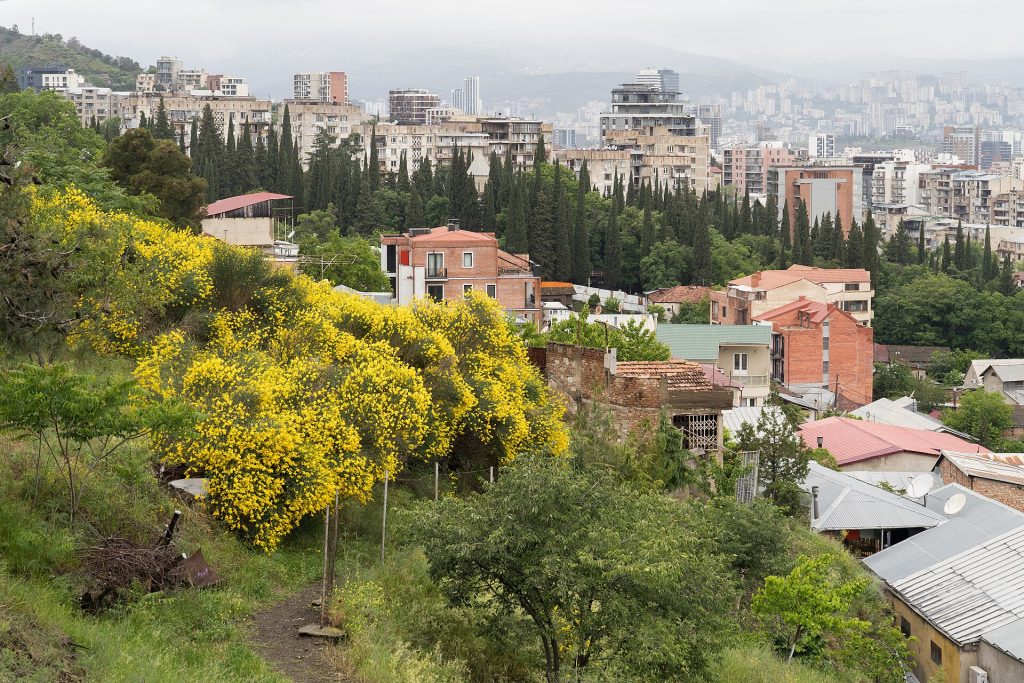
Mtatsminda Park occupies the plateau above central Tbilisi, reached by the historic Mtatsminda Funicular from its lower station near Chonkadze Street (close to Freedom Square and Rustaveli Avenue), or by taxi along the winding mountain road. The funicular ride itself, rising steeply above the Old Town and the Mtkvari River, is part of the experience and offers the first wide view over the city before visitors even reach the festival grounds.
On festival day, expect the park’s central plaza and promenade to be lined with dairy and sweets stalls, with queues forming around the most popular vendors by early afternoon. Live music, children’s activities and the park’s permanent rides run alongside the tastings. Many visitors combine the festival with a visit to the nearby Pantheon of Writers and Public Figures and the Church of St David (Mamadaviti); as with any functioning Georgian Orthodox church, modest dress — covered shoulders and, for women, a head covering if entering the sanctuary — is appropriate there, even though no such etiquette applies to the secular festival itself. Evenings near sunset offer the clearest views over the city and somewhat cooler temperatures than the midday peak of a Tbilisi July.
Travel with GTour
The Tbilisi & Mtskheta — The Essential First Day tour visits Mtatsminda Park on its first day in the capital, making it simple to coincide with the mid-July festival, while Georgia in 10 Days — Tbilisi to Svaneti to the Sea opens in Tbilisi before heading onward, allowing a short stop near the park if timing allows. A GTour travel expert designs the route around the guest’s dates, adjusting the Tbilisi days so the festival can be included once confirmed.
Did you know
- The Georgian word for ice cream, naq’ini, is built from q’inuli, meaning “ice” or “frost.”
- The Mtatsminda Funicular, opened in 1905, was among the earliest mountain funicular railways built in the Caucasus region.
- Matsoni, the fermented milk that flavours many Georgian ice creams, drew the interest of early twentieth-century microbiologist Ilya Mechnikov, who studied Caucasian and Balkan fermented dairy in his research on lactic bacteria and longevity.
- Mtatsminda (“Holy Mountain”) takes its name from churches and hermitages that have occupied the ridge since the early medieval period, including the Church of St David.
- The same hilltop plateau that hosts the festival is also home to the Pantheon of Writers and Public Figures, the burial place of numerous Georgian cultural figures.
Practical tips for visitors
Reach Mtatsminda Park via the funicular (the classic and most scenic route), by taxi or ride-hailing app, or on foot via park paths from Vake for the more energetic. July in Tbilisi is hot during the day, so light clothing, sun protection and water are advisable; the plateau can be a few degrees cooler and breezier than the city centre, which is pleasant by early evening. Entry to the park and most festival stalls is typically free, with individual rides, tastings and purchases paid separately; no advance booking is generally required for the festival itself, though it is worth confirming opening hours on the day, since large family crowds can build quickly around midday. Stroller access on parts of the hillside terrain is limited, so visitors with young children or mobility concerns should plan routes accordingly.
Combine it with
A Mtatsminda visit pairs naturally with wider exploration of Tbilisi’s Old Town and riverside parks on the same day. Travellers extending their stay often continue to the dairy and wine landscapes of Kakheti, or north into the mountain villages of Mtskheta-Mtianeti, where traditional matsoni-making and highland dairy herding can still be observed firsthand.
Questions travellers ask
Is the Ice Cream Festival a public holiday in Georgia?
No. It is a municipal family event with no effect on government, bank or church operating hours; shops and offices across Tbilisi function normally on the day.
How do I get to Mtatsminda Park?
The most scenic route is the historic funicular from its lower station near Chonkadze Street, close to Freedom Square. Taxis and ride-hailing apps can also reach the park directly by road.
Is entry to the festival free?
Entry to Mtatsminda Park and the festival grounds is generally free; individual rides, tastings and purchases from stalls are paid separately.
What ice cream flavours are typically available?
Expect classic flavours alongside versions built on Georgian dairy traditions, such as matsoni-based ice cream, along with seasonal fruit flavours from local producers.
Is the festival suitable for young children?
Yes. It is designed primarily as a family day out, with children’s entertainment, face painting and the park’s permanent rides running alongside the food stalls.
What happens if it rains on the scheduled day?
Organisers may shorten, postpone or adjust the programme in poor weather; checking Tbilisi City Hall or national tourism listings close to the date is the most reliable way to confirm status.
What is the exact date for 2027?
Organisers have provisionally indicated 17 July 2027, but this is to be confirmed closer to the season; travellers should check official listings a few weeks in advance.
What else can I see at Mtatsminda the same day?
The Pantheon of Writers and Public Figures and the Church of St David (Mamadaviti) sit on the same plateau, along with panoramic terraces over the city — all easily combined with a festival visit.
Sources
- Georgia Travel (national tourism portal)
- Tbilisi City Hall
- Agenda.ge (Georgian news and events)
- Georgia Today
- Georgian National Tourism Administration
- National Statistics Office of Georgia
- Georgian Patriarchate
Plan your Georgia
Want to be in Georgia for Ice Cream Festival? A GTour travel expert designs the itinerary around it and calls you back.
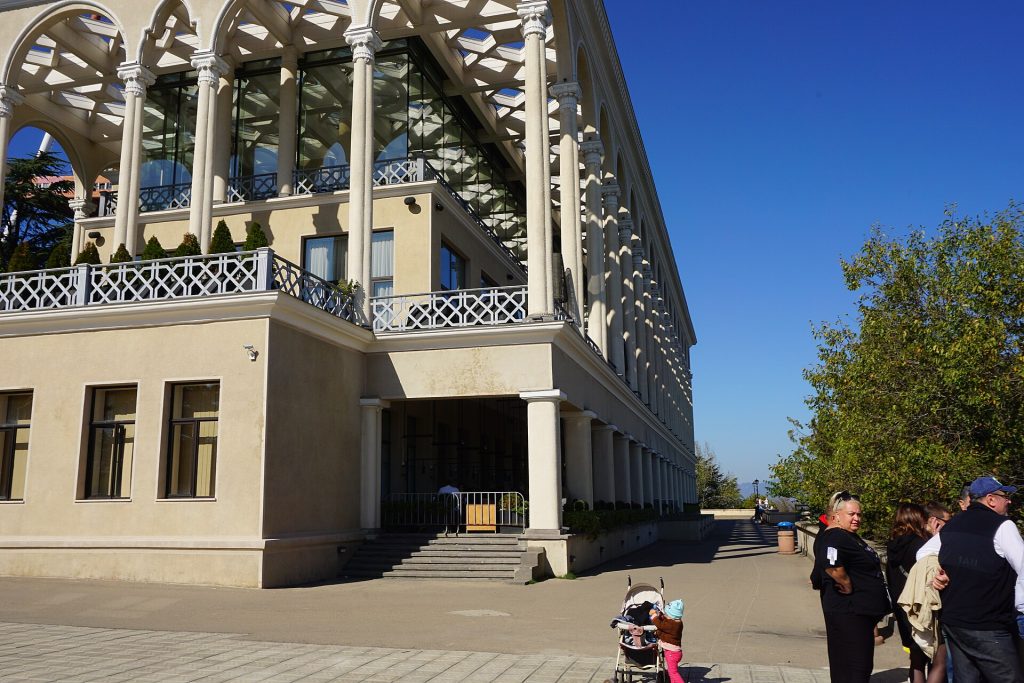
The amusement-area pavilion in Mtatsminda Park, where the Ice Cream Festival is held each summer. · Photo: Andrew Milligan sumo / Wikimedia Commons, CC BY 2.0
This page in other languages: Русский
GTour conciergeAsk anything about Georgia · we reply within hours