Archives


Batumoba in Georgia: dates, meaning and how to experience it
Next dates
24 April 2027 – 25 April 2027 (to be confirmed) · Old Batumi, Europe Square and the boulevard. See the full events calendar and Georgia today for roads and weather.
What it is
Batumoba is the municipal holiday of Batumi, Georgia’s main Black Sea port and the capital of the Adjara Autonomous Republic. The name is built from “Batumi” plus the Georgian suffix -oba, an ending used across the language to form the names of feast days and celebrations attached to a place, a saint or an idea — the same ending appears in Tbilisoba (Tbilisi‘s city day) and in church feasts such as Alaverdoba or Svetitskhovloba. Read literally, Batumoba means something close to “the day of Batumi” or “Batumi’s own feast,” a civic rather than a religious observance.
The holiday is celebrated above all by the residents of Batumi and the wider Adjara region, but in practice it draws a mixed crowd: Georgians from inland provinces who come to the coast for the weekend, the Adjaran diaspora returning for family visits, and foreign visitors whose travel dates happen to coincide with the festival. There is no liturgical dimension to Batumoba — unlike the saints’ days that share its grammatical ending, it is organized by the city hall and the regional government as a secular celebration of civic identity, maritime trade and the city’s tourism economy.
Historical background
- 8th–6th century BC — Greek sailors and colonists reached the eastern Black Sea littoral, within the lands of ancient Colchis; ancient geographers recorded a harbor called Bathys (“deep”) near the site of present-day Batumi.
- 1878 — under the Treaty of Berlin, Batumi passed from Ottoman to Russian imperial administration, opening a period of rapid urban growth.
- 1883 — a railway linking Batumi to the Baku oilfields was completed, and the port began large-scale oil exports, transforming the small town into an industrial harbor.
- 1886 — Batumi was declared a free port (porto franco), drawing foreign consulates, merchant houses and migrant communities from across the Black Sea basin.
- 1880s–1890s — the seaside boulevard, one of the first planned public promenades on the Georgian coast, was laid out along the new embankment.
- 1921 — the Adjara Autonomous Soviet Socialist Republic was established within Soviet Georgia, with Batumi as its capital.
- late Soviet period — Georgian cities adopted annual “city day” festivals on the pattern of Tbilisoba, first held in 1979; Batumi’s version became known as Batumoba.
- 2004–2012 — redevelopment of the Batumi waterfront, Old Town and Europe Square under national and municipal tourism programs gave Batumoba its present scale of open-air concerts, fairs and fireworks.
- 2020s — the festival’s calendar date has shifted between early autumn and spring; the city and region now confirm the exact dates separately each year.
Batumoba does not commemorate a single battle, charter or saint. Instead, it gathers the many layers of the city’s history — Colchian port, Ottoman frontier town, Russian imperial free port, Soviet Adjaran capital, and present-day Georgian resort — into one annual civic festival. This is typical of how Georgian cities built their modern calendars in the late twentieth century, borrowing the “-oba” format of older religious feasts to create new, secular occasions for local pride.
The port’s commercial history explains much of what the festival still celebrates. As a free port from 1886, Batumi attracted Greek, Armenian, Jewish, Persian and Russian merchants alongside Georgians and Adjarans, and this mixed, trading character has remained part of the city’s self-image even as its economy shifted from oil export to seaside tourism after Georgian independence. Batumoba, with its fairs, concerts and maritime setting, is in part a modern echo of that cosmopolitan port culture, reframed as a holiday for residents and visitors alike.
Meaning and traditions
A typical Batumoba weekend combines open-air concerts on Europe Square (Evropis Moedani) and along the boulevard (Batumis Bulvari) with craft and food fairs, folk performances and a fireworks display over the sea. Adjaran ensembles often perform khorumi, a vigorous men’s dance historically associated with Adjara, Guria and Imereti, alongside Georgian and Adjaran polyphonic singing. Food stalls sell acharuli khachapuri — the boat-shaped Adjaran cheese bread topped with a raw egg and butter — along with grilled Black Sea fish, sulguni cheese and regional wine and chacha (grape-pomace spirit) for tasting.
A long table set for guests, whether in a restaurant or a private home, is called a supra, and hospitality around shared food remains central to how the holiday is experienced socially, even at public fairs. Children’s activities, sports events and sometimes a small boat parade or regatta on the bay add a maritime note that distinguishes Batumoba from inland city-day festivals.
Compared with Tbilisoba, which has a fixed autumn date and a longer institutional history, Batumoba is younger as a formal civic brand and its organizers have treated the calendar more flexibly, moving the festival between the end of summer and the start of spring depending on tourism planning. Other Georgian towns hold similar “-oba” city days, but Batumoba is distinguished by its coastal setting and the prominence of Adjaran, rather than purely Kartlian or Imeretian, folk material.
When it happens
Batumoba has no single fixed date defined by church calendar or statute. In practice, the City Hall of Batumi and the government of the Adjara Autonomous Republic announce the dates each year, and recent editions have alternated between early September, marking the close of the peak tourist season, and late April, marking its opening. For 2027 the date has been provisionally set for 24–25 April, though organizers describe this as subject to confirmation closer to the event; at the time of writing, dates for a 2026 edition had not been centrally confirmed. Travelers planning a visit around Batumoba should check the municipal and regional government channels in the weeks before travel.
Batumoba is a local, not a national, public holiday. Shops, banks and offices in Batumi generally operate on their normal schedule, though the streets around Europe Square and the boulevard are typically closed to traffic during the main concerts and the fireworks finale.
Where to experience it
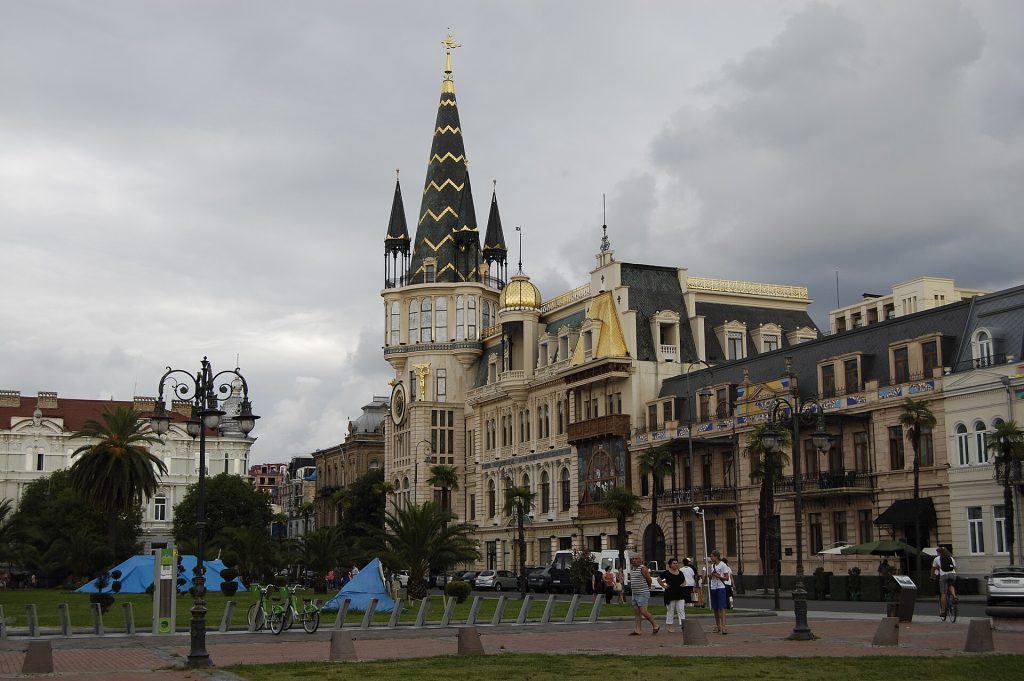
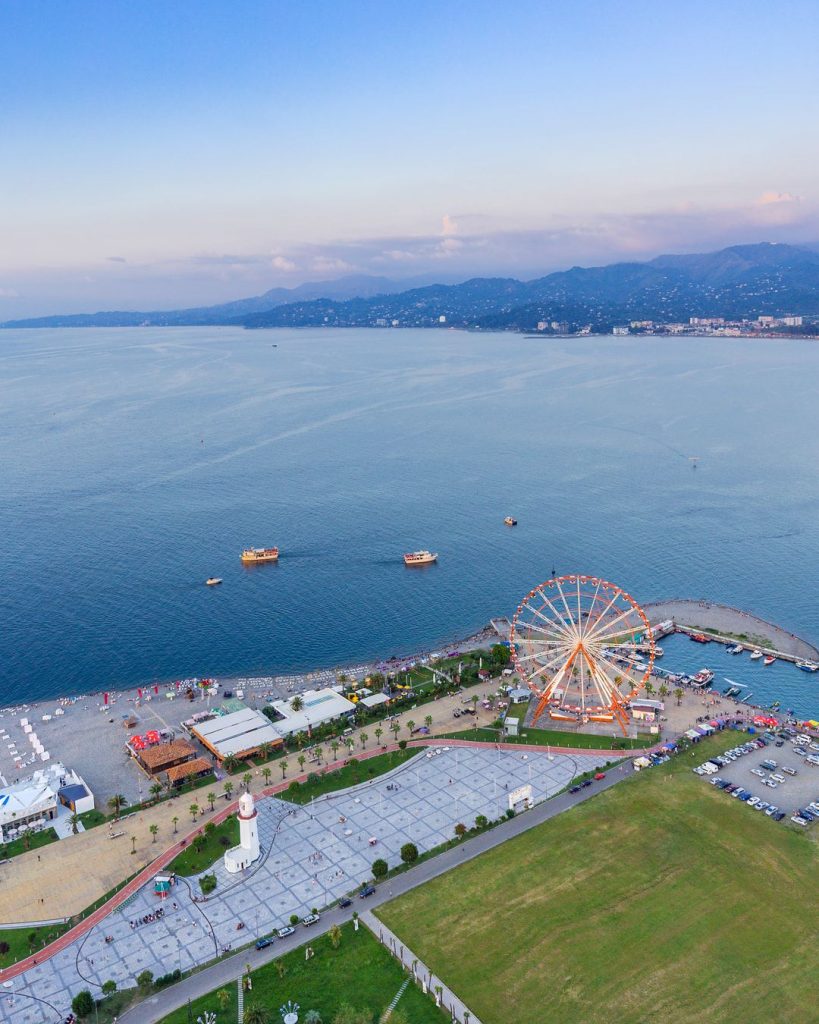
The festival is centered on three connected spaces in Old Batumi: Europe Square, with its statue of Medea and surrounding cafés; the seaside boulevard, which runs for several kilometers along the shore and hosts most of the concert stages and fairs; and the streets of the Old Town in between, where craft stalls and food vendors cluster. Main stage concerts usually run through the evening, with fireworks fired from the waterfront after dark, visible along most of the boulevard.
Visitors can expect large but manageable crowds, family groups, and a mix of amplified pop and folk music rather than quiet ceremony. There is no specific religious etiquette for the festival itself, but the Cathedral of the Nativity of the Virgin and other working churches near the Old Town should be approached with the usual courtesies — modest dress and quiet behavior — if visited during the festival days.
Travel with GTour
The Batumi & the Ajara Mountains — 2 Days tour begins right in Old Batumi near Europe Square and the boulevard, so its first day can align with Batumoba’s concerts and fireworks if the city confirms late-April dates, and the longer Georgia in 10 Days — Tbilisi to Svaneti to the Sea route passes through Batumi on its way to the coast, allowing a similar overlap. A GTour travel expert will design the route around the guest’s dates once the festival schedule is confirmed.
Did you know
- The -oba ending in “Batumoba” is the same grammatical suffix used for Georgian saints’ feast days, linking a secular city festival to the structure of the religious calendar.
- Batumi operated as a free port (porto franco) for several decades in the late nineteenth century, becoming one of the busiest oil-export harbors on the Black Sea.
- Batumi’s seaside boulevard, first laid out in the 1880s, is among the oldest planned public promenades on the South Caucasus coast.
- Adjara is one of only two autonomous republics within Georgia, the other being Abkhazia, a status rooted in its 1921 founding as a Soviet autonomous republic.
- Unlike most Georgian city days, Batumoba’s date has moved between early autumn and spring in recent years, reflecting shifts in tourism-season planning rather than a fixed historical anniversary.
Practical tips for visitors
Batumi is reached by air through Batumi International Airport, or by rail or road from Tbilisi; timetables for the Tbilisi–Batumi train are published by Georgian Railway. Because festival weekends coincide with either the start or end of the main tourist season, hotel rooms along the boulevard and in the Old Town fill quickly, and advance booking is recommended. Dress for the season: late April can bring mild, occasionally wet weather, while early September is typically warm and humid. Comfortable walking shoes are useful for covering the boulevard and Old Town on foot, and cash is helpful for small stalls at the fair. Expect pedestrian-only zones and some road closures around Europe Square and the boulevard during the main concerts and fireworks.
Combine it with
A Batumoba visit pairs naturally with a longer tour of Adjara’s coastline and highland villages, a stop in Imereti on the road toward Kutaisi, or an extension into Samtskhe-Javakheti for the spa town of Borjomi and the mountain fortresses further inland.
Questions travellers ask
Is Batumoba a public holiday with closures across Georgia?
No. Batumoba is a local civic festival in Batumi and Adjara, not a national public holiday. Businesses outside Batumi are unaffected, and even within the city most shops and offices operate normally aside from traffic restrictions near the festival grounds.
What are the confirmed dates for 2026 and 2027?
At the time of writing, a 2026 edition had not been centrally confirmed, while 2027 has been provisionally scheduled for 24–25 April, subject to final confirmation by the municipality closer to the event.
Is entry to the festival free?
The open-air concerts, fairs and fireworks along the boulevard and Europe Square are generally free to attend; visitors only pay for food, drink and craft purchases at individual stalls.
How is Batumoba different from Tbilisoba?
Tbilisoba is an older, autumn-fixed city festival in the capital with a long institutional history dating to 1979, while Batumoba is a coastal counterpart whose date has shifted between spring and early autumn and which features more maritime and Adjaran folk elements.
Will roads be closed during the festival?
Yes, streets around Europe Square and the boulevard are typically closed to vehicle traffic during the main concerts and the evening fireworks; visitors staying nearby should expect to walk the last stretch to their hotel.
What food should visitors try during Batumoba?
Acharuli khachapuri, the Adjaran boat-shaped cheese bread with egg and butter, is the signature dish to try locally, alongside grilled Black Sea fish, sulguni cheese and regional wine or chacha served at festival stalls.
Is the festival suitable for families with children?
Yes, daytime hours feature craft fairs and children’s activities alongside the music, though evenings grow crowded and the fireworks finale is loud, which parents of very young children may want to plan around.
Can Batumoba be combined with wine touring in Kakheti?
Kakheti is on the opposite side of the country from Batumi, roughly a full day’s drive, so combining both in one short trip is impractical; most visitors treat a Batumoba weekend and a Kakheti wine tour as separate legs of a longer Georgian itinerary.
Sources
Plan your Georgia
Want to be in Georgia for Batumoba? A GTour travel expert designs the itinerary around it and calls you back.
Panoramic view of Europe Square, the heart of Batumi's city-day festivities. · Photo: Uwe Brodrecht / Wikimedia Commons, CC BY-SA 2.0
This page in other languages: Русский
GTour conciergeAsk anything about Georgia · we reply within hours