Archives


Egrisoba in Georgia: dates, meaning and how to experience it
Next dates
14 November 2026 – 15 November 2026 (to be confirmed) · Nokalakevi fortress, Senaki, Samegrelo. See the full events calendar and Georgia today for roads and weather.
What it is
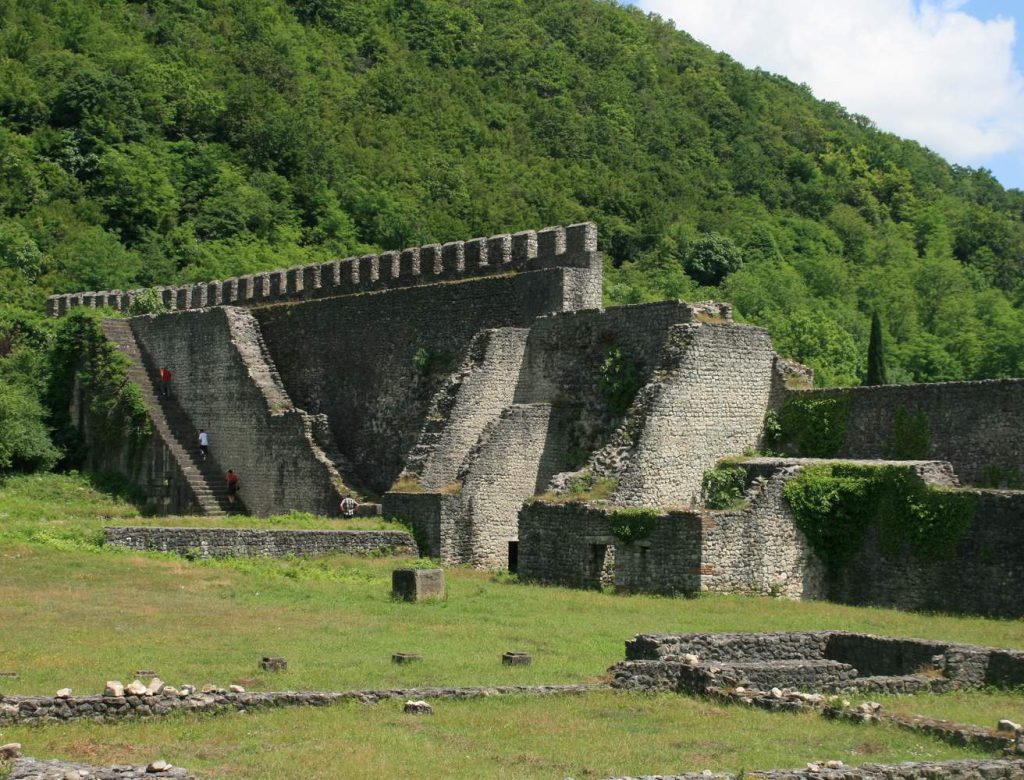
Egrisoba (ეგრისობა) takes its name from Egrisi, the ancient West Georgian kingdom that governed Samegrelo and much of the eastern Black Sea seaboard in late antiquity. The Georgian suffix “-oba” marks a day or festival dedicated to a place, saint or theme — the same pattern found in Tbilisoba, Mtskhetoba and Alaverdoba. Egrisoba therefore means, literally, “the Egrisi festival” or “the day of Egrisi.” Unlike those older church-linked feasts, it is a modern commemorative and cultural holiday, not a liturgical one, held each autumn at Nokalakevi, the fortified hill above the Tekhuri river that most historians identify with Archaeopolis, the wartime capital described by Byzantine writers.
The festival is organised by Senaki Municipality together with cultural institutions of the Samegrelo-Zemo Svaneti region. It brings together Megrelian folk ensembles, craftspeople, schoolchildren, local historians, members of the Megrelian diaspora who return for the occasion, and a growing number of domestic and international visitors drawn by the combination of archaeology and regional cuisine. For Samegrelo, Egrisoba functions as a statement of regional identity: an affirmation of the Megrelian language, cuisine and song within the physical setting of one of the longest-studied fortress sites in the Caucasus.
Historical background
- 8th–6th century BC — Greek traders and local Colchian communities establish settlements along the Black Sea coast; the kingdom of Colchis, ancestor of the later Samegrelo polities, enters Greek literature through the myth of the Golden Fleece.
- 1st century BC–1st century AD — Colchis fragments into smaller polities; Roman and later Byzantine writers refer to the successor kingdom of Lazica, known in Georgian sources as Egrisi, controlling the lowlands that include modern Samegrelo.
- 522 — King Tsate I of Lazica travels to Constantinople and is baptised, formally aligning Egrisi/Lazica with Byzantine Christianity under Emperor Justin I.
- 541–562 — The Lazic War between the Byzantine and Sasanian Persian empires is fought largely on Egrisi’s territory; the sixth-century historian Procopius of Caesarea describes the siege of Archaeopolis, a stronghold most scholars identify with Nokalakevi.
- 6th century — Extensive stone fortification walls, a citadel and a basilica are built at Nokalakevi, reflecting its status as a Byzantine-backed Egrisian capital.
- 1973 — The Anglo-Georgian Expedition begins systematic excavation at Nokalakevi, a collaboration that continues into the present century.
- Soviet and post-Soviet period — Nokalakevi is placed under state protection as an archaeological reserve and museum, today administered within the Georgian National Museum system.
- 21st century — Senaki Municipality establishes Egrisoba as an annual autumn festival at the fortress, pairing archaeological heritage with Megrelian folklore, food and craft; recent editions were held on 12 November 2023, 12 November 2024 and 14–15 November 2025.
Nokalakevi’s layered history — Colchian settlement, Byzantine-sponsored citadel, frontier fortress fought over by two empires — gives Egrisoba an unusual depth for what is, in practical terms, a young municipal festival. The site’s identification with Archaeopolis rests on the correspondence between Procopius’s description of the siege and the scale and date of the walls still visible on the hill, a reading supported by five decades of Georgian and British excavation. For visitors, this means the festival ground is not a reconstruction but an active research site, with trenches, exposed masonry and finds housed in the on-site museum.
The choice of name is deliberate. By calling the event “Egrisoba” rather than naming it for a saint or a harvest, Senaki and the wider Samegrelo region frame the festival as a claim on deep continuity — from the Colchian kingdoms of myth and the Christianised Lazica of the sixth century to the Megrelian-speaking communities of today. The Georgian National Museum, which oversees the Nokalakevi reserve, treats the site as a cornerstone of research into western Georgia’s antiquity, and the Colchis background that underlies Egrisi is among the better-documented chapters of the ancient Caucasus.
Meaning and traditions
Egrisoba combines an open-air folk programme with a crafts and food market set against the fortress walls. Megrelian vocal ensembles perform the region’s distinctive polyphonic singing style, traditionally described as livelier and more syncopated than the singing of eastern Georgia; dance groups perform Samegrelo’s variants of Georgian folk dance. Megrelian (margaluri nina), a separate Kartvelian language rather than a dialect of Georgian, is heard in speeches, poetry readings and song lyrics, and organisers often use the occasion to promote its teaching and preservation.
Food stalls serve Samegrelo’s signature dishes: elarji (a thick cornmeal mash melted together with sulguni cheese), gebzhalia (cheese rolls in a mint-yoghurt sauce), kuchmachi (spiced offal), satsivi and mchadi cornbread, usually with the region’s own churchkhela and fruit preserves on the side. Craftspeople display wood carving, pottery, weaving and metalwork typical of western Georgia. The programme generally includes guided walks over the citadel and lower town walls, short talks by museum archaeologists on the latest excavation season, and a closing concert. Regional comparison is useful: where Tbilisoba (Tbilisi) and Mtskhetoba (Mtskheta) each mark a city’s own history, Egrisoba is the only major “-oba” festival built explicitly around an ancient kingdom’s name rather than a single settlement or saint.
When it happens
Egrisoba has no fixed liturgical date; it is set each year by Senaki Municipality, usually in the second half of November, after the agricultural season ends and before winter weather closes in. Recent editions fell on 12 November 2023, 12 November 2024 and 14–15 November 2025. For 2026 the municipality has proposed 14–15 November, to be confirmed; a 2027 date has not yet been announced and is expected to follow the same mid-November pattern. Egrisoba is not a national public holiday: government offices, banks and schools in Tbilisi and elsewhere in Georgia operate normally, though some Senaki municipal offices and schools may adjust schedules locally on the festival day itself. Visitors should confirm the exact dates close to travel, since the municipality sets them only a few weeks in advance.
Where to experience it
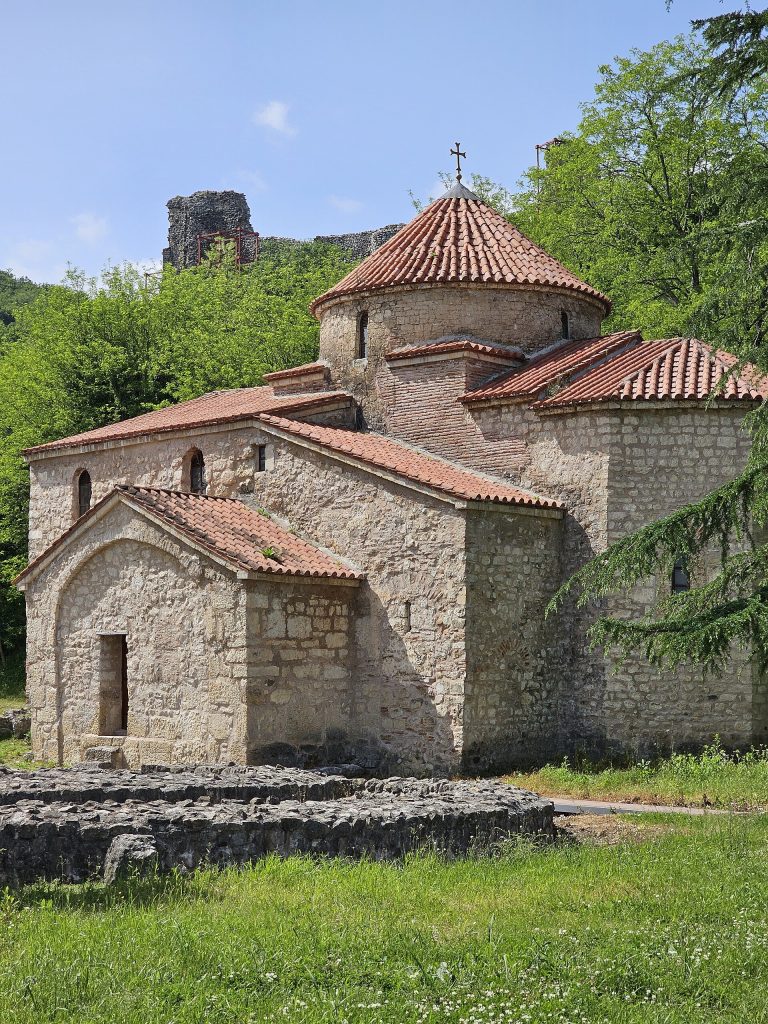
The festival takes place at Nokalakevi fortress, roughly 10 kilometres from the town of Senaki in Samegrelo, western Georgia, on a wooded hill above the Tekhuri river. Activity typically runs through the day, with an opening ceremony in the late morning, folklore performances and the crafts market through the afternoon, and a concluding concert toward evening. A small Orthodox church stands within the fortress walls; visitors entering it, whether during the festival or on an ordinary day, should dress modestly, with shoulders and knees covered and women’s heads covered if a service is in progress, and should ask before photographing inside. The archaeological terrain is uneven, with exposed foundations, steps and slopes, so comfortable, closed footwear is advisable for anyone planning to walk the citadel circuit.
Travel with GTour
The Georgia in 10 Days — Tbilisi to Svaneti to the Sea route runs through Samegrelo on its way toward the coast, allowing a stop at Nokalakevi fortress if travel falls in mid-November, while the Tbilisi & Mtskheta — The Essential First Day tour can be extended westward for travelers wishing to combine it with Egrisoba. A GTour travel expert will design the exact route and timing around the guest’s chosen dates.
Did you know
- Nokalakevi is widely identified by historians with Archaeopolis, the fortress-capital whose sixth-century siege was recorded in detail by the Byzantine historian Procopius of Caesarea.
- The site has been under continuous archaeological investigation by the Anglo-Georgian Expedition since 1973, one of the longest-running joint excavation projects in the Caucasus.
- Megrelian, spoken across Samegrelo, is a distinct Kartvelian language related to but not mutually intelligible with Georgian, and most speakers today are bilingual in both.
- The fortress walls at Nokalakevi enclose an unusually large area for an ancient Caucasian stronghold, divided into an upper citadel and a sprawling lower town.
- Local tradition links the Nokalakevi area, like the wider Colchis region, to the Greek myth of Jason and the Golden Fleece, though this connection is legendary rather than archaeologically confirmed.
Practical tips for visitors
The nearest international gateway is Kutaisi International Airport, roughly 90 minutes by road from Senaki; Senaki itself lies on the Tbilisi–Zugdidi/Poti road and rail corridor, with onward taxi or transfer of about 10 kilometres to the fortress. Mid-November weather in Samegrelo is cool and often wet, so visitors should bring a waterproof layer, warm clothing for evening and sturdy shoes for the archaeological terrain. There is no admission charge structure comparable to Tbilisi’s major museums, but a modest entrance or parking fee at the reserve is possible and should be confirmed locally. Because the exact festival date is only finalised a few weeks ahead by the municipality, travellers planning a trip around Egrisoba should check with Senaki Municipality, the Georgian National Museum’s Nokalakevi reserve, or a local tour operator shortly before departure, and book accommodation in Senaki or Zugdidi in advance, since lodging directly at the site is limited.
Combine it with
Samegrelo sits between several of western Georgia’s major regions, making Egrisoba easy to pair with a wider itinerary.
Sources
- Egrisoba Festival (Nokalakevi)
- Egrisoba Festival (Nokalakevi)
- Egrisoba Festival (Nokalakevi)
- Egrisoba Festival (Nokalakevi)
- Egrisoba Festival (Nokalakevi)
Plan your Georgia
Want to be in Georgia for Egrisoba? A GTour travel expert designs the itinerary around it and calls you back.
The ancient fortress walls of Nokalakevi, site of the Egrisoba festival. · Photo: Анна Ормоцадзе (Anna Ormotsadze)
Uploaded to ru.wikipedia b / Wikimedia Commons, CC BY-SA 3.0
This page in other languages: Русский
GTour conciergeAsk anything about Georgia · we reply within hours