Archives


Kutaisoba in Georgia: dates, meaning and how to experience it
Next dates
2 May 2027 · Kutaisi. See the full events calendar and Georgia today for roads and weather.
What it is
Kutaisoba is the annual city-day festival of Kutaisi, Georgia’s second-largest city and the historic capital of the Kingdom of Imereti. The name follows a familiar Georgian word pattern: the place name “Kutaisi” takes the suffix -oba, the same ending used to turn a saint’s name, a village or an institution into the name of its feast day or collective occasion — as in Tbilisoba (Tbilisi’s city day) or Alaverdoba (the feast of Alaverdi Monastery). Kutaisoba therefore means, loosely, “the day that belongs to Kutaisi” or “Kutaisi’s own occasion,” rather than translating as a single literal phrase.
The holiday is celebrated by residents of Kutaisi and the wider Imereti region, by Imeretian communities living elsewhere in Georgia and abroad, and by visitors drawn by the music, food and open-air atmosphere along the Rioni River. Unlike Georgia’s church feasts, Kutaisoba is a civic rather than a liturgical event: it commemorates the city itself, its deep antiquity, and its role as a royal, ecclesiastical and now administrative center, rather than a saint or a biblical episode.
Historical background
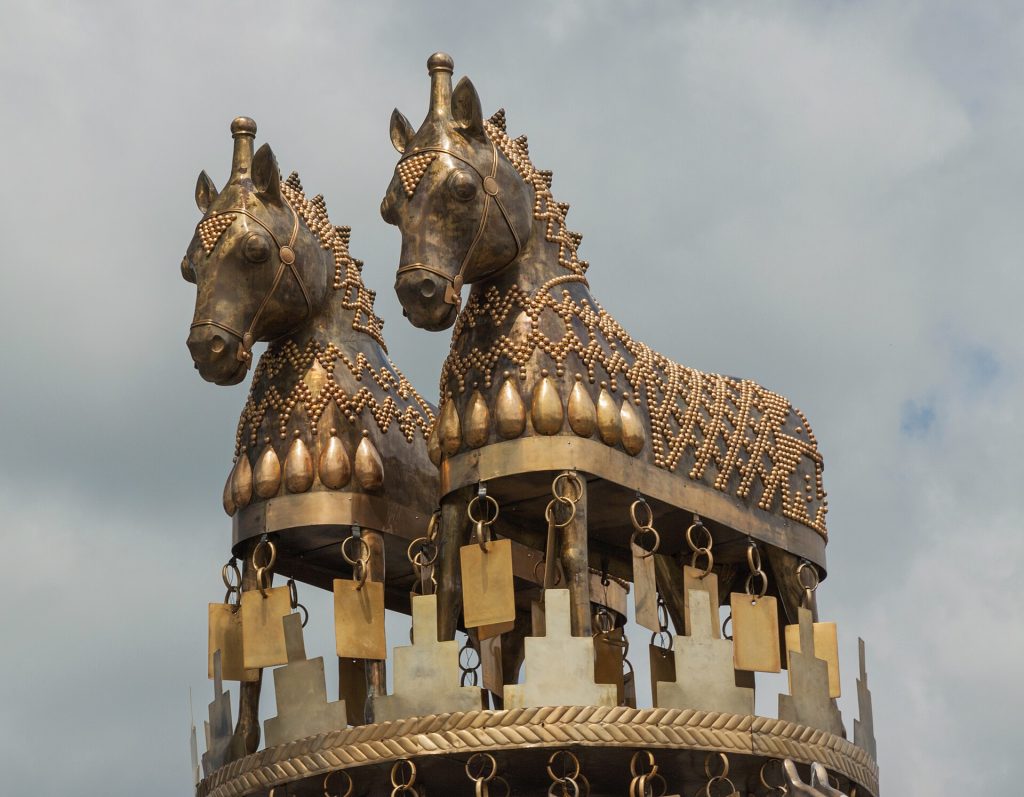
- 2nd millennium BCE — Classical tradition identifies Kutaisi, or a settlement on its site, with Aia, legendary capital of Colchis and the destination of Jason and the Argonauts in search of the Golden Fleece.
- 6th century BCE — Greek trading settlements appear along the eastern Black Sea coast while Colchis, centered on the fertile Rioni valley around Kutaisi, develops as an early Georgian polity.
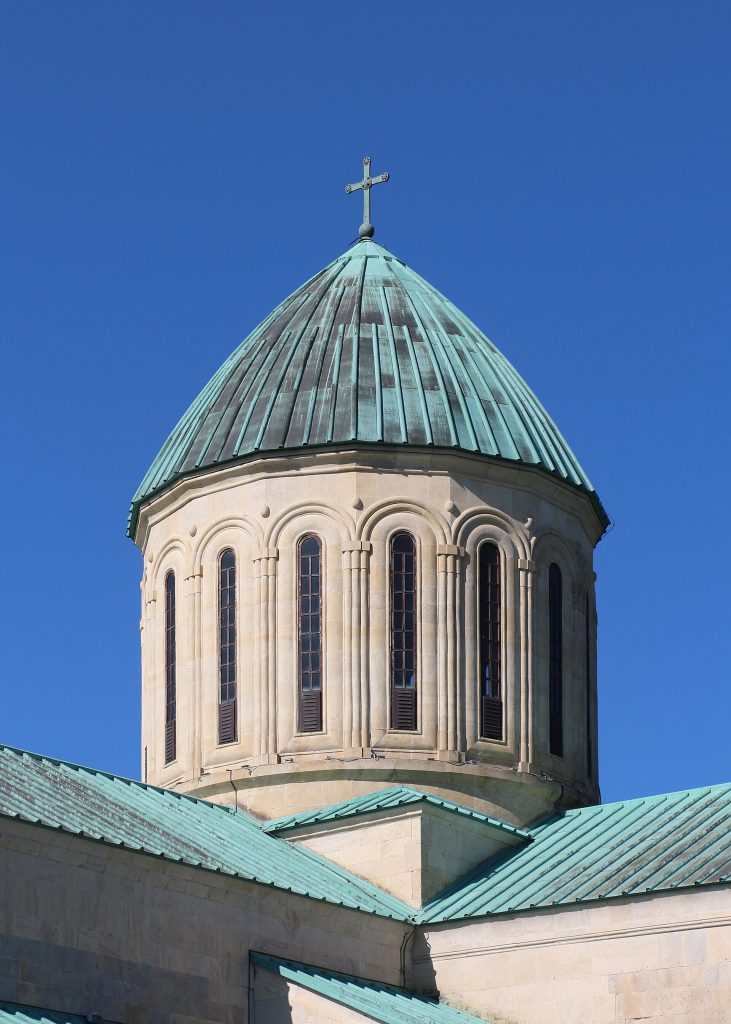
- 1003 — Bagrat III, the first king of a politically unified Georgia, is crowned, and Bagrati Cathedral is raised on Ukimerioni hill overlooking Kutaisi as a seat of royal and ecclesiastical authority.
- 1106 — King David IV the Builder founds Gelati Monastery near Kutaisi, which becomes a leading center of Orthodox theology, manuscript copying and Neoplatonic scholarship in the medieval Caucasus, per UNESCO’s World Heritage listing.
- 1259–1810 — Following the fragmentation of the unified Georgian crown, Kutaisi serves as capital of the independent Kingdom of Imereti.
- 1810 — The Kingdom of Imereti is annexed by the Russian Empire; Kutaisi becomes the administrative seat of the Kutaisi Governorate.
- 1994, extended 2008, revised 2017 — Gelati Monastery is inscribed on the UNESCO World Heritage List; the listing briefly included Bagrati Cathedral before the cathedral was removed in 2017 following reconstruction work judged to compromise its authenticity, documented by UNESCO.
- 2012–2019 — As part of a government decentralization policy, the Parliament of Georgia relocates to a purpose-built chamber in Kutaisi; plenary sessions later return to Tbilisi, reported at the time by Civil.ge.
- Today — Kutaisoba is marked every 2 May with concerts, craft and food fairs, sporting events and fireworks along the Rioni embankment, covered annually by outlets such as Agenda.ge and Georgia Today.
Kutaisi’s claim to civic celebration rests on an unusually long and layered history: a candidate site for the mythic Aia of the Argonaut legend, a Hellenistic and Roman-era hub of Colchian life, the coronation city of a unified Georgia, and later the royal seat of Imereti for over five centuries. Few Georgian cities can point to such a continuous thread of settlement and symbolic importance, and Kutaisoba is, in large part, a modern vehicle for remembering that continuity rather than a holiday handed down from antiquity itself.
The city-day format itself is a more recent civic invention. Tbilisoba, instituted in the Soviet period and expanded after independence, popularized the idea of a single autumn or spring day given over to concerts, crafts and open-air hospitality in a city’s historic quarter; Kutaisi, Batumi and other regional centers later developed their own versions tailored to local produce, dialects and music. Kutaisoba’s fixed date of 2 May is therefore administrative rather than religious — chosen by municipal authorities rather than fixed by the Orthodox calendar — and it sits within a broader annual rhythm of Georgian city and regional festivals that runs from spring wine and harvest events through to Tbilisoba in autumn.
Meaning and traditions
On Kutaisoba the Rioni embankment and the central Davit Agmashenebeli Square fill with stages for folk ensembles and contemporary performers, stalls selling ceramics, wood carving and embroidery, and food vendors offering the specialties of Imeretian cuisine. Visitors can expect khachapuri imeruli (the round, cheese-filled Imeretian khachapuri that gives its name to the country’s most familiar dish), lobio (bean stew), mchadi (cornbread), satsivi (walnut sauce with poultry) and local wines made from the Tsitska and Tsolikouri grape varieties grown in the surrounding lowlands.
Music is central to the day: Imereti is one of the regions most closely associated with Georgian polyphonic singing, recognized by UNESCO’s Intangible Cultural Heritage programme, and local choirs typically perform alongside brass bands, dance troupes and contemporary acts. Children’s competitions, sporting tournaments, exhibitions on the city’s history and evening fireworks over the Rioni round out a program that runs through the day and into the night. There is no fixed liturgy or set phrase associated with Kutaisoba comparable to a church feast; greetings are informal, generally “gilocav kalaqis dRes” — “congratulations on the city’s day.”
Because the holiday is civic, regional variation shows up mainly in emphasis rather than ritual: some years foreground the river and boat displays, others highlight craft markets or sport, and exhibitions at local museums and the Bagrati hill often tie the day’s program back to the Argonaut legend and the medieval kingdom of Imereti.
When it happens
Kutaisoba is observed on a fixed civil date, 2 May, each year, independent of the Orthodox Julian-based church calendar. In 2026 the date falls on Saturday, 2 May; in 2027 it falls on Sunday, 2 May. It is a municipal rather than a national public holiday: government offices, banks and most businesses across Georgia remain open as usual, though some streets along the Kutaisi embankment and central square are closed to traffic for the day’s events, and certain municipal services in Kutaisi itself may adjust hours.
Where to experience it
The main activity concentrates along the Rioni River embankment and Davit Agmashenebeli Square in central Kutaisi, with stages, fairs and fireworks visible from the White Bridge (Tetri Khidi) over the river. Visitors with time to extend the day should climb to Bagrati Cathedral on Ukimerioni hill for views over the city and the Rioni valley, and make the short drive to Gelati Monastery, still an active religious site as well as a UNESCO-listed monument. In both churches, modest dress is expected — covered shoulders and knees, and a headscarf is customary though not strictly enforced for women — and visitors should avoid photographing services in progress or walking through an active liturgy.
Did you know
- Kutaisi is among the oldest continuously inhabited cities in the Caucasus, with a documented history reaching back to the first millennium BCE.
- Classical tradition links Kutaisi to Aia, the legendary capital of Colchis in the myth of Jason and the Golden Fleece.
- Bagrati Cathedral was removed from UNESCO’s World Heritage List in 2017, while neighboring Gelati Monastery remains inscribed.
- Kutaisi briefly hosted the Parliament of Georgia between 2012 and 2019 under a decentralization policy before sessions returned to Tbilisi.
- Imereti, the region centered on Kutaisi, is one of the heartlands of Georgian polyphonic singing, a tradition recognized by UNESCO.
Practical tips for visitors
Kutaisi is reached directly via Kutaisi International Airport, served by low-cost European carriers, or by train and minibus from Tbilisi via Georgian Railway. Early May weather is mild, generally 15–22°C, with occasional rain, so a light jacket is advisable for evening events on the embankment. Accommodation in the city center should be booked ahead of 2 May, as rooms fill with domestic visitors attending the festival. Dress comfortably for walking and bring layers for riverside events after dark; if combining the day with visits to Bagrati Cathedral or Gelati Monastery, carry a scarf or shawl for church etiquette.
Combine it with
Kutaisi makes a natural base for exploring Imereti‘s wine villages and karst caves, and sits within reach of the high mountain villages of Racha and the Svan towers of Svaneti, both reachable as extended trips from the city.
Questions travellers ask
Is Kutaisoba a public holiday across Georgia?
No. It is a municipal celebration specific to Kutaisi; national offices, banks and most businesses elsewhere in Georgia operate normally on 2 May.
Do I need tickets for the concerts?
No. The main stages and fairs along the Rioni embankment and the central square are free and open to the public.
Is Kutaisoba connected to a religious feast?
No. Unlike feasts following the Georgian Orthodox calendar, Kutaisoba is a fixed civic date chosen by the city, commemorating Kutaisi’s history rather than a saint or biblical event.
What should I eat while I’m there?
Try Imeretian khachapuri, the round cheese-filled bread that originates from this region, along with lobio, mchadi cornbread and local Tsitska or Tsolikouri wines sold at festival stalls.
Can I visit Bagrati Cathedral and Gelati Monastery on the same day?
Yes. Both sites are within a short drive of central Kutaisi and can comfortably be combined with a visit to the Rioni embankment festivities in a single day.
Is the city crowded during Kutaisoba?
Central streets and the embankment are busy with local families and visitors, particularly in the evening around concerts and fireworks, though the city as a whole does not reach the density of Tbilisoba in the capital.
What is the weather like in early May?
Expect mild spring conditions, generally 15–22°C, with a chance of rain; layered clothing is recommended for daytime events and cooler evenings by the river.
How do I get from Tbilisi to Kutaisi for the festival?
Regular trains and minibuses run from Tbilisi to Kutaisi, a journey of roughly three to four hours; travellers flying into the country can also arrive directly via Kutaisi International Airport.
Sources
- UNESCO World Heritage – Gelati Monastery
- Georgian National Tourism Administration
- Civil.ge
- Agenda.ge
- Georgia Today
- Ministry of Culture, Sport and Youth of Georgia
- Georgian Railway
- UNESCO Intangible Cultural Heritage
Plan your Georgia
Want to be in Georgia for Kutaisoba? A GTour travel expert designs the itinerary around it and calls you back.
Downtown Kutaisi and the White Bridge over the Rioni River, the site of city-day festivities. · Photo: Kober / Wikimedia Commons, CC BY-SA 3.0
This page in other languages: Русский
GTour conciergeAsk anything about Georgia · we reply within hours