Archives


Lamproba in Georgia: dates, meaning and how to experience it
Next dates
10 February 2027 (to be confirmed) · Mestia and villages of Upper Svaneti. See the full events calendar and Georgia today for roads and weather.
What it is
Lamproba (ლამფრობა) takes its name from lamp’ari (ლამპარი), the Svan and Georgian word for a torch or resin-lit brand. The festival’s name therefore means, roughly, “the carrying of torches,” and that single image — a line of fire moving through a dark, snow-bound valley — is the whole of the event. It is celebrated exclusively by the Svan people of Upper Svaneti, the high mountain province in Georgia’s northwest, centered on the town of Mestia and the surrounding communities of Lenjeri, Kala, Ipari, Mulakhi and Ushguli.
Lamproba is not a single, synchronized national holiday like Easter or New Year; it is a cluster of village-level rites, each set and run by local elders, usually within the same general week but not on an identical date everywhere. Men and boys of each family carry bundles of birch bark to the family’s ancestral tower house or burial ground, light them after dark, and process with neighbors while firing rifles into the air, singing, and calling out the names of the community’s dead. The occasion blends an older, pre-Christian cult of ancestors and household fire with the Orthodox Christian calendar into which Svaneti was gradually absorbed, and it remains one of the clearest surviving windows onto highland Georgian religious life before and alongside the arrival of the church.
Historical background
- 4th century — Christianity becomes the state religion of the kingdom of Kartli under King Mirian III, beginning centuries of gradual Christianization of the highland provinces, including Svaneti.
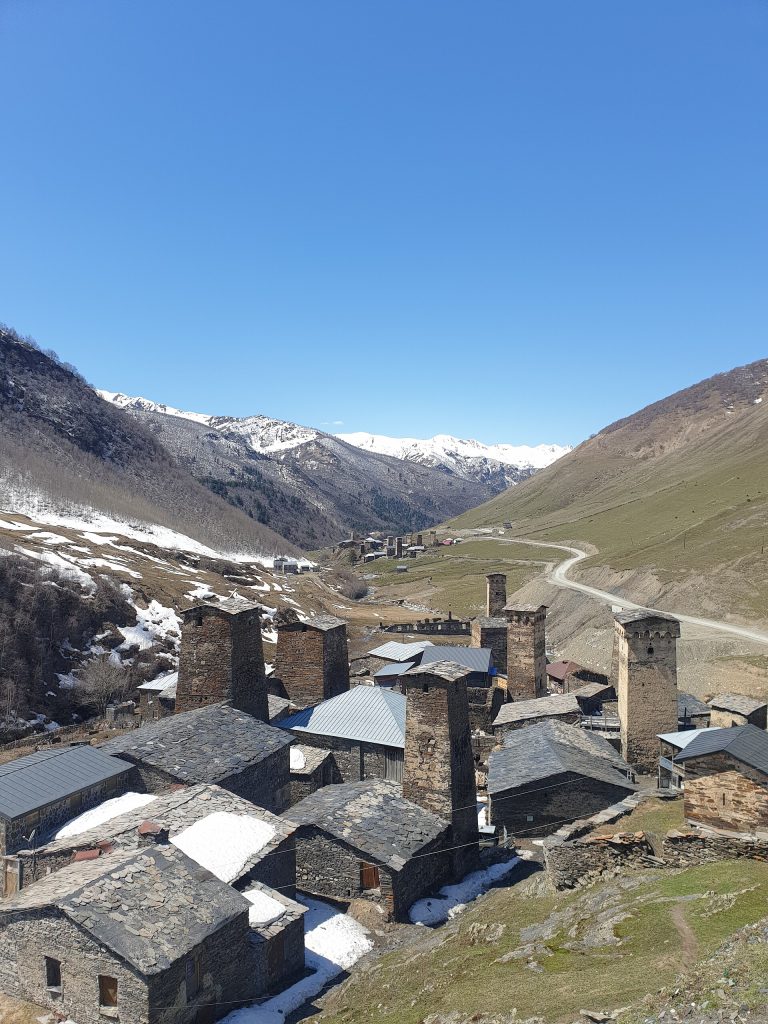
- 9th–11th centuries — Svan communities build the stone defensive tower houses (koshki) and frescoed village churches that still define Mestia and Ushguli, and which remain the physical focus of Lamproba processions today.
- Medieval period — Georgian Orthodox feast days reach Svaneti alongside local customary law (adat) and clan structures that the church did not fully displace; ancestor commemoration and fire ritual persist as household rather than parish practice.
- 19th century — Georgian and Russian ethnographers travelling into Svaneti record the region’s distinct calendar of communal feasts, including torch-lit winter rites, as part of wider documentation of Caucasian highland customs.
- 1921 — Sovietization of Georgia begins; religious observance and ancestor ritual are discouraged under Soviet antireligious policy for the following seven decades.
- 1991 — Georgia regains independence; village and family festivals suppressed or driven indoors under Soviet rule, Lamproba among them, are openly revived.
- 1996 — Upper Svaneti, including Mestia and Ushguli, is inscribed on the UNESCO World Heritage List for its medieval tower-house villages, the setting in which Lamproba is still held — see UNESCO’s Upper Svaneti listing.
- 2010s–present — The opening of Mestia’s airstrip, a paved road from Zugdidi, and the Hatsvali and Tetnuldi ski areas bring winter visitors to Svaneti for the first time in numbers, and Lamproba becomes visible to outsiders as both a living family rite and, cautiously, a cultural attraction.
Lamproba’s deepest layer predates any written record: fire carried to the dwellings of ancestors is a widespread motif across the Caucasus, and Svan tradition treats it as older than the church. What written sources can confirm is the long coexistence of two systems in Svaneti — Georgian Orthodox Christianity, which reached the valleys through Byzantine and Georgian missionary and royal patronage from the 4th century onward, and a parallel structure of clan shrines, customary judges, and household cults that Svaneti’s geographic isolation allowed to survive largely intact into the modern era. Lamproba sits at the seam between the two: it is usually timed with reference to the pre-Lenten period of the church calendar, yet its content — fire, firearms, the recitation of ancestors’ names, visits to towers rather than to church altars — belongs to the older layer.
The Soviet interruption is important to the story. For roughly seventy years, state atheism campaigns discouraged religious and ancestor-focused ritual across Georgia, and highland communities like those of Svaneti, already remote and difficult to police, maintained such customs quietly within families rather than publicly. The open, communal Lamproba that visitors can now watch in Mestia and its satellite villages is therefore both an ancient survival and a genuine post-1991 revival, reconstructed from family memory as much as from any single continuous public tradition.
Meaning and traditions
The central object is the lamp’ari, a torch bundled from strips of birch bark (and, in some villages, resinous pine splinters) gathered and dried in the preceding weeks. Each household prepares its own, and on the appointed night the men and older boys of a family light them at dusk and carry them first to the family tower or ancestral grave, then in a joined procession through the village. Gunfire — rifles or pistols fired into the night air — punctuates the march, a custom understood locally as both a salute to the dead and a driving-off of misfortune for the year ahead. Participants call out the names of relatives who have died in the preceding years, a form of ritual remembrance that functions as a spoken genealogy of the community.
Singing accompanies the procession in many villages, drawing on the region’s distinctive Svan polyphonic tradition, itself recognized internationally as part of Georgia’s broader heritage of multipart singing. Food and drink mark the close of the night rather than the ritual itself: Svan households typically offer kubdari (meat-filled flatbread), tashmijabi (a cheese-and-potato dish), and chacha (grape pomace spirit), along with Svan salt (svanuri marili), a spiced blend used at nearly every table in the province.
Because Lamproba is organized village by village rather than by a single religious authority, the details vary. In some communities the torches are carried only to the tower houses of each family; in others the procession converges on a central shrine or churchyard. Families who have lost a member within the past year are often visited individually, in a gesture that resembles both a wake and a blessing. Outsiders should understand that, whatever the external spectacle, the core of the evening remains a private family and clan rite rather than a public performance staged for visitors.
When it happens
Lamproba has no single fixed Gregorian date. It falls within the winter weeks that Svan communities associate with commemoration of the dead ahead of Great Lent, and each village’s elders set the exact night locally — commonly in the first half of February, though this can shift from year to year and from one village to the next. There is no central church or civil authority that issues one date for all of Svaneti.
In 2026 the festival was marked locally in mid-February, on dates set separately by each community. The next observance is provisionally expected around 10 February 2027, though this remains subject to confirmation by village elders closer to the date, and travelers planning a visit specifically for Lamproba should verify the night with a Mestia-based guide or guesthouse in late January. Lamproba is not a Georgian public holiday: government offices, banks, and most businesses in the rest of the country operate normally. In Mestia and its villages, however, family life is organized around the evening, some shops and guesthouses may close early, and the roads near the ceremonial sites fill with torchlight and gunfire rather than traffic.
Where to experience it
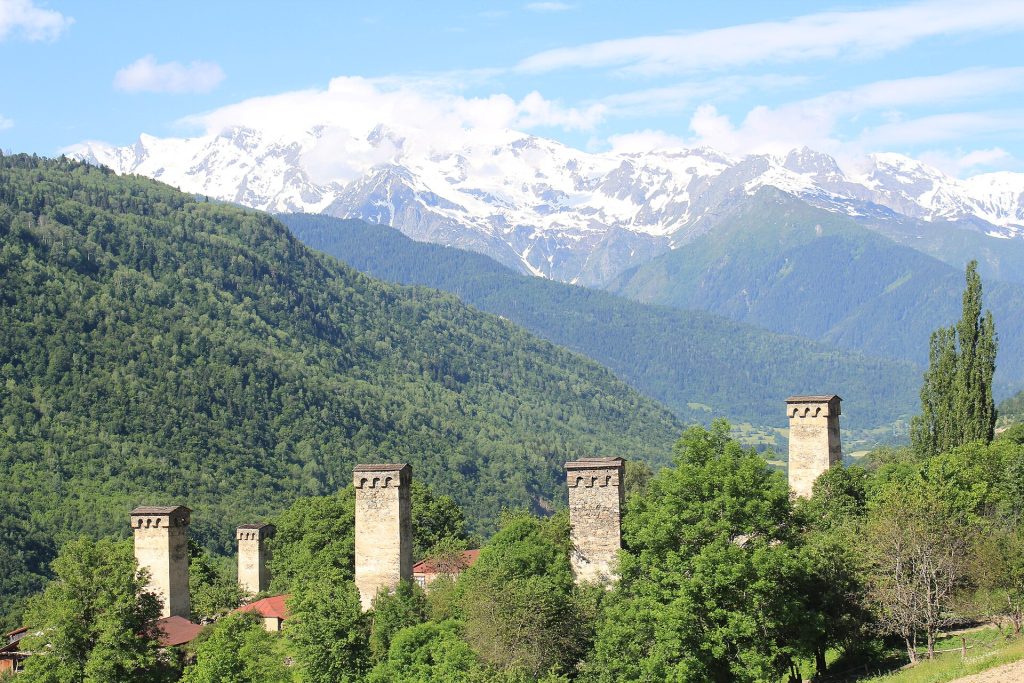
Mestia itself, with its cluster of medieval towers around Seti Square, is the easiest base from which to witness Lamproba, but much of the actual ritual happens in the surrounding villages — Lenjeri, Mulakhi, Ipari, Kala and the Ushguli community further up the Enguri valley. Processions generally begin after nightfall, once torches are lit, and move from family towers through narrow village lanes for an hour or more; temperatures are routinely well below freezing, and the only light is firelight and snow-glare.
Visitors are welcome to watch from village paths but should remember they are observing a family and clan rite, not a staged festival: ask a local host or guide before approaching a procession closely, avoid stepping between participants and the tower or grave they are approaching, and request permission before photographing individuals or household shrines. If invited into a home afterward, modest dress and a readiness to accept food and chacha as offered are appreciated; declining outright can be read as impolite, though moderation is understood. Inside any of Svaneti’s churches, women should cover their shoulders and head, and all visitors should remove hats and lower their voices.
Did you know
- Torches are traditionally made from birch bark rather than any single ceremonial material, chosen simply because it burns long and bright when dried.
- Ushguli, part of the Upper Svaneti World Heritage property, is frequently cited as among the highest continuously inhabited settlement clusters in Europe.
- Svaneti’s defensive tower houses, built mainly in the 9th to 12th centuries, originally protected families from blood feuds and invaders and now serve as the gathering points for Lamproba’s torches.
- Because each village sets its own night, it is possible in a single winter for Lamproba to occur on different dates in Mestia, Ushguli, and Mulakhi.
- Soviet-era antireligious policy pushed the festival out of public view for decades; its open revival dates only to the 1990s, after Georgian independence.
Practical tips for visitors
Mestia is reached from Kutaisi by a mountain road of roughly four to five hours, or occasionally by small aircraft when weather permits; winter driving requires caution, snow tires or chains, and current road-condition checks before departure. Dress for alpine winter conditions — insulated boots, layered clothing, hat and gloves — since the procession takes place outdoors after dark at altitude. Guesthouse accommodation in Mestia is limited and fills quickly in February because the date overlaps with the local ski season at Hatsvali and Tetnuldi, so booking well ahead is advisable. Expect some shops and family-run guesthouses to adjust hours around the festival evening itself, and confirm the exact village and night with a local contact rather than relying on a fixed calendar date.
Combine it with
A winter visit to Svaneti for Lamproba pairs naturally with the gateway city of Kutaisi and the wider Imereti region, through which most road and air access runs, and with the neighboring highland province of Racha, which offers its own mountain villages, churches, and winter scenery for travelers extending their stay in the Caucasus.
Questions travellers ask
Can tourists actually watch Lamproba?
Yes, visitors can observe processions from village paths and squares, but it remains a family and clan ritual rather than a public show, so a respectful distance and local guidance are expected.
Is it safe to attend at night in winter?
The main risks are cold, icy paths, and the gunfire that accompanies the procession; staying with a local host, dressing warmly, and keeping back from the firing line are the main precautions.
What should I wear or bring?
Heavy winter layers, waterproof boots, a headlamp or torch of your own, and gloves are essential; temperatures in the Svaneti highlands in February are routinely well below freezing after dark.
Is photography allowed?
Photographing the general scene is generally acceptable, but individuals and household shrines should not be photographed without asking first, since the rite is a private family commemoration.
How is the exact date decided each year?
Village elders in each Svan community set the night locally based on customary reckoning tied to the pre-Lenten period; there is no single civil or church authority fixing one date for all of Svaneti.
Is Lamproba a public holiday in Georgia?
No. It is not a national public holiday, and government offices, banks, and businesses elsewhere in the country operate normally; only Mestia and its villages organize daily life around it.
How do I get to Mestia in February?
Most visitors drive from Kutaisi, a four- to five-hour mountain journey best done with winter tires or chains, while small aircraft occasionally serve Mestia’s airstrip when weather allows.
Can a visitor join the procession or carry a torch?
Joining as an active participant is a family matter decided by locals; visitors are better served by watching respectfully and accepting any invitation extended by a host rather than inserting themselves into the rite.
Sources
- UNESCO World Heritage listing for Upper Svaneti
- Georgian National Tourism Administration
- Georgian Ministry of Culture, Sport and Youth
- Georgian Orthodox Patriarchate
- Georgian Road Department (travel conditions)
Plan your Georgia
Want to be in Georgia for Lamproba? A GTour travel expert designs the itinerary around it and calls you back.
Traditional Svan tower houses in Mestia, the main town of Upper Svaneti and center of the Lamproba torch festival. · Photo: Anne Sande / Wikimedia Commons, CC BY 4.0
This page in other languages: Русский
GTour conciergeAsk anything about Georgia · we reply within hours