
By David Kiknadze, Transport & Openings Reporter · 16/10/2026
Last checked by the GTour desk on 16 October 2026. Rules, prices and schedules in Georgia change; this page is reviewed and the date updated when they do.
Do you need an international driving licence?
Foreign visitors can legally drive in Georgia using their home country’s driving licence. An International Driving Permit (IDP) is not a legal requirement for tourists, though it is worth carrying one anyway, since some car rental companies ask for it alongside your national licence. If your licence is not in Latin script, an IDP or certified translation makes identification checks and rental paperwork easier.
Basic road rules
Georgia drives on the right. Standard speed limits are approximately 60 km/h in towns and villages, 90 km/h on open roads, and 110 km/h on motorways, though signposted limits should always take priority. Seat belts are compulsory for all occupants. Alcohol tolerance is effectively zero: the legal limit is very low, and police do carry out checks, particularly at night and around holidays.
Speed and red-light cameras are widespread on main roads and in cities, along with mobile radar units. Fines are issued automatically from camera footage and can be paid online through the Ministry of Internal Affairs portal; rental companies may also charge your card directly for unpaid fines after you return the vehicle.
What local driving is actually like
Driving style in Georgia is assertive by Western European standards. Overtaking on blind bends and hills is common, even on mountain roads, so defensive driving is essential. On rural routes, be prepared for livestock, particularly cows and dogs, walking or lying on the road, often without warning. In towns, minibuses (marshrutkas) stop abruptly to pick up or drop off passengers, so keeping distance is wise.
Road surfaces vary considerably. Main highways connecting Tbilisi, Kutaisi, and Batumi are generally in good condition, but secondary and mountain roads can be narrow, poorly marked, or affected by landslides and seasonal damage. Always check current road status before setting out, especially outside the main travel season.
Renting a car
Both international chains and local rental companies operate at Tbilisi International Airport and Kutaisi International Airport, as well as in city centres. Prices and insurance terms vary significantly, so compare what is included, particularly collision damage waiver and cross-border restrictions if you plan to drive into Armenia or Azerbaijan.
- A standard sedan is sufficient for the main Tbilisi–Kazakhi–Batumi routes and most lowland travel.
- A 4×4 is required for Tusheti via the Abano Pass, which is open only from roughly June to October and should only be attempted by experienced mountain drivers, ideally with local knowledge of the route.
- The road to Ushguli in Svaneti is rough and unpaved in sections but is passable by a normal car in summer conditions; after rain or in shoulder seasons, a higher-clearance vehicle is preferable.
- Winter tyres or snow chains are necessary for the Gudauri area and the Jvari Pass (Georgian Military Highway) between approximately November and April, when snow and ice are common and the pass is sometimes closed temporarily.
Fuel and parking
Fuel stations are widespread across the country, including major brands such as Wissol, Gulf, Socar, and Rompetrol, all offering standard petrol and diesel grades. Prices are posted per litre at the pump; card payment is generally accepted at larger stations, though carrying some cash is useful in remote areas.
In Tbilisi, on-street parking in central zones is paid and managed through a mobile app or SMS system, with zone numbers posted on nearby signs or meters. Fines for unpaid parking are issued and, as with speeding fines, payable online.
Popular routes to consider
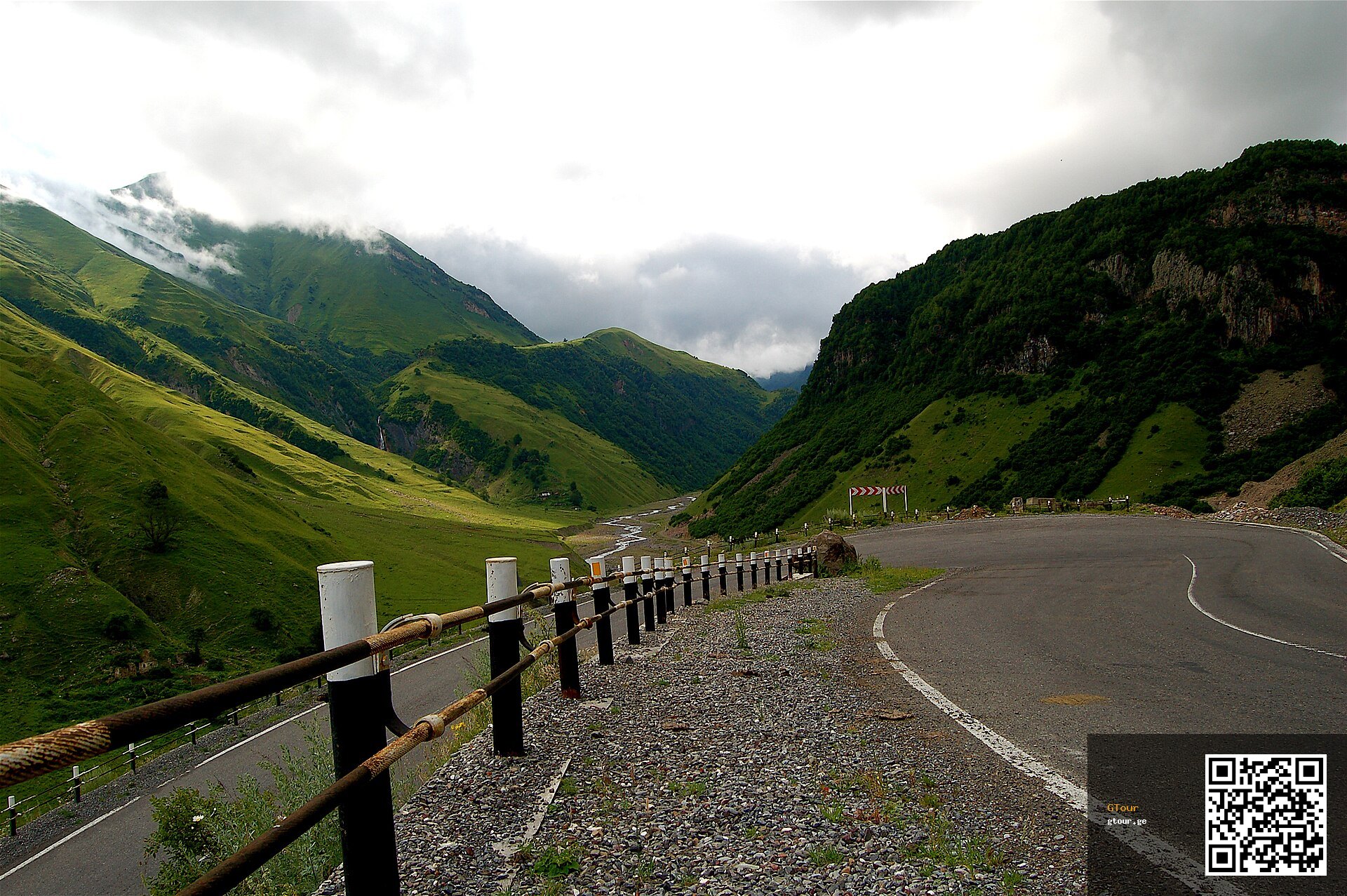
Two of the most common self-drive routes for visitors are the trip from Tbilisi to Kazbegi along the Georgian Military Highway, and the longer route from Tbilisi to Batumi across the country toward the Black Sea coast. Both are manageable in a standard rental car in good weather, though the Kazbegi road climbs to high altitude and can close temporarily in winter due to snow.
Alternative: hiring a private driver
For visitors who prefer not to navigate mountain passes, unpredictable overtaking, or unfamiliar road signage, hiring a private driver is a practical alternative. GTour arranges private drivers and guided day trips covering the main routes, including Kazbegi, Svaneti, Kakheti, and the Black Sea coast; see the tours page for current options.
Quick answers
Do I need an International Driving Permit to drive in Georgia? No, it is not legally required for tourists, but carrying one alongside your home licence is recommended since some rental firms request it.
Can I drive to Ushguli in a normal car? Yes, in summer conditions the road is rough but generally passable by a standard car; a 4×4 is safer after rain or outside summer months.
Is the Abano Pass to Tusheti open year-round? No, it is typically open only from June to October and should only be driven by experienced drivers in a 4×4.
How strict are drink-driving limits in Georgia? Very strict; the legal alcohol limit is extremely low, and checks are common, so the safest approach is not to drink at all before driving.
How do I pay a traffic fine in Georgia? Fines from cameras or radar are generally payable online through the official government portal; rental companies may also charge fines directly to your card.
Do I need winter tyres for mountain roads? Yes, winter tyres or chains are necessary for routes like Gudauri and the Jvari Pass roughly between November and April.
Sources
- Ministry of Internal Affairs of Georgia (patrol.ge)
- Georgian Roads Department (sakautodzrava / roads.ge)
- Tbilisi City Hall parking service
- GTour road-status page
Tell us your dates and what you love. A GTour travel expert designs a private itinerary and calls you back — no payment until you are sure.
Photo: Morten Oddvik from Trondheim, Norway / Wikimedia Commons, CC BY 2.0
Been to Georgia? Tell us how it went — the best stories are published here.
Share your trip