Archives


Tkibuloba in Georgia: dates, meaning and how to experience it
Next dates
28 August 2027 (to be confirmed) · Tkibuli, Imereti. See the full events calendar and Georgia today for roads and weather.
What it is
Tkibuloba is the city day of Tkibuli, a coal-mining town in the Imereti region of western Georgia. The name follows a common Georgian pattern: the place name “Tkibuli” takes the suffix -oba, which turns a noun into the name of a feast or observance — the same construction seen in Tbilisoba (Tbilisi‘s day), Batumoba (Batumi‘s day) and the saints’ days Giorgoba or Mariamoba. Literally, Tkibuloba means something close to “Tkibuli-ness” or “the day of Tkibuli” — a civic rather than a religious feast, built around the identity of a single working town rather than a church calendar event.
The holiday is celebrated by the residents of Tkibuli and the surrounding villages of the Tkibuli municipality, by former residents and miners’ families who return for the occasion, and by visitors from neighbouring Kutaisi and other parts of Imereti. Because Tkibuli’s entire modern existence is tied to coal, the festival doubles as a tribute to the region’s mining labour, past and present, and functions much like the “city day” held by dozens of Georgian towns, but with Miners’ Day as its organising anchor.
Historical background
- 15th century — After the fragmentation of the unified Georgian kingdom, the Tkibuli valley becomes part of the western Georgian Kingdom of Imereti, ruled by a branch of the Bagrationi dynasty.
- 19th century — Coal outcrops in the Tkibuli basin, long known locally to blacksmiths, draw industrial attention under Russian imperial administration, and the first small-scale pits open.
- Early 20th century — A narrow-gauge railway is laid to move coal out of the steep Tkibuli gorge; local engineering accounts describe a spiral loop built to climb the valley over a short distance, still remembered as one of the town’s curiosities.
- 1939 — The mining settlement is granted town (qalaqi) status, reflecting its growth under Soviet industrialization programmes for Georgian coal.
- 1947 — The Soviet Union establishes an all-union Miners’ Day (Den’ Shakhtyora), fixed on the last Sunday of August; Tkibuli, as Soviet Georgia’s principal coal centre, becomes one of the republic’s focal points for the observance.
- 1950s–1980s — Tkibuli coal feeds Georgian power stations and metallurgical industry; the town’s population, housing and cultural institutions expand around the mines.
- 1990s — Post-Soviet economic contraction and repeated mine-safety incidents reduce output and population; several pits close or change ownership.
- 2000s–2010s — Mining continues under restructured management; Tkibuli City Hall revives and formalises Tkibuloba as an annual city-day festival timed around Miners’ Day.
- 2020s — Tkibuloba is held each late August, combining a civic tribute to miners with concerts, sport and a town fair, with the exact date confirmed by the municipality every year.
Unlike the great church feasts of the Georgian calendar — Alaverdoba, Mtskhetoba, Giorgoba — Tkibuloba has no medieval or ecclesiastical root. It belongs to a younger, industrial layer of Georgian civic life, one created by the twentieth-century transformation of a mountain valley into a coal town supplying the wider economy of Soviet Georgia, documented in outline by Georgia’s national statistics and cultural heritage bodies covering the Imereti region’s settlement history (geostat.ge, culture.gov.ge).
The Soviet institution of a professional “Miners’ Day,” observed across the USSR from 1947 on the last Sunday of August, gave every coal town a built-in date for civic pride, and Tkibuli — Georgia’s most significant coal deposit — absorbed it into local identity more deeply than most. After independence, as output and population fell, the municipality leaned on that memory, turning a trade-union observance into the broader Tkibuloba city festival that exists today, comparable to the way manganese-mining Chiatura, also in Imereti, keeps its own mining-linked town day.
Meaning and traditions
At the centre of Tkibuloba is recognition of labour: a civic ceremony, usually in the main square or at the town’s miners’ memorial, where the municipality honours veteran and active miners (mushaki) and remembers those killed in mining accidents, laying flowers at the monument. This is followed by a programme that looks much like other Georgian town days: an outdoor concert with Imeretian folk ensembles performing Georgia’s distinctive polyphonic singing, a crafts and produce fair selling Imeretian khachapuri, local cheese, honey and wine, children’s activities, a football tournament, and fireworks after dark.
A number of Georgian and Russian-derived terms recur: shakhteri (miner, from Russian shakhtyor), supra (the ceremonial feast table), tamada (toastmaster, who leads toasts that at Tkibuloba often include one specifically to miners and their families), and alaverdi (passing the toast to the next speaker). Regional variation is modest: the format is broadly shared with other Imeretian town days such as Kutaisoba and Chiaturoba, but Tkibuloba is distinguished by its explicit framing around mining labour rather than a saint, a king, or a river.
When it happens
Tkibuloba is not fixed to a saint’s day or a national anniversary; it is scheduled by Tkibuli City Hall around the last Sunday of August, following the old Soviet Miners’ Day pattern, with the exact programme dates confirmed each year closer to the event — sometimes a single Sunday, sometimes a weekend of events. For 2026 the festival fell near the traditional late-August weekend; for 2027 organisers have provisionally indicated 28 August 2027, still to be confirmed. Travellers planning a visit around this date should check with the municipality or a local operator close to the time rather than relying on a fixed calendar date years in advance.
Tkibuloba is a local, not a national, public holiday: it does not appear on Georgia’s official list of non-working days, and government offices, banks and most businesses across the country operate normally. In Tkibuli itself, schools, local offices and shops may adjust hours around the central events, and the town’s main square and approach roads are typically closed to traffic for a few hours during the ceremony and concert.
Where to experience it
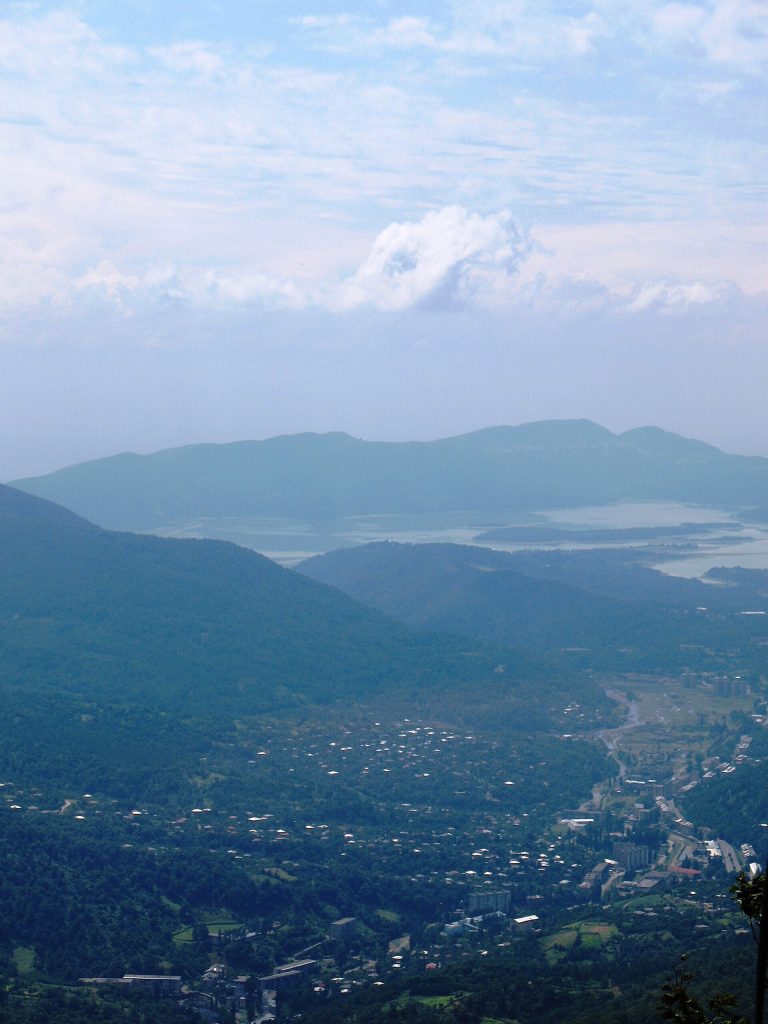
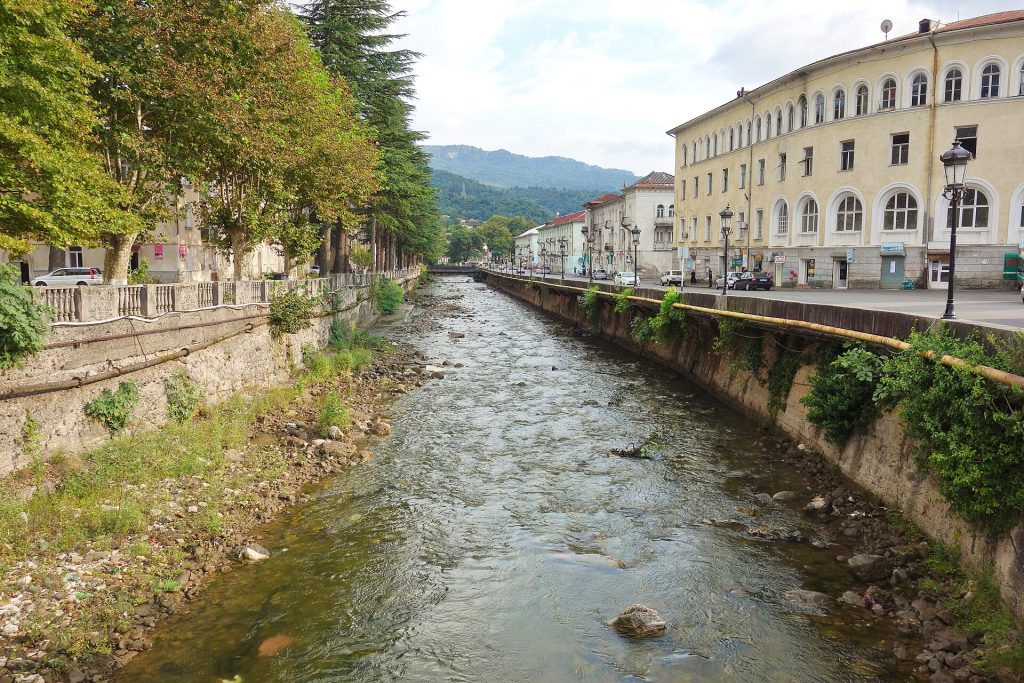
The festival centres on Tkibuli’s town square and adjacent park, the House of Culture, the central stadium for sporting events, and the miners’ memorial where the morning tribute is held. Evening concerts and the fair usually run into the night, ending with fireworks visible across the valley. Visitors who arrive in daylight can also see the town’s mining-era architecture, the steep valley setting, and the reservoir on its outskirts, used informally for boating during the festival weekend.
If the programme includes a memorial liturgy or church blessing for miners, visitors attending should dress modestly — covered shoulders and, for women, a head covering are customary inside a Georgian Orthodox church, men should remove hats, and photography during a service should be unobtrusive. Outside religious moments, the festival atmosphere is informal and welcoming to outsiders, as is typical of Georgian town days.
Travel with GTour
The Martvili & Okatse Canyons + Prometheus Cave — Day Trip from Kutaisi passes close to Tkibuli and can be shifted to late August to coincide with Tkiboba, while the Kutaisi & Western Georgia — 3 Days tour allows a stop in the mining town during its Imereti itinerary. A GTour travel expert designs the exact route and timing around the guest’s planned dates.
Martvili & Okatse Canyons + Prometheus Cave tour Plan my trip
Did you know
- The Georgian suffix -oba, used in “Tkibuloba,” is the same ending found in Tbilisoba, Batumoba and the church feasts Giorgoba and Alaverdoba — a single grammatical pattern covering both sacred and civic holidays.
- Tkibuli’s coal seams lie in a narrow, steep valley, which is why its early mining railway reportedly needed a spiral loop to gain elevation — an engineering detail still cited in local histories of the town.
- The USSR’s Miners’ Day, instituted in 1947 and kept on the last Sunday of August, is still observed in various forms across Russia, Ukraine, Kazakhstan and Georgia, long after the Soviet Union itself ended.
- Imereti, Tkibuli’s home region, gave Georgia its best-known cheese-filled bread, Imeretian khachapuri, a staple of the festival’s food stalls.
- Georgia’s national statistics office records a sharp population decline in Tkibuli since the Soviet period, part of a broader pattern of deindustrialization in the country’s former mining towns (geostat.ge).
Practical tips for visitors
Tk
Sources
- Tkibuloba
- Tkibuloba (Tkibuli city day coverage)
- Tkibuli news coverage
- Tkibuli municipality news
- Tkibuli municipality population data
- Tkibuli municipal self-government acts
- Tkibuli municipality official page
Plan your Georgia
Want to be in Georgia for Tkibuloba? A GTour travel expert designs the itinerary around it and calls you back.
Panoramic view of Tkibuli town from Tskhrajvari mountain, Imereti region. · Photo: travelgeorgia.ru (Ткибули (город)) / Wikimedia Commons, CC BY-SA 3.0
This page in other languages: Русский
GTour conciergeAsk anything about Georgia · we reply within hours