Archives


Zekaroba in Georgia: dates, meaning and how to experience it
Next dates
8 August 2027 (to be confirmed) · Zekari Pass, between Adigeni and Baghdati. See the full events calendar and Georgia today for roads and weather.
What it is
Zekaroba is a one-day shepherds’ festival held on the Zekari Pass, the mountain crossing that links Adigeni municipality in Samtskhe-Javakheti with Baghdati municipality in Imereti. The name combines “Zekari,” the pass itself, with the suffix “-oba,” the common Georgian ending used for a feast or commemorative day tied to a place, a saint, or an event (as in Alaverdoba or Mariamoba). The literal sense is therefore something close to “the day of Zekari” — a gathering named for the place where it happens rather than for a person or a church feast.
The festival is celebrated chiefly by herding families and mountain villagers from both sides of the pass, together with local administrations that organize the day, folk ensembles that perform, and increasingly by visitors who come up from Akhaltsikhe, Borjomi, Kutaisi and Baghdati for the outing. It is a regional, community event rather than a feast of the Georgian Orthodox Church calendar, and it belongs to the broader pattern of highland Georgia marking the movement of flocks between lowland winter quarters and high summer pasture — a rhythm of life historically shared by shepherd communities across the Lesser Caucasus.
Historical background
- Antiquity — Seasonal movement of flocks between the lowlands of Imereti and the uplands of Samtskhe across passes of the Lesser Caucasus, including the Zekari crossing, is consistent with the pastoral transhumance long practiced in the historic Georgian provinces.
- Medieval period — The Zekari route connected the historic province of Meskheti (Samtskhe) with Imereti, serving travelers, traders and herders moving between the two sides of the range.
- 19th century — Highland communities on both slopes of the pass continued seasonal herding, with shepherds from Samtskhe and Imereti customarily meeting on the pass during the summer grazing period, according to local tradition.
- Soviet period — Collectivization reorganized livestock management, but seasonal use of the high pastures around Zekari persisted, and the informal gathering of shepherds on the pass is remembered by local communities as a continuing custom through this period.
- Late 20th century — Following Georgian independence, the informal shepherds’ meeting on the pass was given a more organized, public form as a local cultural event supported by village and municipal administrations on both sides.
- 2010s — Zekaroba began appearing in regional event listings promoted by Adigeni and Baghdati municipalities and by Georgia’s tourism authorities, drawing visitors beyond the herding communities themselves.
- 2020s — The festival continues annually in summer, with the exact date confirmed each year by the organizing municipalities; the 2026 gathering took place on 9 August.
Zekaroba belongs to a family of Georgian mountain gatherings whose purpose was practical before it was festive: shepherds driving flocks up to subalpine and alpine pasture in early summer, and back down before the first snows, used fixed points along the route to meet, trade news, exchange livestock, and settle grazing arrangements with neighbors from the other side of the watershed. The Zekari Pass, as one of the historic crossings between Samtskhe and Imereti, was a natural meeting point for exactly this kind of seasonal contact between communities who otherwise lived a full day’s journey apart.
What survives today as a festival is this older practical gathering, formalized into a single scheduled day with music, food, and games rather than the continuous traffic of herds that once crossed the pass through the summer months. The event is comparatively little documented in written sources compared with major church feasts, and much of what is known about its older history rests on local oral tradition and the records of Georgian ethnographers who studied highland pastoral life; readers should treat the earlier centuries as a description of a long-standing practice rather than a dated institution with a single founding moment.
Meaning and traditions
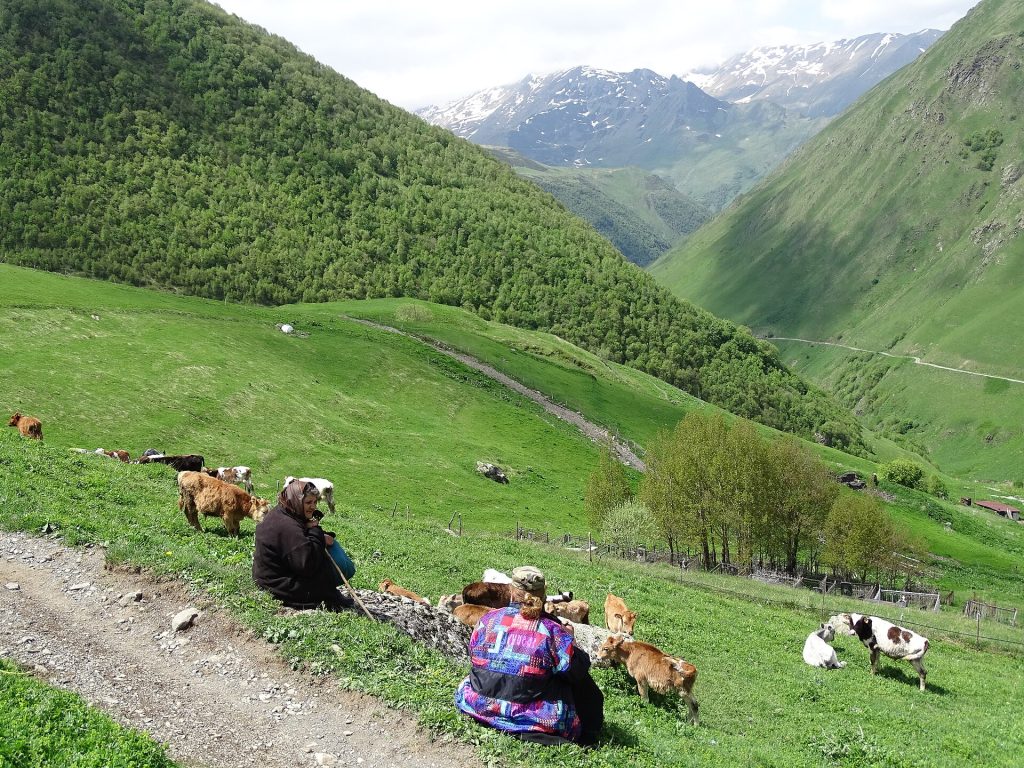
At its core Zekaroba marks the height of the summer grazing season, when flocks from both Samtskhe and Imereti are on the high pastures around the pass. Families and shepherd brigades gather on the open ground of the pass itself, pitch tables in the grass, and share food brought up from both valleys — freshly made matsoni (yogurt), mountain cheeses such as those produced from the summer milk, bread baked locally, and meat prepared on open fires. Supra, the Georgian feast-table tradition, is observed in simplified form, with toasts (sadghegrdzelo) offered to the mountain, to good pasture, to the health of the flocks, and to friendship between the communities of the two provinces.
Folk ensembles from Samtskhe-Javakheti and Imereti typically perform polyphonic singing and regional dances, and horse riders and shepherd dogs — including the large Georgian livestock-guardian breed historically used to protect flocks from wolves — are often part of the day’s display. Wrestling and other traditional contests of strength are a recurring feature of highland gatherings of this kind, as is horse racing where the terrain allows. Conversation on the day moves easily between Georgian and the local dialects of the two neighboring regions, and much of the occasion functions, as it always did, as a chance for families separated by the mountain to meet face to face once a year.
When it happens
Zekaroba has no fixed calendar date. It is set by the municipalities of Adigeni and Baghdati each year, usually for a Saturday or Sunday in late July or August, once the unpaved pass road is reliably clear of snow and safe for vehicles and livestock. The 2026 gathering was held on 9 August 2026. The 2027 date had not been formally confirmed at the time of writing and is expected, by the usual pattern, in early-to-mid August 2027; travelers planning a visit around that time should check with the Adigeni or Baghdati municipal administration, or with Georgia’s tourism authorities, closer to the date.
Zekaroba is not a national public holiday. Government offices, banks and shops across Georgia operate normally on the day; only the pass itself and the immediately surrounding villages see any change, with parking and access arrangements organized locally for the event.
Where to experience it
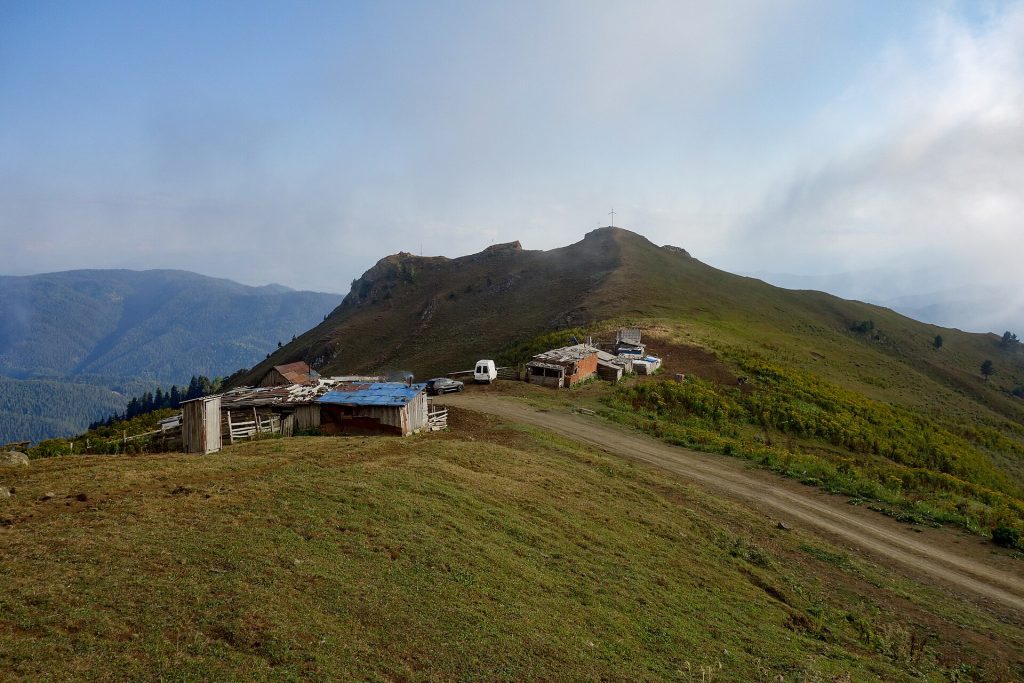
The festival takes place on the open ground of the Zekari Pass itself, at an elevation of roughly 2,000 metres, on the unpaved road connecting Abastumani and Adigeni in Samtskhe-Javakheti with Baghdati in Imereti. Visitors arriving from the Samtskhe side typically approach via Akhaltsikhe and Adigeni; those coming from Imereti approach via Baghdati. The gathering unfolds through the middle of the day, with the supra, performances and contests running through the afternoon before families begin the drive back down to either valley before evening.
There is no church service attached to the day, so visitors need not observe the dress or behavior conventions expected inside Georgian Orthodox churches. General highland etiquette applies instead: dress for changeable mountain weather, accept a toast if offered rather than refusing outright, and ask before photographing individual shepherds, their dogs or their flocks up close.
Travel with GTour
The Borjomi, Bakuriani & Rabati — 2 Days tour travels through Samtskhe toward Adigeni, close to the Zekari Pass, and can be scheduled around 8 August 2027 to coincide with the Zekaroba shepherds’ gathering, while the Martvili & Okatse Canyons + Prometheus Cave — Day Trip from Kutaisi tour runs on the Imereti side near Baghdati, the pass’s other approach. A GTour travel expert will design the exact route and timing around the guest’s own dates.
Martvili & Okatse Canyons + Prometheus Cave tour Plan my trip
Did you know
- The Zekari Pass sits on the historic boundary between Meskheti (modern Samtskhe-Javakheti) and Imereti, two of Georgia’s traditional provinces with distinct dialects and culinary traditions.
- The suffix “-oba” used in “Zekaroba” is the same ending found in many Georgian feast names, including Alaverdoba and Mariamoba, though Zekaroba itself is a secular, place-named gathering rather than a church feast.
- Georgian highland shepherd dogs, bred for centuries to guard flocks against wolves on exactly this kind of exposed mountain pasture, are often present at the festival.
- The pass road is seasonal, typically usable only from late spring to early autumn, which is why the festival date depends on road conditions as much as the calendar.
- Similar shepherd gatherings tied to the summer transhumance cycle are found in other Georgian mountain regions, reflecting a pastoral calendar once common across the Caucasus highlands.
Practical tips for visitors
The Zekari Pass road is unpaved and winds through mountain terrain; a vehicle with good clearance is recommended, and conditions should be checked locally before travel, especially after rain. Mountain weather changes quickly even in August, so warm layers and waterproof clothing are worth packing alongside sun protection. There are no formal ticketing arrangements; the gathering is open and informal, though visitors should expect limited parking and should follow the directions of local organizers. GTour arranges a private driver or guide for the day, which is useful given the unmarked mountain road and the uncertainty around the exact annual date.
Combine it with
Zekaroba sits directly on the border of two regions worth building a longer trip around: Samtskhe-Javakheti, with the fortress town of Akhaltsikhe and the monastic complex of Vardzia, and Imereti, with Kutaisi, the Gelati and Motsameta monasteries, and the Prometheus and Sataplia caves.
Questions travellers ask
What does “Zekaroba” mean?
It combines “Zekari,” the name of the mountain pass, with “-oba,” the Georgian suffix used for a feast or commemorative day. The name simply means the day associated with the Zekari Pass.
When exactly is Zekaroba held?
There is no fixed date; organizers in Adigeni and Baghdati set it each year for late July or August once the pass is clear. The 2026 edition was on 9 August; the 2027 date is to be confirmed.
Is Zekaroba a public holiday in Georgia?
No. It is a local cultural event, not a national public holiday, so businesses, banks and government offices operate as usual nationwide.
How do I get to Zekari Pass?
The pass is reached by unpaved mountain road from Adigeni in Samtskhe-Javakheti on one side and from Baghdati in Imereti on the other. A private driver or 4×4-capable vehicle is advisable.
Is the Zekari Pass road passable by car?
The road is seasonal and unpaved, typically usable from late spring to early autumn; it should be checked locally before travel, as conditions depend on recent weather.
What happens at the festival?
Expect a shared mountain meal (supra) with toasts, folk singing and dance performances, traditional wrestling and other contests, and shepherd dogs and horses on display.
Can visitors join the shepherds’ meal?
Visitors are generally welcome to join the open gathering and are often included in toasts if present; it is courteous to accept rather than decline outright, following standard Georgian hospitality customs.
Is Zekaroba connected to a church feast?
No. Unlike many Georgian “-oba” days tied to saints, Zekaroba is a secular shepherds’ gathering named for the pass itself, with no accompanying church service.
Sources
- Georgia Travel (National Tourism Administration)
- Georgian National Tourism Administration
- Ministry of Culture and Sport of Georgia
- Government of Georgia
- Ministry of Environmental Protection and Agriculture of Georgia
- Zekaroba — Shepherds' Festival, Zekari Pass
- Zekaroba shepherd festival marks end of transhumance
- Zekaroba: traditional shepherd gathering in Georgia
Plan your Georgia
Want to be in Georgia for Zekaroba? A GTour travel expert designs the itinerary around it and calls you back.
Shepherd huts and herders near the summit of Zekari Pass, the festival's traditional setting. · Photo: Aleksey Muhranoff / Wikimedia Commons, CC BY-SA 3.0
This page in other languages: Русский
GTour conciergeAsk anything about Georgia · we reply within hours