Archives


Manglisoba in Georgia: dates, meaning and how to experience it
Next dates
7 August 2027 – 8 August 2027 (to be confirmed) · Manglisi, Tetritskaro municipality. See the full events calendar and Georgia today for roads and weather.
What it is
Manglisoba takes its name from the Georgian suffix -oba, which turns a place name into “the day of” or “the feast of” that place — the same pattern as Tbilisoba (“the day of Tbilisi“) or Alaverdoba (“the feast of Alaverdi”). Manglisoba is therefore, literally, “the feast of Manglisi“: a town holiday built around the hill resort of Manglisi in Tetritskaro municipality and, at its spiritual center, around the sixth-century Manglisi Sioni Cathedral that gives the settlement its historical weight.
The festival is celebrated by the residents of Manglisi and the surrounding villages of Tetritskaro municipality, by families with summer houses in the pine forests above the town, by pilgrims who come for a service at the cathedral, and increasingly by day-trippers from Tbilisi, roughly an hour and a half away. It combines a church commemoration with a secular municipal fair — craft stalls, regional food, music and sport — a format common to many Georgian “-oba” festivals that pair an old sacred calendar with modern civic programming.
Historical background
- 4th century — according to Georgian church tradition, a congregation and a first church were established at Manglisi in the decades following the Christianization of Kartli under King Mirian III, traditionally dated to 337.
- 6th century — the surviving core of Manglisi Sioni Cathedral was built in this period, making it one of the oldest standing church buildings in Georgia and an important early example of domed basilica construction.
- 11th century — the cathedral underwent substantial rebuilding, part of a wider wave of church reconstruction across a politically unified Georgian kingdom.
- 13th–14th centuries — like much of eastern Georgia, the Manglisi district suffered during Mongol and later Timurid incursions through the Trialeti region.
- 19th century — under Russian imperial administration, Manglisi’s elevation and pine forests made it a favored hill-station retreat for Tiflis society, and the cathedral received further restoration work.
- Soviet period — religious life at the cathedral was curtailed, though Manglisi continued to function as a sanatorium and recreation town for workers from Tbilisi.
- Post-1991 — church services resumed at Manglisi Sioni following Georgian independence, and the cathedral was returned to active worship under the Georgian Orthodox Church.
- 2000s–present — Tetritskaro municipality formalized Manglisoba as an annual summer festival, scheduling a weekend of liturgy, fair and folk performance to draw visitors to the town each August.
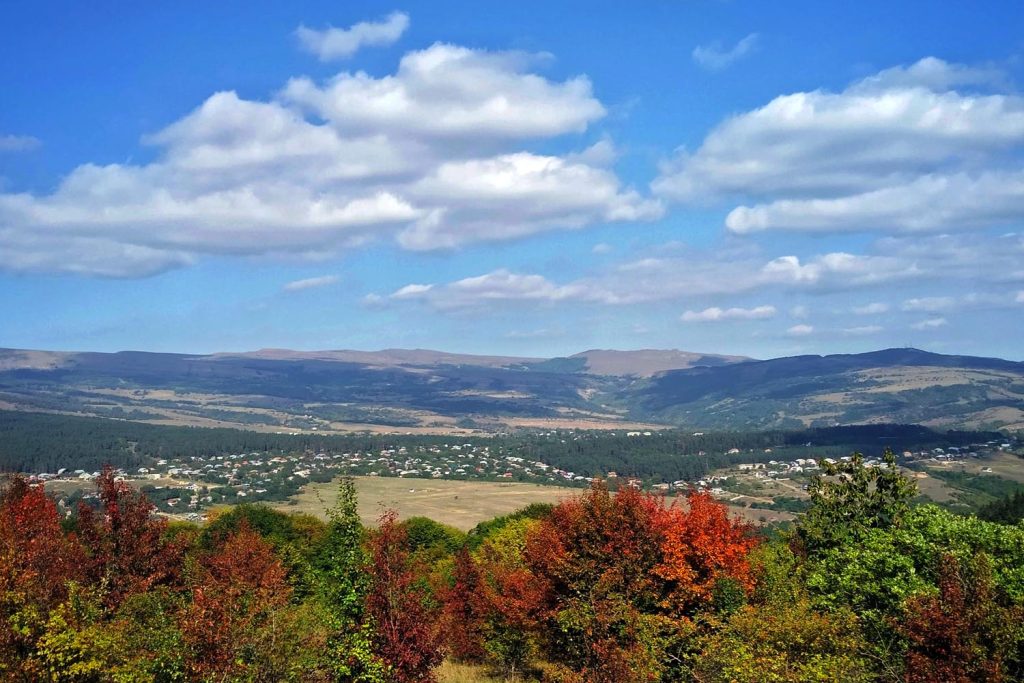
Manglisi’s position on the southern slopes of the Trialeti range, at an altitude that gives it a notably cooler climate than the Kartli plain below, shaped its history twice over: first as a defensible early Christian settlement worth fortifying with a stone cathedral, and later as a retreat from the summer heat of Tbilisi. The cathedral itself carries the dedication pattern common to Georgian churches named “Sioni” — a reference to the Jerusalem hill of Zion — and such churches are conventionally associated with the Dormition of the Mother of God, a feast kept in late August in the Georgian Orthodox calendar.
Manglisoba as a named festival belongs to the same civic tradition that produced Tbilisoba and other municipal “-oba” days in the late Soviet and post-Soviet periods: a fixed religious building and its patronal associations providing the anchor, while local government supplies the stage, vendors and entertainment. This explains why Manglisoba’s calendar date floats within early August rather than falling on a single fixed church feast day — it is a municipal event built around, but not strictly bound to, the liturgical cycle.
Meaning and traditions
At the core of Manglisoba is a liturgy (liturgia) at Manglisi Sioni Cathedral, usually in the morning, drawing residents, clergy and visiting pilgrims. Outside the church walls, the town turns into a bazrobi — a fair — with stalls selling honey, fruit preserves, wool goods and highland cheese from Tetritskaro’s farms. Musicians perform Georgian polyphonic song (kartuli khmrebi, “Georgian voices”) and regional dance troupes appear on an open-air stage; local sport, including wrestling (chidaoba) or horseback games in some years, rounds out the afternoon programming.
Food at Manglisoba reflects both Kartli’s plains cuisine and the cooler highland produce of Tetritskaro: khinkali, mtsvadi (skewered meat), fresh highland vegetables, and bread baked in a tone oven are typical. As with most Georgian festival days, a shared table and toasting (sadghegrdzelo) with local wine or homemade chacha closes out the day for families and friends who gather in Manglisi’s gardens and guesthouse courtyards.
When it happens
Manglisoba is held on the first weekend of August, a date set by Tetritskaro municipality each year rather than fixed permanently on the church calendar; organizers confirm the exact days closer to the event. For 2026, the weekend has effectively passed by late October — the next observance is planned for 7–8 August 2027, with the schedule to be confirmed by local organizers nearer the time. It is a local and regional festival, not a national public holiday, so businesses and offices outside Tetritskaro municipality operate normally; within Manglisi itself, shops and the town’s small guesthouses adjust hours around the fair and liturgy.
Where to experience it
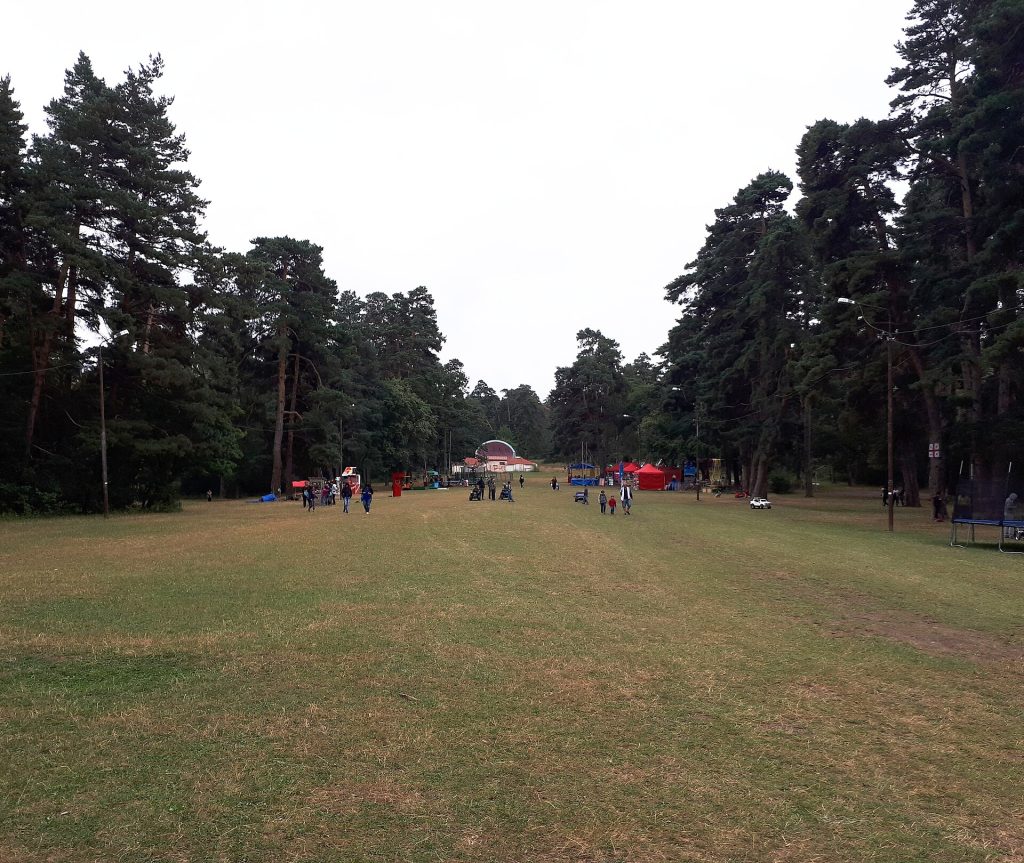
The center of the festival is Manglisi Sioni Cathedral and the square and park immediately surrounding it, in the town of Manglisi, Tetritskaro municipality, roughly 70 kilometers southwest of Tbilisi in the Trialeti highlands. Morning is for the liturgy inside the cathedral; by midday the fair stalls and stage performances fill the open ground outside. Visitors entering the cathedral should dress modestly — covered shoulders and, for women, a head covering, which is often available at the entrance — and should move quietly during services, photographing only where permitted.
Travel with GTour
The Georgia in 10 Days — Tbilisi to Svaneti to the Sea route passes within easy reach of Manglisi and its 6th-century cathedral, and an early August departure can be arranged to coincide with the first weekend festivities; the shorter Tbilisi & Mtskheta — The Essential First Day can likewise be extended with a stop there. A GTour travel expert designs the route around the guest’s dates to work the visit in where it fits best.
Did you know
- Manglisi Sioni Cathedral is counted among the oldest surviving church buildings in Georgia, with its core fabric dated to the sixth century.
- The “-oba” suffix that names Manglisoba is the same grammatical device behind Tbilisoba, Alaverdoba and dozens of other Georgian town and village festivals.
- Manglisi’s elevation in the Trialeti range made it a favored summer retreat for Tiflis residents under the Russian Empire, a role it still plays for Tbilisi families today.
- Georgian churches named “Sioni” take their name from the hill of Zion in Jerusalem, reflecting a naming convention used across the country, from Tbilisi to Nikortsminda.
- Unlike fixed religious feasts, many Georgian municipal “-oba” festivals have their exact dates set annually by local government, meaning the calendar can shift from year to year.
Practical tips for visitors
Manglisi is reached by road from Tbilisi via Tetritskaro; there is no rail service to the town, so a private car, hired driver or tour transfer is the practical option, and GTour can arrange a private driver or guide for the day. August afternoons in the highlands are mild but evenings can turn cool, so a light jacket is worth packing alongside sun protection for the daytime fair. Church etiquette applies at the cathedral regardless of the festival atmosphere outside — modest dress and quiet conduct during services. Accommodation in Manglisi itself is limited, so visitors planning an overnight stay should book guesthouses in advance or base themselves in Tbilisi and travel out for the day; confirm the exact festival dates with Tetritskaro municipality close to the event, since the schedule is set annually.
Combine it with
Manglisoba pairs naturally with a broader trip through the historic churches and fortress sites of the wider Kartli region, an easy return day trip from Tbilisi, or an extension south toward the monasteries and mountain scenery of Samtskhe-Javakheti.
Questions travellers ask
Is Manglisoba a national public holiday in Georgia?
No. It is a local and municipal festival centered on Manglisi and Tetritskaro municipality. Offices, schools and businesses elsewhere in Georgia operate normally on these dates.
How far is Manglisi from Tbilisi?
Manglisi lies roughly 70 kilometers southwest of Tbilisi in the Trialeti highlands, a drive of about ninety minutes to two hours depending on road conditions.
Do I need to book tickets for Manglisoba?
No admission ticket is required for the festival itself; it is an open-air municipal event. Accommodation and private transport, however, should be arranged in advance given Manglisi’s limited guesthouse capacity.
Can visitors attend the church service during Manglisoba?
Yes, the morning liturgy at Manglisi Sioni Cathedral is open to all, including visitors, provided dress is modest and conduct is respectful during the service.
What is the exact date of Manglisoba each year?
The festival is generally held on the first weekend of August, but the precise dates are confirmed annually by Tetritskaro municipality rather than fixed years in advance.
Is Manglisi worth visiting outside festival weekend?
Yes. The sixth-century cathedral, the pine forests and the cooler highland climate make Manglisi a pleasant stop or overnight retreat at any time in the warmer months, independent of the festival.
What should I wear to the cathedral during the festival?
Modest dress is expected: covered shoulders and knees for all visitors, and a head covering for women, usually available at the cathedral entrance if needed.
Is Manglisoba suitable for families with children?
Yes. The fair, music and open-air stage performances are family-friendly, and the town’s parkland around the cathedral offers space for children while adults attend the liturgy or browse stalls.
Sources
- Georgian National Tourism Administration
- Ministry of Culture, Sport and Youth of Georgia
- Georgian Orthodox and Apostolic Church (Patriarchate)
- National Parliamentary Library of Georgia
- UNESCO World Heritage, State Party Georgia
Plan your Georgia
Want to be in Georgia for Manglisoba? A GTour travel expert designs the itinerary around it and calls you back.
The 6th-century cathedral of Manglisi, centre of the annual Manglisoba festival. · Photo: George Mel / Wikimedia Commons, CC BY 3.0
This page in other languages: Русский
GTour conciergeAsk anything about Georgia · we reply within hours