Archives


Kobuletoba in Georgia: dates, meaning and how to experience it
Next dates
26 June 2027 – 27 June 2027 (to be confirmed) · Kobuleti, Adjara. See the full events calendar and Georgia today for roads and weather.
What it is
Kobuletoba is the annual town day of Kobuleti, a Black Sea resort town in the Autonomous Republic of Adjara in western Georgia. The Georgian name follows a common pattern: the place name “Kobuleti” takes the suffix -oba, which turns a name into the designation of a feast or commemorative day — the same construction gives Georgian its words for Tbilisoba (Tbilisi‘s city day), Batumoba (Batumi’s) and the saints’ days Giorgoba and Mariamoba. “Kobuletoba” therefore means, quite literally, “the day of Kobuleti.”
The festival is organised by Kobuleti City Hall and is celebrated chiefly by residents of the town and the wider Kobuleti municipality, alongside the domestic and foreign holidaymakers who begin arriving on this coast at the same time of year. Unlike Georgia’s church feasts, Kobuletoba has no fixed place in the ecclesiastical calendar; it is a civic, secular occasion that doubles as the informal opening of the summer tourist season on this stretch of the Adjaran coast.
Historical background
- Antiquity — The coastal strip around present-day Kobuleti lay within ancient Colchis, the region named in Greek sources including the Argonaut myth, long before any town festival existed here.
- 16th–19th centuries — The area came under Ottoman administration as part of Adjara, which left a lasting imprint of mosques, dialect and cuisine alongside older Georgian Orthodox traditions.
- 1878 — Following the Russo-Turkish War, the Treaty of Berlin transferred most of Adjara, including the coastal zone around Kobuleti, from the Ottoman Empire to the Russian Empire.
- 1921 — The Adjara Autonomous Soviet Socialist Republic was established within Soviet Georgia, formalising the region’s autonomous status that Adjara retains today as an Autonomous Republic within independent Georgia, see Britannica’s entry on Adjara.
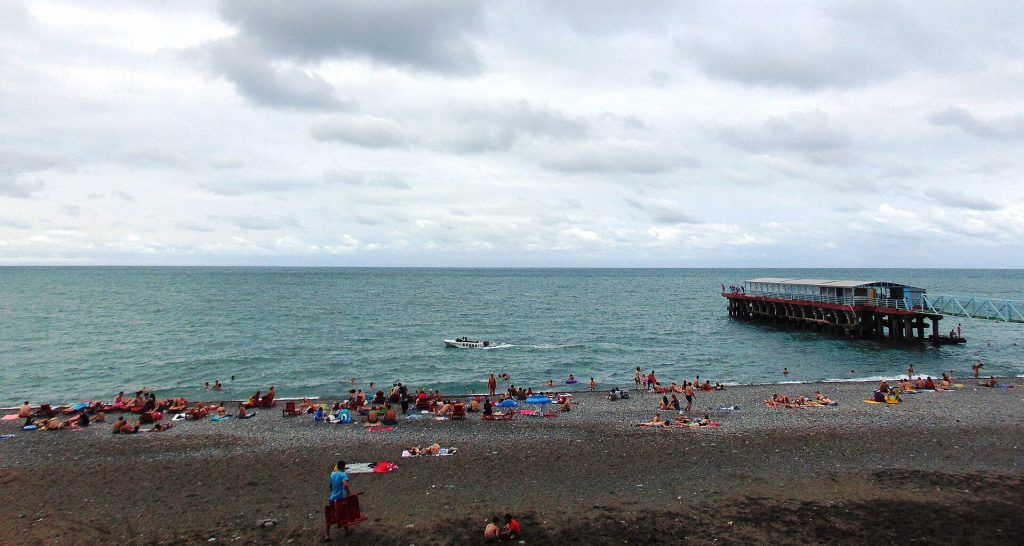
- Mid-to-late 20th century — Kobuleti’s long pebble beach and mild climate made it one of the Soviet Union’s popular sanatorium and holiday coasts, a role reflected in the sanatoria still standing along its seafront today.
- 1991 — Georgia restored its independence, and Adjara continued as an Autonomous Republic within the Georgian state, with its own government based in Batumi, see the Government of Adjara.
- Post-Soviet decades — Kobuleti City Hall began marking an annual town day in early summer to open the resort season; the precise founding year of “Kobuletoba” is not documented in publicly available municipal records.
- 30 June 2017 — The most recently confirmed date of Kobuletoba on record, after which the event has continued to be announced separately each year rather than fixed to a permanent calendar slot.
Kobuletoba belongs to a distinctly Georgian family of civic festivals built on the -oba suffix, in which a town marks its own identity much as larger cities do with Tbilisoba or Batumoba, but on a modest, local scale appropriate to a seaside town of Kobuleti’s size. It is not an ancient rite revived, nor a transplanted church feast; it is a late-twentieth or early-twenty-first-century civic invention layered onto a coastline whose deeper history runs through Colchis, Ottoman Adjara and the Soviet resort era.
That layered history is part of what visitors notice on the day itself. The same boulevard where brass bands and folk ensembles perform for Kobuletoba sits on a coast shaped first by Greek and Roman trade along ancient Colchis, then by three centuries of Ottoman rule, then by Soviet-era sanatoria, and now by independent Georgia’s growing Black Sea tourism economy, coordinated nationally through bodies such as the Georgian National Tourism Administration. The festival is best understood as a modern civic punctuation mark on a very old shoreline, rather than as a survival of ancient custom.
Meaning and traditions
Kobuletoba typically centres on the town’s seaside boulevard (bulvari) and main square, where a stage hosts an opening ceremony addressed by the mayor and local officials, followed by a programme of music and dance that runs through the afternoon and evening. Folk ensembles usually perform acharuli, the fast, percussive Adjaran dance tradition associated with this region, alongside brass band music and sets by contemporary Georgian singers. Daytime hours often bring sports competitions — beach volleyball, swimming and athletics for local youth — while children’s entertainment and craft stalls run along the promenade.
Food is central to the day. Stalls typically sell khachapuri acharuli, the open, boat-shaped cheese bread topped with a raw egg and butter that is Adjara’s best-known culinary export, together with fresh Black Sea fish such as red mullet (barbuni), grilled corn, churchkhela and local wine. As with most Georgian gatherings, informal supra (feast tables) with a tamada (toastmaster) offering toasts may form spontaneously among residents and visiting families, even though Kobuletoba itself is a municipal rather than a household celebration. The evening generally closes with fireworks over the sea.
Regional variation is worth noting: Batumi’s equivalent town day, Batumoba, is a larger affair in Georgia’s main Black Sea city 25 kilometres south, while Tbilisoba, the capital’s city day, falls in October after the grape harvest and has a more autumnal, wine-centred character. Kobuletoba, by contrast, sits firmly at the start of the beach season, and its tone is lighter, smaller and more local.
When it happens
Kobuletoba has no fixed civil date and is not tied to the religious calendar; Kobuleti City Hall announces the date each year, typically in late June, to coincide with the opening of the beach season. The last publicly confirmed date was 30 June 2017; for 2027 the likely window is around 26–27 June 2027, but this remains unconfirmed and should be checked directly with Kobuleti City Hall closer to the date. Kobuletoba is not a national public holiday in Georgia: banks, shops, schools and government offices operate on their normal schedule, with the exception of local municipal staff and venues directly involved in staging the event, and some streets near the boulevard are closed to traffic for the day.
Where to experience it
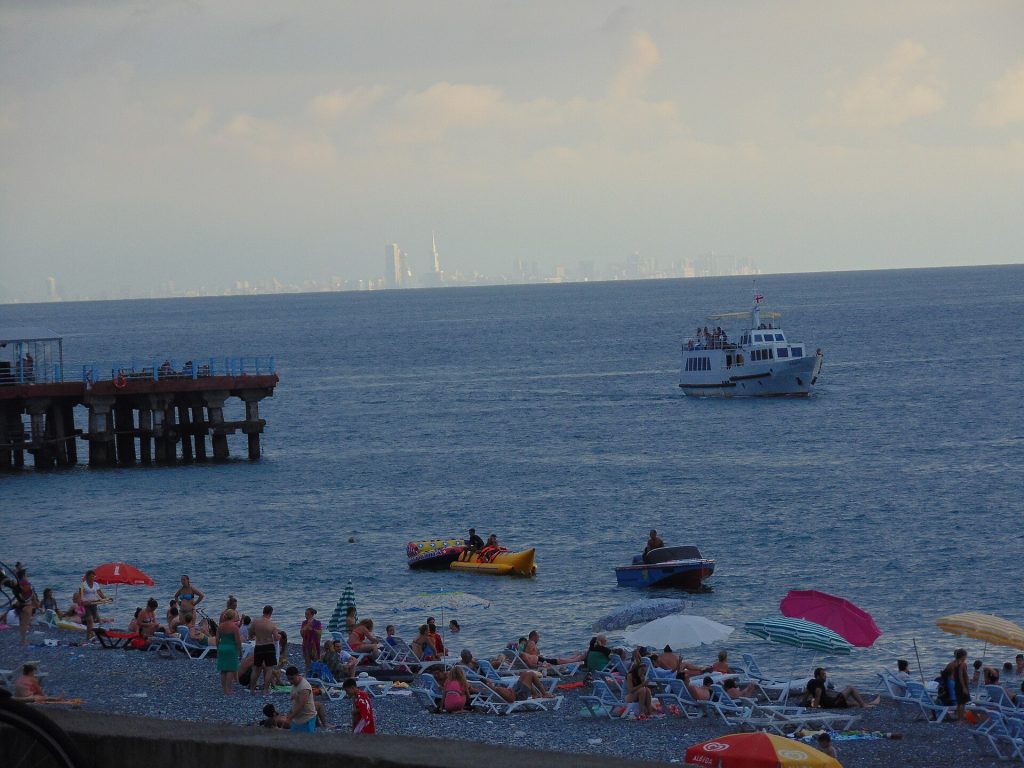
The festival is staged along Kobuleti’s central seaside boulevard and the adjoining town square, with the main stage usually set up facing the beach so that both the promenade and the sand fill with spectators. Events generally run from late afternoon into the evening, with fireworks after dark marking the close. Visitors who arrive earlier in the day can walk the length of the beach, which stretches for several kilometres, or visit the Kobuleti Managed Reserve wetlands just inland, a quieter counterpoint to the festival crowds. There is no religious liturgy built into the day, so church etiquette is not generally required for the main events; if travelling further into Adjara to visit churches or mosques, modest dress covering shoulders and knees is expected, and shoes should be removed before entering a mosque.
Travel with GTour
The Batumi & the Ajara Mountains — 2 Days tour passes through Kobuleti on its route along the Adjara coast, and the Georgia in 10 Days — Tbilisi to Svaneti to the Sea itinerary reaches the sea around the same late-June dates when Kobuletoba is traditionally held. A GTour travel expert can adjust either route around the guest’s travel dates to align with the town’s celebrations, pending confirmation from Kobuleti City Hall.
Did you know
- The -oba suffix that names Kobuletoba is the same grammatical device behind Giorgoba (St. George’s Day) and Tbilisoba, a distinctively Georgian way of naming a day after a place or person.
- Adjara was under Ottoman administration for roughly three centuries before its 1878 transfer to the Russian Empire, leaving mosques and a distinct regional dialect alongside Georgian Orthodox churches.
- Khachapuri acharuli, the boat-shaped cheese bread topped with egg and butter sold at Kobuletoba’s food stalls, takes its name directly from Adjara (Achara in Georgian).
- Kobuleti’s beach and nearby wetlands, including the Ispani mires, form part of a wetland complex recognised under the Ramsar Convention on Wetlands for its importance to migratory birds.
- During the Soviet period, Kobuleti’s long pebble coastline made it one of the most popular sanatorium destinations on the Black Sea, and several of those sanatoria still operate as hotels today.
Practical tips for visitors
Kobuleti is reached most easily via Batumi International Airport, about 25 kilometres south, or via Kutaisi International Airport, roughly 90 kilometres away, with onward travel by taxi, marshrutka minibus or train along the coastal line operated by Georgian Railway. Late June brings warm, humid weather suited to light summer clothing and swimwear, though a cover-up is advisable for any detour to a church or mosque. Because the festival coincides with the start of peak beach season, accommodation in Kobuleti should be booked well in advance. As the exact date changes year to year, confirming the schedule directly with Kobuleti City Hall shortly beforehand is the most reliable approach; GTour can also arrange a private driver or guide for the day, confirming the current date before travel.
Combine it with
Kobuletoba pairs naturally with a longer stay in Adjara, exploring Batumi’s old town and botanical garden alongside the mountain villages of the interior. Travellers arriving via Kutaisi can extend the trip into Imereti, with its cave monasteries and the Kutaisi region’s wine and cuisine. Those interested in Georgia’s Ottoman-era frontier heritage might also combine it with Samtskhe-Javakheti, home to the restored Rabati fortress and a similarly mixed Muslim-Christian history.
Questions travellers ask
Is Kobuletoba a public holiday in Georgia?
No. It is a local municipal festival in Kobuleti, not a national public holiday, so businesses, schools and offices across Georgia operate normally, with only local closures around the festival venue.
What is the exact date of Kobuletoba in 2027?
The precise date has not been fixed. Kobuletoba is usually held in late June; organisers estimate around 26–27 June 2027, but confirmation should come from Kobuleti City Hall closer to the date.
Do I need to buy tickets?
No. The main concerts, parades and fireworks take place in public spaces along the Kobuleti boulevard and are free to attend.
How do I get from Tbilisi to Kobuleti?
Kobuleti lies about 340 kilometres from Tbilisi on the Black Sea coast. Options include an overnight or daytime train, long-distance buses and marshrutka minibuses, or a private car via the Tbilisi–Batumi highway, a journey of roughly five to six hours by road.
Is Kobuleti a good base for a beach holiday?
Kobuleti has one of Georgia’s longest pebble-and-sand beaches, shallow entry into the Black Sea and a more relaxed, family-oriented atmosphere than Batumi, making it a popular choice for a quieter seaside stay.
Can Kobuletoba be combined with a visit to Batumi?
Yes. Batumi is only about 25 kilometres south of Kobuleti, making it straightforward to combine the festival with a day or more exploring Batumi’s old town, seafront and nightlife.
What food should I try at the festival?
Look for khachapuri acharuli, the Adjaran boat-shaped cheese bread with egg and butter, alongside grilled Black Sea fish such as red mullet, churchkhela and local wine sold at the festival’s food stalls.
What should I wear to Kobuletoba?
Light, casual summer clothing suits the festival itself, since it is an outdoor seaside event in late June. A modest cover-up is worth packing only if visiting a nearby church or mosque during the same trip.
Sources
Plan your Georgia
Want to be in Georgia for Kobuletoba? A GTour travel expert designs the itinerary around it and calls you back.
Crowded pebble beach at Kobuleti, the Adjara seaside resort that hosts the town’s festival. · Photo: MIKHEIL / Wikimedia Commons, CC BY-SA 4.0
This page in other languages: Русский
GTour conciergeAsk anything about Georgia · we reply within hours