Archives


Khvamloba in Georgia: dates, meaning and how to experience it
Next dates
19 June 2027 (to be confirmed) · Khvamli mountain, Tsageri, Lechkhumi. See the full events calendar and Georgia today for roads and weather.
What it is
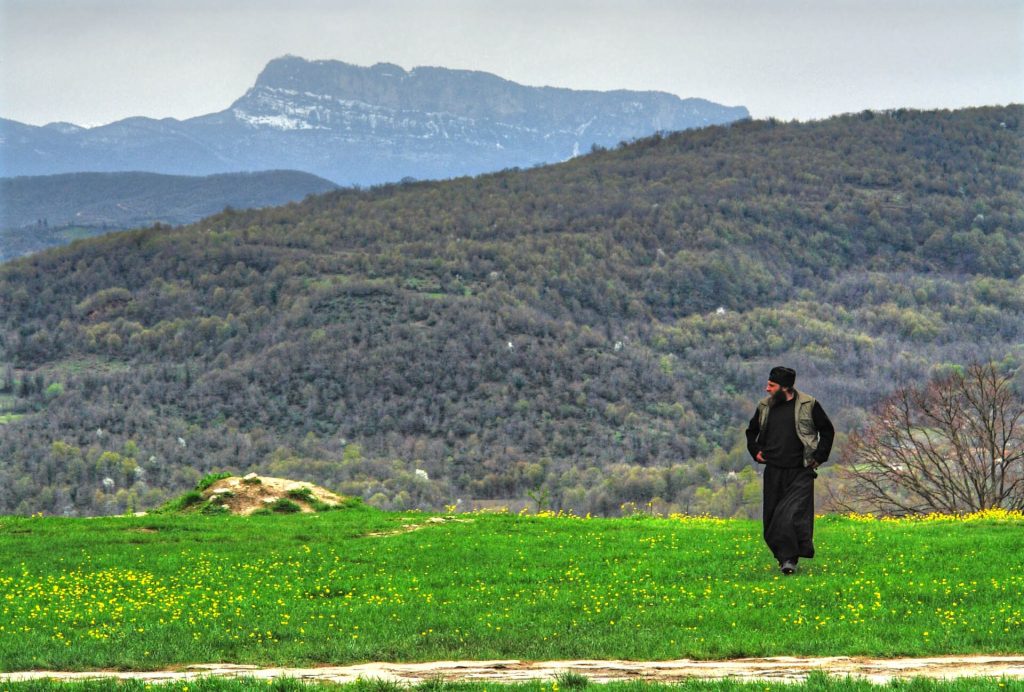
Khvamloba is the annual feast day associated with Mount Khvamli (Khvamli Mta), a limestone massif that dominates the Lechkhumi valley above the town of Tsageri in western Georgia. The Georgian suffix “-oba” is the standard way of naming a feast or holiday tied to a person, saint, or place — as in Giorgoba (the feast of Saint George) or Alaverdoba (the feast tied to Alaverdi Cathedral) — so “Khvamloba” means, literally, “the feast of Khvamli.” The occasion is dedicated to Saint George, whose small shrine and cross stand near the summit, and it is observed primarily by the people of Lechkhumi and their descendants who return each year from Tbilisi, Kutaisi, and abroad.
Unlike the two nationally fixed feasts of Saint George — 6 May and 23 November — Khvamloba belongs to a large family of local Georgian “hilloba” or mountain-shrine feasts, each attached to a specific peak, church, or sacred grove and kept on its own customary date. These local observances sit alongside, rather than replace, the national calendar, and together they illustrate how deeply the cult of Saint George is woven into the geography of Georgia, with nearly every valley claiming its own hill, spring, or summit under his protection.
Historical background
- Pre-Christian era — Georgian oral tradition names Khvamli as the mountain where the mythic hero Amirani, a Caucasian counterpart to the Greek Prometheus, was chained for defying the gods, marking the peak as sacred long before church records begin.
- 4th century — Georgia’s royal court adopts Christianity under King Mirian III, traditionally dated to 337, beginning a long process in which older mountain and spring cults across the country were absorbed into the veneration of Christian saints, Saint George foremost among them.
- Medieval period — Lechkhumi appears in Georgian historical and ecclesiastical sources as a distinct district of western Georgia, administered in turn by Georgian royal authority and later by the kingdom of Imereti.
- 17th–18th centuries — Western Georgian ethnographic record describes hereditary lay custodians (locally called khevisberi) tending mountain shrines such as Khvamli’s, organizing the annual rites and the accompanying feast.
- 1921–1991 — Under Soviet rule, organized religious pilgrimage was officially discouraged; village-level gatherings on Khvamli reportedly continued in reduced or informal form.
- 1991 — Restoration of Georgian independence allows open revival of church feast days and mountain pilgrimages nationwide, Khvamloba among them.
- 2000s–present — Khvamloba continues as an annual gathering coordinated by Tsageri’s municipal and church community, drawing Lechkhumi families, diaspora visitors, and a growing number of outside guests.
The layered history of Khvamloba — a pre-Christian mountain myth overlaid with a Christian saint’s feast, interrupted by decades of Soviet restriction, and then restored — is typical of rural Georgian religious life rather than exceptional to it. Georgia’s adoption of Christianity in the fourth century, one of the earliest state conversions in the world, did not erase older mountain reverence so much as rename and reorient it, a pattern documented across the Caucasus and discussed in general histories of the country such as Britannica’s entry on Georgia.
Saint George himself, venerated across the Christian world as recorded in sources such as Britannica’s biography of Saint George, holds an unusually central place in Georgian religious identity, with dozens of local feast days scattered through the year rather than a single observance. Khvamloba is one expression of that pattern, specific to Lechkhumi and inseparable from the particular silhouette of Khvamli above the Tskhenistsqali valley.
Meaning and traditions
The core of Khvamloba is a climb: families and pilgrims ascend Khvamli’s slopes to the small cross and shrine (jvari) near the summit, where a priest conducts a liturgy and blesses those present. Afterward, groups gather for a supra, the Georgian ritual feast, at which a toastmaster (tamada) leads a structured sequence of toasts honoring God, Saint George, ancestors, and the Lechkhumi homeland. Traditional dishes brought up the mountain or prepared at gathering points below typically include khachapuri, roasted or boiled meat, and Lechkhumi’s own wines, poured generously for toasts sung in the region’s distinctive three-voice harmony.
Lechkhumi is known in particular for Usakhelouri, a rare local grape variety whose name translates roughly as “the nameless one,” grown almost nowhere else in Georgia. At Khvamloba it often appears alongside more common western Georgian wines, and its scarcity makes it something of a point of local pride at the feast. Table songs and polyphonic chants, part of a wider Georgian singing tradition, commonly accompany the meal, and older participants recount the Amirani legend to younger visitors as part of the day’s storytelling rather than as formal liturgy. Regional variants of this kind of mountain feast exist throughout Racha-Lechkhumi and Svaneti, each tied to its own peak or shrine, so a visitor who has seen one hilloba will recognize the broader pattern while noting that each community insists on its own particular customs.
When it happens
Khvamloba does not fall on a fixed civil date. Like many Georgian mountain-shrine feasts, it is traditionally timed to a period in June after the upper slopes have cleared of snow and become safely passable, with the exact Sunday confirmed each year by the Tsageri municipal administration together with the local church community, usually announced in the preceding weeks. This variability distinguishes it from the two calendar-fixed national feasts of Saint George on 6 May and 23 November.
The 2026 gathering was held earlier this year in June, ahead of today’s date. The next occasion is provisionally set for 19 June 2027, subject to final confirmation closer to the date. Khvamloba is not a national public holiday; businesses, offices, and schools across Georgia operate normally, and only the villages and visitors directly involved in the pilgrimage treat the day as a holiday.
Where to experience it
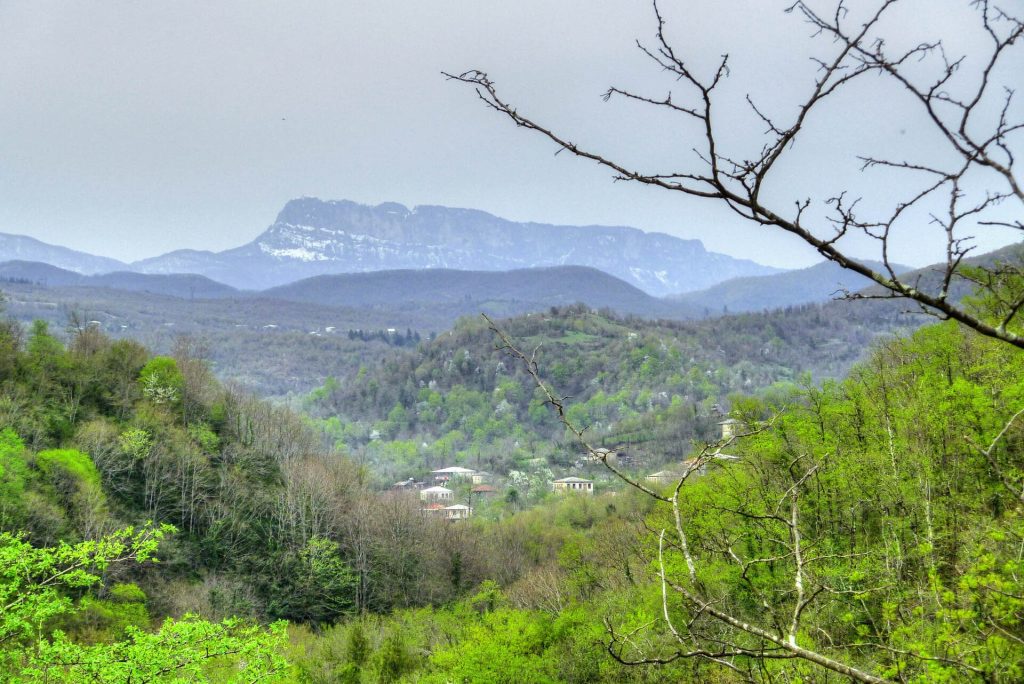
The feast centers on Mount Khvamli itself, reached from the town of Tsageri in Lechkhumi, in the Racha-Lechkhumi and Kvemo Svaneti region of western Georgia. Visitors typically gather at a trailhead on the mountain’s lower slopes before the ascent to the summit shrine, a walk of several hours depending on route and fitness. At the top, a modest cross and small chapel mark the sacred site; the atmosphere is informal and communal rather than tightly managed, with groups of pilgrims arriving throughout the morning and early afternoon. The feast proper, with music, toasts, and food, generally takes place on open ground below the summit or back in Tsageri and nearby villages once the climb is complete.
Visitors should treat the summit shrine with the same quiet respect expected at any Georgian church: remove hats, dress modestly, and avoid loud conversation near the cross during the liturgy. Women may wish to carry a headscarf. If invited into a private supra, it is customary to remain for at least the first round of toasts and to let the tamada direct the order of speech rather than toasting independently.
Travel with GTour
The Racha — Khvanchkara Wine & Mountain Lakes (2 Days) tour passes near Tsageri in Lechkhumi, allowing a stop close to Khvamli mountain around 19 June, while Georgia in 10 Days — Tbilisi to Svaneti to the Sea crosses the same region en route to Svaneti and could include a short detour to the feast. A GTour travel expert designs the exact route and timing around the guest’s dates.
Did you know
- Georgian legend holds that the hero Amirani, chained to Khvamli for defying the gods, is a Caucasian parallel to the Greek Prometheus myth.
- Saint George is honored in Georgia with dozens of separate local feast days through the year, each tied to an individual shrine, cross, or mountain rather than one fixed date.
- Lechkhumi is the principal home of Usakhelouri, a rare grape variety whose name means “nameless,” rarely found outside the district.
- Mountain shrine feasts like Khvamloba have historically been tended by hereditary lay custodians known as khevisberi, a role recorded by Georgian ethnographers across the Caucasus.
- Georgian polyphonic singing, regularly performed at feasts such as Khvamloba’s, is inscribed on UNESCO’s Representative List of the Intangible Cultural Heritage of Humanity.
Practical tips for visitors
Tsageri is reached by road from Kutaisi, a drive of roughly two and a half to three hours on mountain roads that narrow and steepen in the final stretch; a vehicle with good clearance is advisable, particularly if rain has fallen recently. June weather at altitude can shift quickly from sun to mist and light rain, so sturdy footwear, a layered jacket, and water for the climb are essential. Tsageri itself has limited shops and no reliable ATM network, so visitors should carry cash in advance from Kutaisi. Because the date is confirmed locally only shortly before the event, travellers should check with the municipal office or a local guide close to the time rather than relying on a fixed calendar. GTour arranges a private driver or guide for the day for visitors who prefer not to navigate the logistics independently.
Combine it with
Khvamloba sits naturally within a wider tour of western Georgia’s mountain regions. Visitors often combine it with Racha, Lechkhumi’s immediate neighbor and another region of mountain shrines and distinctive wines; with Svaneti, whose medieval towers and high-altitude villages lie a further drive beyond Lechkhumi; or with Imereti, the lowland region through which most routes from Kutaisi to Tsageri pass.
Questions travellers ask
What does “Khvamloba” mean?
It means “the feast of Khvamli,” using the Georgian suffix “-oba” that marks a holiday or feast day connected to a saint, place, or figure, in this case the mountain itself.
Is Khvamloba a public holiday in Georgia?
No. It is a local, traditional observance in Lechkhumi rather than a national public holiday, so offices, schools, and businesses elsewhere in Georgia operate as usual.
How do I get to Mount Khvamli?
The usual approach is by road from Kutaisi to Tsageri, followed by a drive to a lower trailhead and then a walk of several hours to the summit shrine; a private driver familiar with the route is recommended.
Can visitors who are not Orthodox Christian join the pilgrimage?
Yes, respectful visitors of any background are generally welcome to observe the climb and the liturgy at the summit, provided they follow basic church etiquette such as modest dress and quiet conduct near the shrine.
What should I wear and bring?
Sturdy hiking shoes, layered clothing for shifting mountain weather, a headscarf for women entering the shrine area, water, and cash, since Tsageri has limited banking facilities.
Is the date the same every year?
No. The feast is traditionally held in June once the upper slopes are clear of snow, but the exact Sunday is confirmed annually by local organizers rather than fixed on the civil calendar in advance.
What happens at the summit?
A priest conducts a liturgy and blessing at the small cross and chapel, after which pilgrims typically descend to gather for a communal feast with toasts, food, and traditional singing.
How does Khvamloba relate to the main Giorgoba feasts on 6 May and 23 November?
It shares the same patron, Saint George, but functions as one of many local mountain-shrine feasts around the country, each kept on its own customary date rather than on the two nationally fixed Giorgoba dates.
Sources
- Patriarchate of Georgia
- Georgian National Tourism Administration
- Georgian Ministry of Culture, Sport and Youth
- Khvamloba (St. George's feast, Mount Khvamli, Tsageri, Lechkhumi)
- Khvamloba (St. George's feast, Mount Khvamli, Tsageri, Lechkhumi)
- Khvamloba (St. George's feast, Mount Khvamli, Tsageri, Lechkhumi)
- Khvamloba (St. George's feast, Mount Khvamli, Tsageri, Lechkhumi)
Plan your Georgia
Want to be in Georgia for Khvamloba? A GTour travel expert designs the itinerary around it and calls you back.
The Church of St George on Khvamli mountain, the goal of the Khvamloba pilgrimage. · Photo: Daviti Zhorzholiani / Wikimedia Commons, CC BY-SA 4.0
This page in other languages: Русский
GTour conciergeAsk anything about Georgia · we reply within hours