Archives


Baghdatoba in Georgia: dates, meaning and how to experience it
Next dates
3 November 2026 (to be confirmed) · Baghdati, Imereti. See the full events calendar and Georgia today for roads and weather.
What it is
Baghdatoba takes its name from the town of Baghdati in western Georgia’s Imereti region, with the Georgian suffix “-oba” marking a day or feast dedicated to a particular place, much as Tbilisoba is the day of Tbilisi and Alaverdoba the feast of the Alaverdi monastery. Baghdatoba is therefore best understood as a town day: an annual civic and cultural festival through which the municipality of Baghdati celebrates its identity, its agricultural calendar and, distinctively, its connection to one of the twentieth century’s most influential Russian-language poets, Vladimir Mayakovsky, who was born in the town in 1893.
The festival is celebrated primarily by residents of Baghdati and the surrounding Baghdati municipality, together with former residents who return for the occasion, visiting relatives from Kutaisi and Tbilisi, and a growing number of travellers who combine it with a wider tour of Imereti. Unlike major church feasts such as Alaverdoba or Mtskhetoba, Baghdatoba is a secular, locally organised event rather than a fixed point on the Georgian Orthodox liturgical calendar, and its character is closer to a harvest fair and cultural showcase than to a religious observance.
Historical background
- 1893 — Vladimir Mayakovsky is born in the village of Baghdadi, then part of the Kutaisi Governorate of the Russian Empire, to a family of minor Russian gentry settled in Georgia.
- 1906 — after the death of his father, the Mayakovsky family leaves Georgia for Moscow, where the poet later became a central figure of Russian Futurism.
- Soviet period — the town is renamed Mayakovski in the poet’s honour, and his childhood home is preserved and opened as a memorial house-museum.
- 1991 — Georgia regains independence, beginning a broader process of restoring Soviet-era place names across the country.
- Post-independence decades — the town’s historic Georgian name, Baghdati, is restored, and the Mayakovsky house-museum continues to operate as a literary heritage site within the renamed town.
- Recent decades — Baghdati municipality establishes an annual autumn town festival, Baghdatoba, pairing harvest-season celebration with tribute to the town’s literary legacy.
- 10 October 2024 — Baghdatoba is held on this date.
- 3 November 2025 — the festival is held roughly three weeks later than the previous year, illustrating its variable autumn scheduling.
Baghdati’s modern identity is unusually layered for a small Imeretian town. It sits within a region whose medieval and early modern history is bound up with the Kingdom of Imereti, yet its best-known association internationally is literary and twentieth-century: the birth, in a modest household there, of a poet whose work shaped Soviet-era Russian verse and visual culture far beyond Georgia’s borders. Biographical details of Mayakovsky’s life, including his Georgian birthplace and 1906 departure for Moscow, are documented in standard reference sources such as Britannica’s entry on Vladimir Mayakovsky.
The renaming of the town to Mayakovski during the Soviet period, and its reversion to Baghdati afterward, mirrors a pattern seen across many Georgian towns and streets that carried Soviet-era names tied to political or cultural figures. Baghdatoba, as currently celebrated, reflects a reconciliation of these layers: it does not erase the town’s connection to Mayakovsky, whose house-museum remains a point of civic pride, but folds that connection into a festival whose core purpose is to mark Baghdati’s own agricultural year and communal life, set in the Imeretian autumn of grape and hazelnut harvest.
Meaning and traditions
At its heart, Baghdatoba follows the pattern common to Georgian town and village “-oba” days: a central gathering, often in the town’s main square, with a stage programme of folk and contemporary performance, craft and produce stalls, and a communal supra (feast table) either organised publicly or hosted in private homes for visiting family. A tamada (toastmaster) typically leads the sadghegrdzelo, the formal toasts that structure a Georgian feast, raising glasses to guests, to the town, to ancestors and to peace, usually with local Imeretian wine.
Cultural programming during Baghdatoba often includes readings or theatrical tributes connected to Mayakovsky’s work and biography, alongside Imeretian folk singing and dance. Imereti is part of Georgia’s rich tradition of polyphonic singing, recognised by UNESCO as an element of the Intangible Cultural Heritage of Humanity, and table songs in this style are commonly heard at regional feasts. Food centres on Imeretian specialities: khachapuri imeruli (a round cheese-filled bread distinct from the Adjarian open-boat version), shkmeruli (chicken in garlic sauce), fresh walnuts and late-season grapes and apples, reflecting the harvest timing of the festival. Regional variation is notable: a village supra in the Baghdati countryside will feel more intimate and family-centred, while the town-centre programme is more performance- and market-oriented, aimed as much at visitors as at residents.
When it happens
Baghdatoba does not fall on a fixed calendar date. Municipal organisers set the date each year within a broad autumn window, typically between early October and early November, depending on the local harvest, the municipal cultural calendar and scheduling of performers and officials. In 2024 the festival was held on 10 October; in 2025 it moved to 3 November, a difference of more than three weeks that illustrates how much the date can shift from year to year.
As of late October 2026, the exact date for this year’s Baghdatoba had not yet been publicly confirmed; based on the recent pattern, it is expected within the same October–November window, but travellers should treat any specific date as provisional until confirmed by Baghdati municipal authorities closer to the event. Baghdatoba is not a national public holiday in Georgia: government offices, banks and most businesses nationwide operate normally on the day. Locally in Baghdati, some shops, markets and municipal offices may adjust hours or close for part of the day around the main festival programme, but this does not extend to the wider region.
Where to experience it
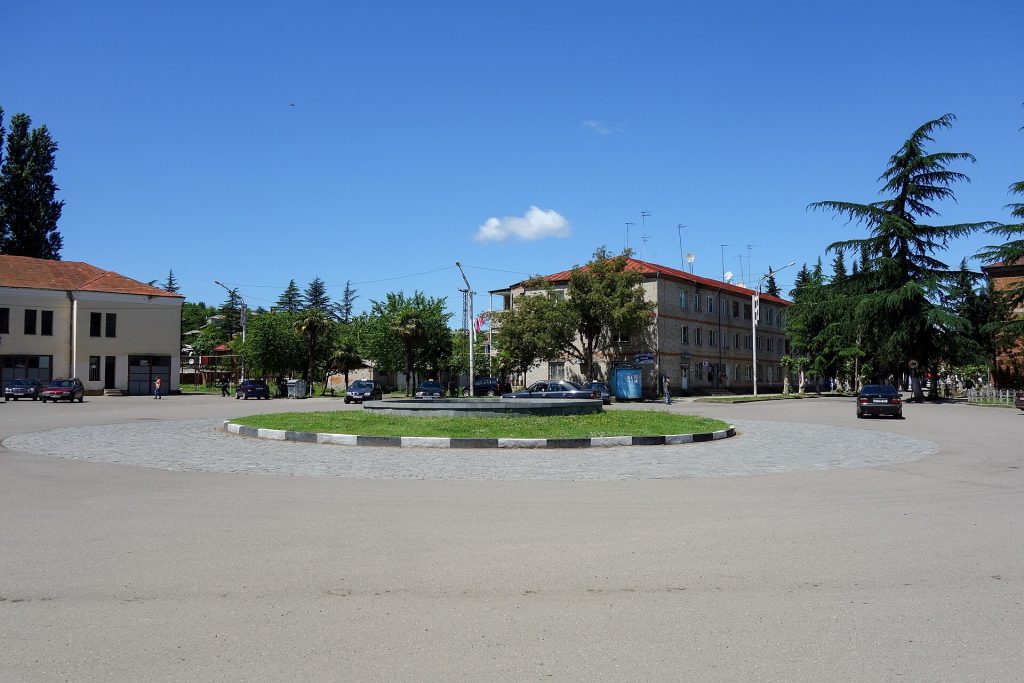
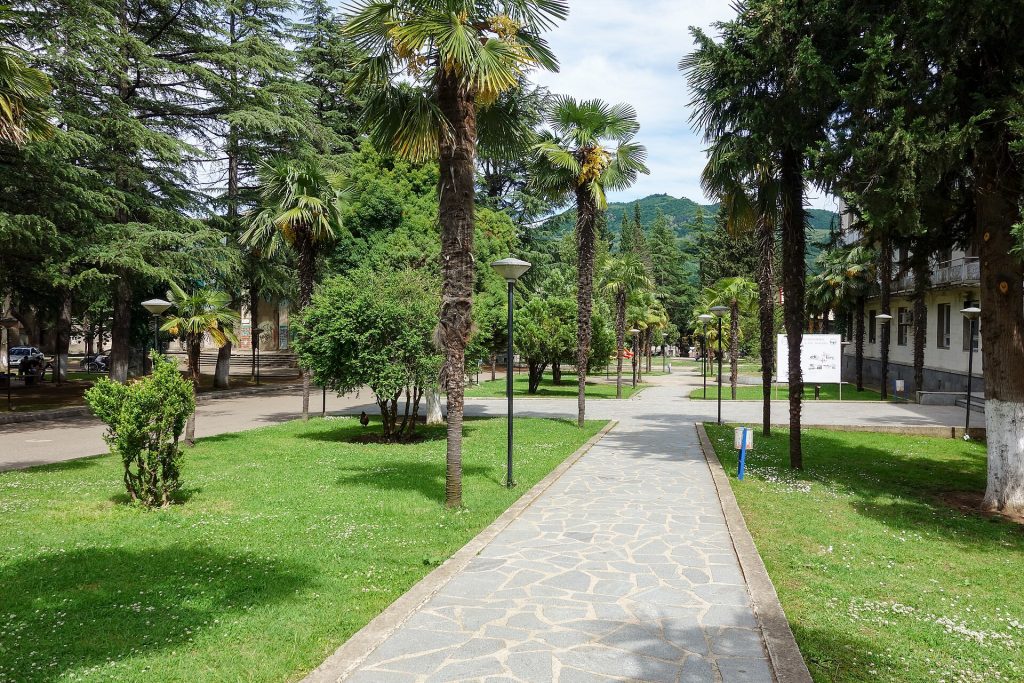
The festival centres on Baghdati’s town square and the area around the Mayakovsky house-museum, where the main stage programme, stalls and exhibitions are typically set up. Events generally run through the afternoon and into early evening, with performances, speeches by local officials, and communal eating and toasting continuing after the formal programme ends. Visitors are welcome to walk through the stalls, watch performances and sample food and wine from local producers.
Etiquette is straightforward: dress is casual but respectful, as at any Georgian town gathering; if invited to join a private supra, it is customary to accept a toast rather than decline outright, though moderate participation is entirely acceptable. If the programme includes a visit to a church or a brief blessing by local clergy, modest dress (covered shoulders and knees, and a headscarf for women) is appropriate inside any church building, consistent with norms across Georgia’s Orthodox sites.
Travel with GTour
The Kutaisi & Western Georgia — 3 Days tour travels through Imereti and can be arranged to pause in Baghdati when Baghdatoba takes place, while the Martvili & Okatse Canyons + Prometheus Cave — Day Trip from Kutaisi covers the nearby canyons on the same regional route. A GTour travel expert designs the itinerary around the guest’s dates once the festival day is confirmed.
Martvili & Okatse Canyons + Prometheus Cave tour Plan my trip
Did you know
- Vladimir Mayakovsky, a central figure of Russian Futurism, was born in Baghdati (then Baghdadi) in Imereti in 1893.
- During the Soviet period the town was renamed Mayakovski in his honour, before reverting to its historic Georgian name, Baghdati, after independence.
- The Georgian suffix “-oba” is used to name place-based festival days across the country, as in Tbilisoba (Tbilisi) and Alaverdoba (Alaverdi).
- Georgian polyphonic singing, heard at feasts such as Baghdatoba, is inscribed on UNESCO’s Representative List of the Intangible Cultural Heritage of Humanity.
- Baghdati’s Mayakovsky childhood home survives as a memorial house-museum, linking the town’s festival calendar to its literary history.
Practical tips for visitors
Baghdati lies in Imereti, close to Kutaisi, making Kutaisi International Airport the most convenient arrival point for travellers combining the festival with a regional visit; flight and transport details are available via Kutaisi International Airport. From Tbilisi, the drive to Baghdati takes roughly three and a half to four hours along the main east–west highway. Because the exact festival date is confirmed only shortly in advance, it is worth checking locally or with a tour operator close to the event before planning travel; GTour arranges a private driver or guide for the day on request. Late October and early November bring cool, often damp weather in Imereti, so layered clothing and a light rain jacket are advisable, and comfortable walking shoes are useful for the town’s uneven pavements.
Combine it with
Baghdati sits within easy reach of several other highlights of western Georgia, and a Baghdatoba visit pairs naturally with wider time in Imereti, including Kutaisi’s historic sites and nearby canyons and caves. Travellers continuing north can combine the festival with the mountain landscapes of Racha, while those extending west toward the high Caucasus may continue on to Svaneti.
Questions travellers ask
Is Baghdatoba a public holiday in Georgia?
No. It is a local municipal festival in Baghdati, not a nationally recognised public holiday, so offices, banks and schools elsewhere in Georgia operate normally on the day.
Why is Baghdati associated with the poet Mayakovsky?
Vladimir Mayakovsky, a leading figure of Russian Futurism, was born in the town in 1893, when it was still known as Baghdadi; his childhood home is preserved today as a memorial house-museum.
Has the 2026 date for Baghdatoba been confirmed?
As of late October 2026, the municipality had not yet published a final date. Based on 2024 and 2025, when the festival fell on 10 October and 3 November respectively, an early-to-mid autumn date is likely, but it should be confirmed locally before travel.
How do I get to Baghdati from Tbilisi or Kutaisi?
From Tbilisi the drive takes roughly three and a half to four hours via the main highway; from Kutaisi, Baghdati is a short onward drive of well under an hour, making Kutaisi International Airport the most practical arrival point.
Is there an entrance fee for the Mayakovsky house-museum?
Small regional house-museums in Georgia typically charge a modest entrance fee, though hours and pricing can change, so it is best to check locally or with a guide on the day.
What should visitors wear or bring?
Casual, comfortable clothing is appropriate, with a light rain jacket and layers recommended given the cool, often damp autumn weather typical of Imereti in October and November.
Can Baghdatoba be combined with other sights in one trip?
Yes. Many visitors pair the festival with a day or two exploring Kutaisi and wider Imereti, and some extend the trip toward Racha or Svaneti given Baghdati’s position in western Georgia.
Is English widely spoken at the festival?
English is limited among older residents and market vendors, though younger locals and festival organisers often have some English; a Georgian-speaking driver or guide is useful for following announcements and conversing with stallholders.
Sources
- 3. Ministry of Culture, Sport and Youth – Mayakovsky House-Museum, Baghdati
- 6. Agenda.ge – Baghdatoba town festival coverage
Plan your Georgia
Want to be in Georgia for Baghdatoba? A GTour travel expert designs the itinerary around it and calls you back.
The wooden house in Baghdati where poet Vladimir Mayakovsky was born, now a museum. · Photo: Yasuhiro Kojima / Wikimedia Commons, CC BY-SA 4.0
This page in other languages: Русский
GTour conciergeAsk anything about Georgia · we reply within hours