Archives


TelaVino in Georgia: dates, meaning and how to experience it
Next dates
9 October 2027 (to be confirmed) · Erekle II palace courtyard, Telavi. See the full events calendar and Georgia today for roads and weather.
What it is
TelaVino is an autumn wine festival held in the courtyard of the former royal palace of King Erekle II in Telavi, the historic capital of Kakheti, Georgia’s principal wine-producing region. The name itself is a modern coinage, not a traditional Georgian word: it joins “Telavi,” the city’s name, with “vino,” the international word for wine. It was built around and adjacent to the much older Georgian concept of rtveli, the word Georgians use for the grape harvest and the family gatherings, church blessings and communal wine-pressing that accompany it each September and October.
The festival is attended mainly by Kakhetian wineries, both long-established commercial houses and small family producers who still ferment wine in buried clay qvevri, alongside domestic visitors from Tbilisi and increasing numbers of foreign travellers who plan an autumn trip around the grape harvest. It is a civic and commercial event rather than a religious one, organised with the involvement of regional tourism bodies and Georgia’s National Wine Agency, and it sits within a broader calendar of Georgian wine tourism that also includes Tbilisi’s New Wine Festival in spring and the Tsinandali Festival nearby in Kakheti.
Historical background
- c. 6000 BC — Archaeological evidence from Neolithic sites south of Tbilisi points to among the earliest known wine production anywhere in the world, underpinning Kakheti’s long viticultural identity.
- antiquity — Kakheti’s plains and foothills, with their distinct microclimates, were cultivated for vine growing for many centuries before statehood as understood today.
- 17th century — Telavi served as the capital of the Kingdom of Kakheti, a separate Georgian kingdom distinct from Kartli to its west.
- 1744–1798 — Erekle II ruled the united Kingdom of Kartli-Kakheti from Telavi, expanding the palace complex known as Batonis Tsikhe that today hosts the festival courtyard.
- 1801 — Following the death of Erekle II’s son, Giorgi XII, the Russian Empire annexed the Kingdom of Kartli-Kakheti, ending Telavi’s role as a royal capital.
- 2013 — UNESCO inscribed the ancient Georgian traditional qvevri wine-making method on the Representative List of the Intangible Cultural Heritage of Humanity.
- 2010s — Regional tourism authorities and Kakhetian producers began organising a public autumn wine gathering in the palace courtyard in Telavi, giving visitors direct access to winemakers during harvest season.
- today — TelaVino continues as an annual, organiser-confirmed event, promoted alongside Georgia’s wider push to position Kakheti as a wine-tourism destination.
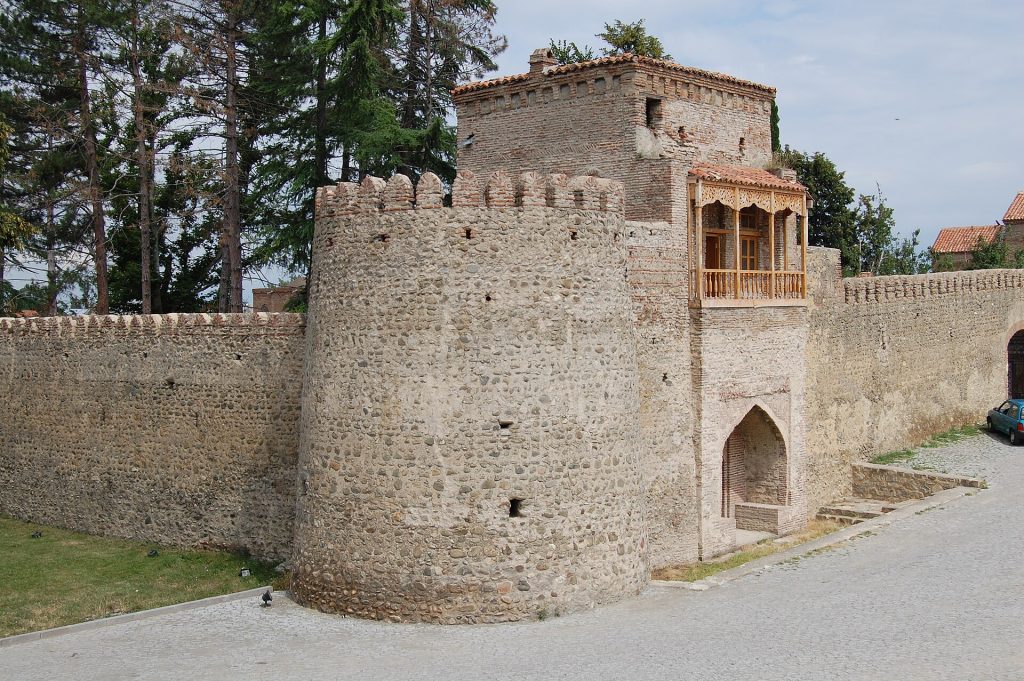
Telavi’s claim to the festival rests on two layers of history that overlap neatly. The city was a royal seat for more than a century, and the palace that Erekle II enlarged still stands with its defensive walls, church and a plane tree traditionally said to have been planted by the king himself. At the same time, the valleys around Telavi, including Tsinandali, Napareuli, Kvareli and Akhasheni, have been under vine for longer than written Georgian history records, producing the grape varieties, Rkatsiteli and Saperavi foremost among them, that still dominate Kakhetian wine today.
The festival is best understood as a modern civic invention layered onto very old practices. Rather than reviving a single historic ceremony, organisers use the royal courtyard as a stage to bring producers, many of whom work from small villages without tasting rooms, into direct contact with the public during the one season when the harvest is physically visible in every courtyard and vineyard across Kakheti. This makes TelaVino less a feast day with fixed liturgy and more a showcase, timed deliberately to coincide with rtveli.
Meaning and traditions
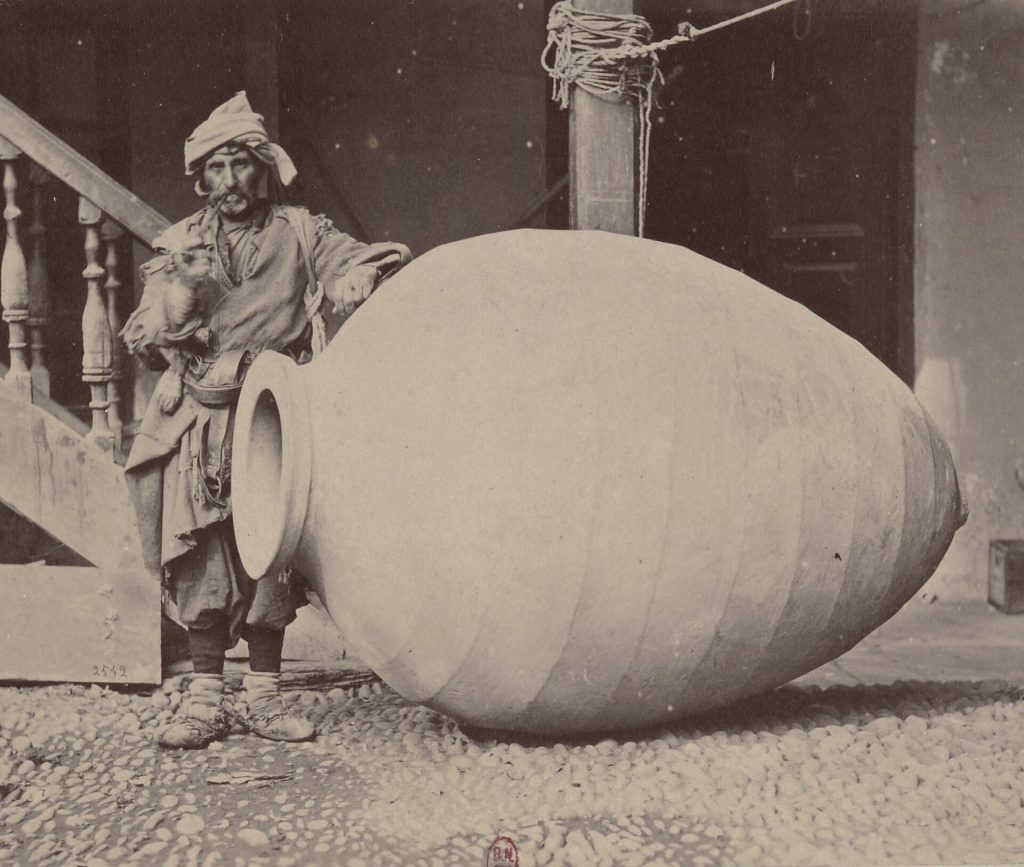
At its core, TelaVino is about tasting: rows of producers pour Rkatsiteli, Saperavi, Mtsvane and other indigenous varieties, often made in both the European style and the traditional qvevri method, in which grape juice, skins, pips and stems ferment together in large clay vessels buried in the ground. Visitors can expect to hear the word qvevri (the buried clay vessel), marani (the cellar or wine-house where the qvevri are kept), and gaumarjos, the Georgian toasting word meaning roughly “to victory,” used at every table.
Food stalls typically serve Kakhetian specialties that pair with the region’s tannic reds and amber wines: khinkali, mtsvadi (grilled meat skewers), lobio and freshly baked bread from a clay tone oven. Traditional polyphonic singing, a Georgian choral form recognised internationally for its complex harmonies, often accompanies the tastings, along with regional dance performances. Regional variation matters here: Kakhetian hospitality customs, including the role of the tamada, or toastmaster, who leads formal toasts at a shared table, are distinct from how wine is served and discussed in western Georgian regions such as Imereti or Racha, where lighter, less tannic wines and different toasting conventions prevail.
When it happens
TelaVino does not follow a fixed calendar date. Like the grape harvest itself, its timing depends on the ripening of Kakheti’s vineyards that year, and organisers confirm the exact day only a few weeks in advance, typically placing it in early October. In 2026 the festival was held in early October; the next edition is provisionally scheduled for 9 October 2027, subject to confirmation closer to the date.
TelaVino is not a public holiday in Georgia. Government offices, schools and most businesses operate normally on the day, and the event affects only local traffic and parking around Telavi’s old town rather than national services.
Where to experience it
The festival takes place inside the courtyard of Batonis Tsikhe, the former royal residence of Erekle II in central Telavi, a complex that includes the king’s church, defensive walls and museum displays on the Kingdom of Kartli-Kakheti. Visitors typically arrive from mid-morning onward, when producer stalls are set up along the courtyard, and the atmosphere builds through the afternoon as tastings, food and music overlap. Within the walled courtyard, dress modestly if visiting the small palace church, removing hats for men and covering shoulders for women, as is customary at any functioning Orthodox church in Georgia.
Beyond the palace itself, the surrounding Kakheti region rewards a longer stay: Alaverdi Cathedral and Monastery, one of the tallest historic churches in Georgia, lies a short drive from Telavi, as does Tsinandali Estate, the 19th-century home and winery of the Chavchavadze family. Many visitors combine a day at TelaVino with a wider wine-road itinerary through Kvareli and Napareuli.
Travel with GTour
The Rtveli — Wine Harvest in Kakheti (3 Days, September–October) tour already travels through Telavi during the harvest weeks and can be arranged to include the TelaVino gathering at Erekle II palace courtyard if the early-October date is confirmed in time. For guests combining this with the Racha — Khvanchkara Wine & Mountain Lakes (2 Days) tour, a GTour travel expert will design the route around the chosen dates.
Did you know
- Archaeological finds from sites south of Tbilisi have made Georgia one of the places most frequently cited by researchers as home to the earliest evidence of wine production anywhere in the world.
- The qvevri method of fermenting wine in large buried clay vessels was recognised by UNESCO as Intangible Cultural Heritage in 2013.
- Georgia is home to several hundred indigenous grape varieties, according to Georgia’s National Wine Agency, far more than most wine-producing countries retain in active use.
- The palace courtyard in Telavi where TelaVino is held once served as the seat of Erekle II, a king remembered for briefly uniting eastern Georgia’s two kingdoms, Kartli and Kakheti.
- Rtveli, the traditional family grape harvest that TelaVino coincides with, is typically a household and village event rather than a public festival, carried out in home courtyards and marani cellars across Kakheti.
Practical tips for visitors
Telavi lies roughly a two-hour drive east of Tbilisi along the Kakheti highway; shared marshrutka minibuses and private transfers both run the route, but a private driver offers more flexibility for combining the festival with nearby wineries and churches. Early October weather in Kakheti is generally mild during the day and cool after sunset, so layered clothing and comfortable shoes for cobbled palace courtyards are advisable. Because tastings are central to the event, arranging transport in advance rather than driving is strongly recommended. GTour arranges a private driver or guide for the day, which removes the need to drive after tasting and allows stops at wineries en route.
Combine it with
A trip to TelaVino pairs naturally with a longer stay across Kakheti’s wine villages and monasteries, or a return route through Tbilisi for its old town and museums. Travellers with more time sometimes continue north toward Kazbegi for a contrast between the wine valleys of Kakheti and the high Caucasus.
Questions travellers ask
Is TelaVino a public holiday in Georgia?
No. It is a regional cultural and tourism event, not a state holiday, so schools, offices and most businesses operate as usual on the day.
How do I get from Tbilisi to Telavi for the festival?
Telavi is about two hours from Tbilisi by road. Shared minibuses run from Tbilisi’s Isani or Samgori transport hubs, while a private driver offers more flexibility for combining the festival with surrounding wineries.
Do I need to book tickets in advance?
Entry details and any ticketing are set by the organisers closer to the confirmed date each year, so checking official regional tourism channels shortly before travelling is advisable.
How is TelaVino different from Tbilisi’s New Wine Festival?
The New Wine Festival takes place in Tbilisi in spring, soon after the previous year’s wine is ready to taste, while TelaVino happens in Kakheti in autumn, timed to the grape harvest itself and set inside a historic royal courtyard rather than an urban park.
Can children attend the festival?
Yes, the event is family-friendly, with food, music and dance alongside the wine stalls, though the tastings themselves are intended for adults.
What is qvevri wine, and will I taste it at TelaVino?
Qvevri wine is fermented in large clay vessels buried underground, a method distinct from stainless-steel or barrel fermentation, and it is central to Kakhetian winemaking. Most producers at TelaVino pour at least one qvevri-style wine alongside their European-style bottlings.
What should I wear or bring?
Comfortable shoes for the cobbled palace courtyard, a light jacket for the cooler evening, and modest clothing if visiting the small palace church are all advisable.
What else is worth seeing in Telavi on the same trip?
Batonis Tsikhe itself, including Erekle II’s church and the old plane tree, Alaverdi Cathedral a short drive away, and Tsinandali Estate are all commonly combined with a festival visit.
Sources
- UNESCO Intangible Cultural Heritage – Qvevri wine-making
- National Wine Agency of Georgia
- Georgian National Tourism Administration
- Ministry of Culture of Georgia
- Agenda.ge
- Georgia Today
- Ministry of Environmental Protection and Agriculture
- Georgian National Tourism Administration (georgia.travel)
Plan your Georgia
Want to be in Georgia for TelaVino? A GTour travel expert designs the itinerary around it and calls you back.
Erekle II palace courtyard in Telavi, venue of the TelaVino wine festival. · Photo: MaxBenidze / Wikimedia Commons, CC BY-SA 4.0
This page in other languages: Русский
GTour conciergeAsk anything about Georgia · we reply within hours