Archives


Batumi Honey Festival in Georgia: dates, meaning and how to experience it
Next dates
7 August 2027 – 8 August 2027 (to be confirmed) · Batumi Boulevard. See the full events calendar and Georgia today for roads and weather.
What it is
The Batumi Honey Festival (in Georgian, Taplis Festivali, literally “Festival of Honey,” from tapli, honey) is a summer open-air event held on Batumi Boulevard that brings together beekeepers from Adjara and other Georgian regions to sell, taste and explain their honey, beeswax and hive products to residents and visitors. It is organized as part of Batumi’s wider calendar of seaside cultural and agricultural events, which also includes wine, cheese and seafood gatherings on the same promenade.
The festival is celebrated by beekeepers’ cooperatives, family apiary owners, and the municipal and regional tourism bodies that support them, with the public — Batumi residents, Georgian holidaymakers, and foreign tourists visiting the coast in high season — as the main audience. Unlike church feast days, it is a secular, tourism-oriented event, though it draws on a much older regional reputation for honey that stretches back to the ancient Black Sea littoral known to Greek writers as Colchis.
Historical background
- 5th century BCE — Xenophon’s Anabasis describes Greek mercenaries on the Black Sea coast near the lands of the Colchians falling ill after eating local honey, now understood to be “mad honey” produced from rhododendron nectar, a phenomenon still associated with this coastline (britannica.com).
- Classical antiquity — Greek and Roman sources repeatedly describe Colchis, the historical region encompassing modern Adjara, for its dense forests, rivers and abundant wild bees.
- Medieval period — Georgian Orthodox practice incorporated beeswax candles and, traditionally, honey offerings into church ritual and feast-day hospitality, reinforcing beekeeping as a household occupation across Georgian regions.
- 19th century — Surveys of Transcaucasia under Russian imperial administration note Adjara’s chestnut forests and mountain pastures as favorable for apiculture alongside tobacco and citrus.
- Soviet period — State and collective farms organized apiaries in Adjara on an industrial scale, standardizing honey production alongside other regional agriculture.
- 1990s — After the end of collective farming, beekeeping in Adjara reverted largely to small family operations, a pattern that still defines the sector today.
- 2010s — A dedicated honey festival on Batumi Boulevard emerged as part of the city’s expanding summer cultural-tourism program, giving small producers a direct outlet to sell to visitors.
- Today — The festival continues annually on the boulevard in mid-August, promoted through Adjara’s tourism channels as one of several seasonal food festivals on the coast (gobatumi.com, visitbatumi.com).
The deeper history behind the festival is not the event itself, which is modern, but the region’s long-standing relationship with bees. Adjara’s subtropical climate, chestnut forests and flowering understorey, combined with the wild rhododendron thickets of the nearby mountains, have produced both prized honey and the odd, well-documented toxic honey that unsettled Xenophon’s soldiers more than two thousand years ago. That reputation, still referenced by beekeepers and guides today, gives the festival a cultural weight beyond its recent founding.
In practical terms, the festival grew out of Batumi’s post-2000s transformation into a year-round resort city, where municipal and regional authorities began scheduling themed agricultural and culinary events to extend tourism beyond the beach. Honey, alongside wine and hazelnuts, became a natural showcase product for Adjara, and the Boulevard — already the city’s central public space — the obvious venue.

Meaning and traditions
Beekeepers set up stalls along a stretch of Batumi Boulevard, displaying jars of tsitsmatura tapli (chestnut honey), acacia honey, wildflower honey, and sometimes small quantities of the rhododendron-nectar honey associated with the region’s ancient reputation, usually sold with a clear warning about its mild intoxicating effect if eaten in large amounts. Visitors can taste products before buying, and stalls often include honeycomb pieces, beeswax candles, propolis tinctures, pollen, and bee-related crafts.
Alongside the tastings, the festival typically features folk music, demonstrations of traditional hive-keeping equipment, and sometimes children’s activities explaining pollination and beekeeping. Food stalls pair honey with Georgian staples — bread, cheese, walnuts — and some vendors offer honey-based drinks or desserts. The event has no fixed liturgical vocabulary or ritual script; its language is practical and commercial, built around direct conversation between beekeepers and the public rather than performance.
Regional variation shows mainly in the honey itself: Adjara’s coastal lowlands and chestnut forests produce a dark, mineral-rich chestnut honey distinct from the lighter acacia and linden honeys more common in Kakheti and Imereti, and from the high-mountain wildflower honeys of Svaneti and Racha. Visitors who taste across Georgia’s regions often notice these differences more clearly than any single festival ritual.
When it happens
The Batumi Honey Festival is not fixed to a specific calendar date; it is scheduled by organizers for a weekend in mid-August each year, timed to the summer tourist season on the coast, and dates are confirmed closer to the event. For 2026, the festival falls on 25 October according to the organiser’s current notice, though mid-August dates are more typical in past years; for 2027, organisers have indicated 7–8 August, to be confirmed. It is not a public holiday, and it does not affect the opening hours of shops, offices or transport in Batumi; the city operates normally around it.
Where to experience it
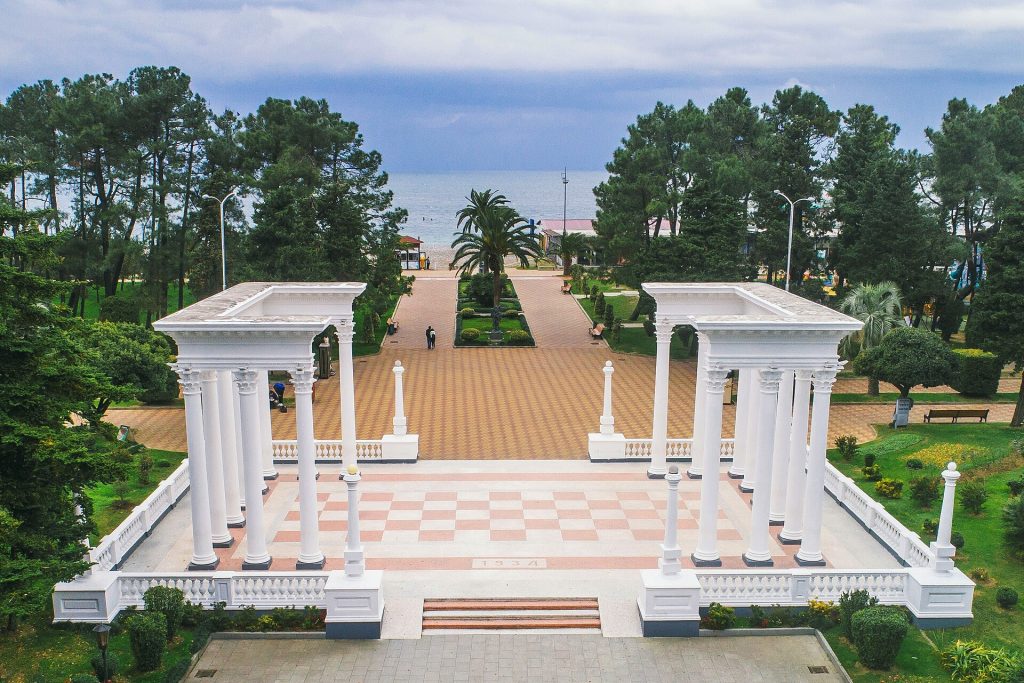
The festival takes place outdoors on Batumi Boulevard, the long seafront promenade that runs along the Black Sea coast through the center of Batumi. Visitors should expect rows of vendor tables set along a section of the boulevard’s wide paved walkways, typically active through the afternoon and into the evening when the sea breeze makes the heat more bearable. No church or sacred etiquette applies, as this is a secular public event; the only practical courtesy is the usual market manner — ask before tasting multiple samples, and expect prices to be fixed rather than heavily negotiable, since most stalls are small family producers.
Travel with GTour
The Batumi & the Ajara Mountains — 2 Days tour closes its loop along Batumi Boulevard, so an early August departure can land its final afternoon right in the honey stalls, while Georgia in 10 Days — Tbilisi to Svaneti to the Sea reaches the coast near the festival weekend as it winds down from the mountains. A GTour travel expert will shape either route around your own dates once the festival is confirmed.
Did you know
- Ancient Greek writer Xenophon recorded soldiers becoming disoriented after eating local honey on the Black Sea coast near Colchis, an episode modern researchers attribute to rhododendron-derived “mad honey,” still produced in small quantities in Georgia’s mountains today.
- Adjara’s chestnut forests, which still supply a distinctive dark honey, were already noted by 19th-century regional surveys as valuable both for timber and for beekeeping.
- Georgian households traditionally used honey in winter preparations and hospitality long before the festival existed, though the iconic honey-and-walnut sweet gozinaki is associated with the New Year period rather than this summer event.
- Most honey sold at the festival comes from small, family-run apiaries rather than large commercial producers, a pattern that re-emerged after the end of Soviet-era collective farming.
- Batumi Boulevard, the festival’s venue, is one of the oldest planned public promenades in the South Caucasus, developed from the late 19th century onward as the city grew into a Black Sea port and resort.
Practical tips for visitors
Batumi is reachable by air via Batumi International Airport, by train from Tbilisi, or by road along the coastal highway; the boulevard itself is within easy walking distance of the city center and most hotels. Mid-August weather on the coast is hot and humid, so light clothing, sun protection and water are advisable for an afternoon spent browsing outdoor stalls. Because exact festival dates are confirmed only shortly beforehand, travelers planning a trip specifically around it should check current listings with Adjara’s tourism offices before booking accommodation. No tickets or advance booking are required to attend; it is a free, open public event.
Combine it with
A visit to the festival pairs naturally with time exploring the wider Adjara region, including its mountain villages and chestnut forests that supply much of the honey on sale. Travelers continuing inland can combine Batumi with the vineyards and wine culture of Kakheti, or the historic towns and architecture of Imereti, both regions with their own honey traditions worth comparing against Adjara’s coastal varieties.
Questions travellers ask
Is the Batumi Honey Festival a public holiday?
No. It is a cultural and tourism event, not a national or religious holiday, and it has no effect on the opening hours of shops, banks or offices in Batumi.
Do I need tickets to attend?
No advance tickets are required. The festival is a free, open-air public event on Batumi Boulevard that anyone can walk into.
Is it safe to eat the “mad honey” sometimes sold there?
Vendors who sell rhododendron-derived honey typically warn buyers about its mild intoxicating effects in large quantities; it is generally sold in small amounts and should be tasted cautiously rather than eaten freely.
What exactly will I see at the festival?
Expect stalls of jars featuring chestnut, acacia and wildflower honey, honeycomb pieces, beeswax candles, propolis products, and often folk music or hive demonstrations along a stretch of the boulevard.
How do I find out the exact dates each year?
Because the festival is scheduled on a variable mid-August weekend and confirmed closer to the time, checking Adjara’s regional tourism websites shortly before a planned visit is the most reliable approach.
Is this the same as other Georgian honey or food festivals?
It is a distinct regional event tied to Adjara’s coastal and chestnut-forest honey traditions, separate from wine festivals in Kakheti or other seasonal food events elsewhere in Georgia, though all are part of a similar pattern of agricultural tourism festivals.
Can I buy honey to take home?
Yes, most vendors sell sealed jars suitable for travel; buyers planning to fly internationally should check their airline’s and destination country’s rules on importing liquid food products.
Is the festival suitable for children?
Yes, it is an outdoor, family-friendly event, and some editions have included simple educational activities about bees and pollination aimed at younger visitors.
Sources
- Georgia Travel – National Tourism Administration
- Go Batumi tourism portal
- Visit Batumi tourism portal
- Ministry of Culture, Sport and Youth of Georgia
- Agenda.ge Report
Plan your Georgia
Want to be in Georgia for Batumi Honey Festival? A GTour travel expert designs the itinerary around it and calls you back.
A beekeeper lifts a honeycomb frame from a hive in Chkhorotsku, Georgia, showcasing local apiculture. · Photo: Giorgi Abdaladze / Wikimedia Commons, CC BY-SA 4.0
This page in other languages: Русский
GTour conciergeAsk anything about Georgia · we reply within hours