Archives


Tbilisi Honey Festival in Georgia: dates, meaning and how to experience it
Next dates
26 June 2027 – 27 June 2027 (to be confirmed) · Mtatsminda Park, Tbilisi. See the full events calendar and Georgia today for roads and weather.
What it is
The Tbilisi Honey Festival — in Georgian თბილისის თაფლის ფესტივალი, Tbilisis Taplis Pestivali — takes its name directly from the word tapli (თაფლი), simply “honey,” combined with the borrowed international word for festival. It is not a church feast or a state holiday but a public cultural-agricultural gathering, organized each summer at Mtatsminda Park above the city, where beekeepers (meputkreebi, from mepa, bee) bring their harvests down from mountain valleys, chestnut forests and vineyard country to sell, compare and explain their craft to Tbilisi residents and visitors.
It is celebrated, in the loose sense of that word, by anyone who shows up: professional and smallholder beekeepers from Racha, Kakheti, Guria, Svaneti and Adjara; chefs and food producers who pair honey with Georgian cheese, bread and fruit preserves; families out for a weekend walk; and tourists drawn by the park’s funicular and its views over the Mtkvari valley. The event sits at the intersection of two Georgian preoccupations that run deeper than any single festival — a fierce regional pride in local produce, and a long rural tradition of keeping bees in the country’s forests and high pastures.
Historical background
- Antiquity — beekeeping and the gathering of wild honey are attested across the forested valleys and subalpine meadows of the Caucasus from early times, forming part of the subsistence economy of mountain and lowland communities alike, according to Georgian ethnographic scholarship.
- Medieval period — honey and beeswax served practical and ritual purposes in Georgian life, from sweetening and preserving food to supplying wax for church candles, a use that has continued unbroken in Georgian Orthodox practice.
- 19th century — rural apiculture in Georgia, then part of the Russian Empire, gradually absorbed movable-frame hive techniques alongside older log-hive and basket methods still practiced in remote valleys.
- 1921–1991 — under Soviet rule, beekeeping was partly organized through collective and state farms, while many households continued to keep a small number of hives privately.
- 1990s — following independence, collectivized apiaries broke up and beekeeping reverted largely to family and smallholder operations, a pattern that still defines the sector today, as reflected in data from the National Statistics Office of Georgia.
- 2000s–2010s — the agriculture ministry and beekeepers’ associations began promoting Georgian honey varieties for domestic and export markets, work continued today by the Ministry of Environmental Protection and Agriculture.
- Mid-2010s — Tbilisi City Hall, working with regional beekeeping associations, began hosting an annual honey festival at Mtatsminda Park as a showcase for producers from across the country.
- 2020–2021 — like most public gatherings in Georgia, the festival’s format and scale were affected by pandemic-era restrictions.
- Today — the festival is held annually on the last weekend of June, with exact dates confirmed by organizers each spring and publicized through the Tbilisi City Hall and national tourism channels.
Georgia’s unusually compressed geography — subtropical Black Sea coast, broadleaf and chestnut forest belts, vineyard plains and high alpine pasture, often within a single day’s drive of one another — gives its beekeepers access to a wide palette of nectar sources rarely found together in one country. This diversity, more than any single historic event, is the real engine behind the festival: chestnut forests in Guria and Adjara, high-mountain wildflower meadows in Racha and Svaneti, acacia stands in Kakheti and linden trees in Imereti each yield honey with a distinct color, density and flavor, and it is this variety that the Tbilisi festival exists to put side by side on one table.
The festival itself is a modern institution rather than an ancient rite, and organizers are candid that it functions as both cultural event and small-business platform, helping rural beekeeping households reach urban and international buyers who would otherwise never taste a jar of high-altitude Svan honey or Rachan chestnut honey. Its continuity owes more to municipal and ministerial support for regional agriculture than to any fixed historical calendar, which is why its dates are announced fresh each year rather than fixed permanently.
Meaning and traditions
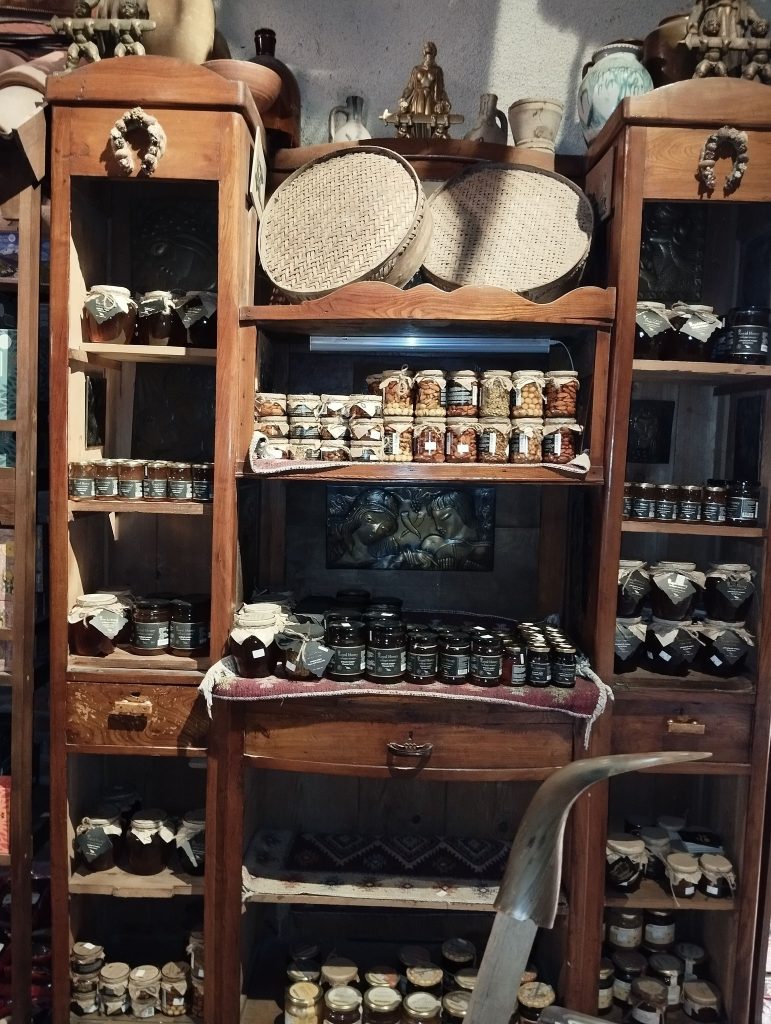
At its core the festival is a market and a tasting fair. Stalls run by beekeeping families and cooperatives line the paths of Mtatsminda Park, each offering small spoons or sticks for sampling multiple jars of tapli before buying. Many vendors bring observation hives behind glass or mesh so visitors can watch bees at work without risk, and some demonstrate extraction equipment, combs and traditional wooden hive boxes alongside modern frame hives. Alongside raw honey, stalls typically sell beeswax candles, propolis tinctures, bee pollen, honeycomb pieces and honey-based sweets — including, in some years, gozinaki, the walnut-and-honey brittle traditionally associated with the New Year table but sold year-round as a honey-forward confection.
There is no fixed liturgy or set of words associated with the event, unlike a church feast; the atmosphere is informal, with folk and acoustic music on a small stage, children’s activities, and food stalls pairing honey with Georgian cheese, bread, fruit and matsoni (strained yogurt). The main Georgian vocabulary a visitor will hear is straightforward: tapli (honey), meputkre (beekeeper), and the names of regional honeys such as tsablis tapli (chestnut honey). Regional identity matters a great deal here — a Rachan beekeeper will speak proudly of high-altitude wildflower honey gathered far from agricultural chemicals, while a Gurian or Adjaran producer will emphasize the dark, slightly bitter character of chestnut-forest honey, and Kakhetian stalls often highlight lighter acacia varieties grown near the region’s vineyards.
When it happens
The festival follows no fixed church or state calendar; it is scheduled by its organizers for the last weekend of June each year, with precise Saturday–Sunday dates confirmed closer to the event. The 2026 edition is understood to have taken place on the last weekend of that June; the 2027 edition is expected on 26–27 June 2027, subject to confirmation by Tbilisi City Hall and partner beekeeping associations in the preceding months. It is not a public holiday in Georgia: government offices, banks, shops and transport run on a normal schedule, and the event affects only Mtatsminda Park and its immediate approaches, which become busier than usual on festival days.
Where to experience it
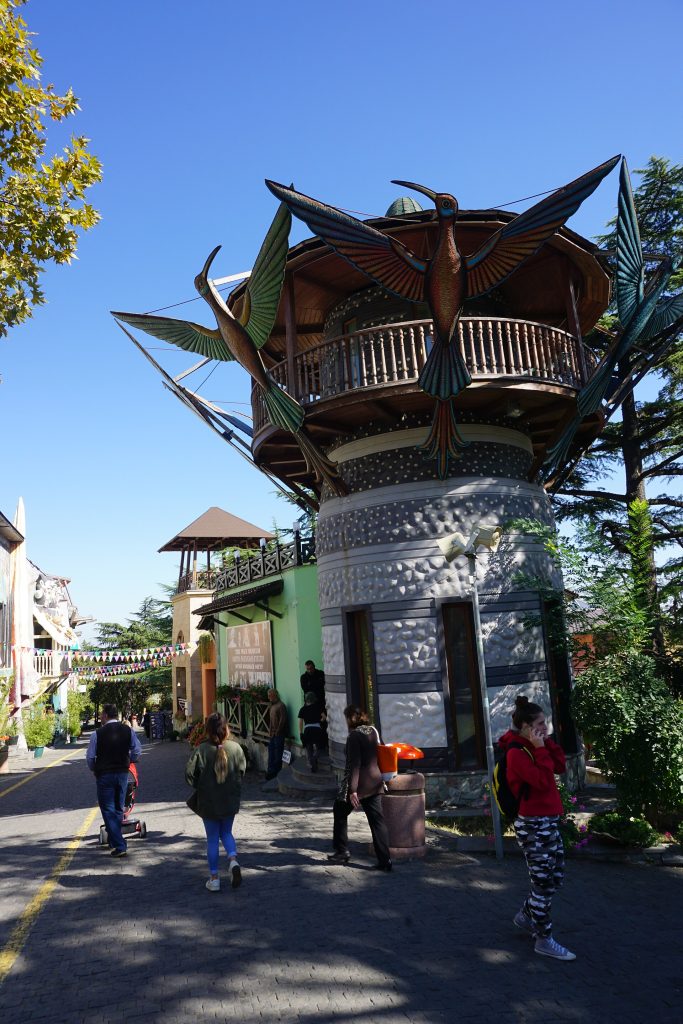
Mtatsminda Park sits on the plateau atop Mount Mtatsminda overlooking central Tbilisi, reached by the historic Mtatsminda Funicular from its lower station near Chonkadze Street, by cable car, or by road. On festival days, stalls typically run through the daytime and into early evening across the weekend, with the busiest crowds on Saturday and Sunday afternoons. Visitors can expect rows of producer stalls, tasting spoons offered freely by vendors, observation hives, a music stage, and sweeping views over the Mtkvari river valley and the old town below. There is no religious etiquette to observe, as this is a secular civic event, but ordinary courtesy applies: ask before photographing individual vendors and their products, do not touch or disturb live bee displays, and keep small children close to observation hives.
Travel with GTour
The Tbilisi & Mtskheta — The Essential First Day tour begins in the capital and can be arranged to include Mtatsminda Park on the last weekend of June, when beekeepers from every region gather for the honey festival, while Georgia in 10 Days — Tbilisi to Svaneti to the Sea opens with the same Tbilisi days before continuing north. A GTour travel expert designs the route around the guest’s dates to align either tour with the festival weekend.
Did you know
- Georgia’s compressed range of climate zones, from subtropical coast to high Caucasus pasture, lets beekeepers within a short drive of one another produce honeys of markedly different color and flavor.
- Mtatsminda Park has been reached by funicular since the early twentieth century, making the ride up the mountain part of the festival experience itself.
- Gozinaki, walnuts bound in boiled honey, is traditionally served at the Georgian New Year table, showing honey’s place in festive food well beyond midsummer.
- Georgian beekeeping remains largely a smallholder activity, with many apiaries family-run on a small scale rather than industrialized.
- Chestnut forests in Adjara and Guria yield a distinctively dark, slightly bitter honey that beekeepers and buyers treat as a separate category from lighter wildflower varieties.
Practical tips for visitors
Reach Mtatsminda Park by the funicular from the lower station near Freedom Square and Chonkadze Street, by cable car, or by taxi along the mountain road; parking at the plateau is limited on festival weekends. Dress for a warm late-June day in Tbilisi, with comfortable shoes for walking the park grounds and a hat or sunscreen, since much of the festival takes place outdoors with limited shade. Entry to the park and festival area is typically free, though individual tastings or workshops may carry small charges, so carrying some cash in Georgian lari is useful, as smaller stalls may not accept cards. There are no citywide closures connected to the event, and it is easily combined with a half-day visit to Tbilisi’s old town, since the park overlooks it directly. Because dates are confirmed only a few months ahead, travelers planning a trip specifically around the festival should check current announcements before booking.
Combine it with
Travelers interested in the honey festival often extend their trip into Kakheti, Georgia’s wine region, where acacia honey production sits alongside vineyards; Racha, known for high-mountain wildflower honey and dramatic alpine scenery; and Adjara, whose chestnut forests supply the dark honey prized by many festival vendors.
Questions travellers ask
Is the Tbilisi Honey Festival a public holiday?
No. It is a cultural and agricultural event, not a state or religious holiday, so offices, banks and shops operate normally on festival days.
How do I get to Mtatsminda Park for the festival?
The easiest route is the historic funicular from its lower station near Freedom Square and Chonkadze Street; the park is also reachable by cable car or by road via taxi.
Is there an entrance fee?
Entry to the park and festival grounds is generally free, though some individual tastings, workshops or products carry their own small charges from vendors.
What can I buy at the festival?
Expect jars of regional honey varieties, beeswax candles, propolis and pollen products, honeycomb, and honey-based sweets such as gozinaki, sold directly by beekeeping families and cooperatives.
Is it suitable for children?
Yes, with music, tastings and observation hives that let children watch bees safely behind glass or mesh, though adults should supervise children closely near any live bee displays.
What happens if the dates change from year to year?
Because the festival is scheduled around the last weekend of June rather than fixed to a specific date, organizers confirm exact dates a few months in advance through city and tourism channels, so it is worth checking before finalizing travel plans.
Are there other honey events elsewhere in Georgia?
Smaller regional fairs and agricultural markets in honey-producing areas such as Racha and Guria sometimes feature local honey alongside other produce, but the Tbilisi festival is the most prominent dedicated honey event in the capital.
What should I wear or bring?
Light, comfortable summer clothing and sturdy walking shoes suit the outdoor park setting; sun protection and small cash denominations in Georgian lari are also useful for tastings and purchases.
Sources
- Georgian National Tourism Administration
- Ministry of Environmental Protection and Agriculture of Georgia
- National Statistics Office of Georgia
- Tbilisi City Hall
- Agenda.ge
- Georgia Today
- GNTA
Plan your Georgia
Want to be in Georgia for Tbilisi Honey Festival? A GTour travel expert designs the itinerary around it and calls you back.
A Georgian beekeeper inspects a honeycomb frame, reflecting the craft celebrated at the festival. · Photo: Giorgi Abdaladze, Photographer of the Orbeliani Palace / Wikimedia Commons, CC BY-SA 4.0
This page in other languages: Русский
GTour conciergeAsk anything about Georgia · we reply within hours