Archives


Mercedes-Benz Fashion Week Tbilisi in Georgia: dates, meaning and how to experience it
Next dates
6 May 2027 – 9 May 2027 (to be confirmed) · Factory Tbilisi. See the full events calendar and Georgia today for roads and weather.
What it is
Mercedes-Benz Fashion Week Tbilisi is the capital’s principal runway event, bringing together Georgian and regional designers, buyers, stylists and press for several days of shows and presentations. In Georgian, the event is generally referred to as modis k’vira (მოდის კვირა), a phrase built from moda, a borrowed word for “fashion,” and k’vira, meaning “week” — so, literally, “fashion’s week.” Unlike the religious and agricultural feasts that structure much of the Georgian calendar, this is a modern, secular, industry-driven event, closer in spirit to the fashion weeks of Paris, Milan or Tbilisi’s regional neighbours than to a folk holiday.
It is celebrated, in a sense, by Georgia’s design and creative community: fashion houses old and new, textile and jewellery makers, models, photographers, make-up artists and the journalists who cover them. For visitors, it functions less as a civic holiday — it is not a day off work or school — and more as a cultural showcase: a chance to see, in a few concentrated days, how a small post-Soviet country turned a handful of tailoring workshops into an internationally watched design scene.
Historical background
- 1990s — after Soviet collapse and the disruption of state-run textile combines, independent ateliers and small studios begin to re-establish private fashion production in Tbilisi.
- 2014 — Tbilisi-born brothers Demna and Guram Gvasalia found the Paris-based label Vetements, drawing international design attention to Georgian talent for the first time in a generation.
- 2015 — Demna Gvasalia is appointed creative director of Balenciaga the same year that organised fashion-week presentations begin in Tbilisi, laying the groundwork for a recurring citywide event.
- 2016 — Fabrika Tbilisi, a former Soviet-era garment and footwear factory in the Avlabari district, reopens as a hostel, co-working and creative complex, later becoming the event’s principal venue.
- Late 2010s — the event is rebranded as Mercedes-Benz Fashion Week Tbilisi, joining the internationally licensed Mercedes-Benz Fashion Week format and adopting a twice-yearly, spring and autumn calendar.
- 2020–2021 — like fashion weeks worldwide, in-person runway programming is curtailed by the COVID-19 pandemic, with organisers scaling back to smaller or digital presentations.
- 2022 onward — full runway seasons resume at Factory Tbilisi, typically clustered around early May, showcasing established and emerging Georgian labels to visiting buyers and press.
- 2020s — Georgian-trained designers continue to show in Paris, Milan and London, with Fashion Week Tbilisi serving as the domestic platform that feeds that international pipeline.
The event’s rise tracks a broader story about Tbilisi’s post-Soviet reinvention. International outlets including the BBC and The Guardian have profiled the city’s emergence as an unlikely fashion hub over the past decade, usually anchored by the global visibility of Demna Gvasalia and a wider wave of Georgian-trained designers working in Western ateliers. That international attention, in turn, helped justify a dedicated local platform: a place where Georgian houses could show at home, in front of foreign buyers, rather than only abroad.
The choice of venue matters as much as the calendar. Factory Tbilisi occupies a Soviet-built industrial shell that once produced textiles and footwear — the same kind of building that, in earlier decades, might have symbolised standardised state production. Its conversion into a stage for individual designers’ collections is, deliberately or not, a small piece of historical irony that organisers and visiting press have repeatedly noted.
Meaning and traditions
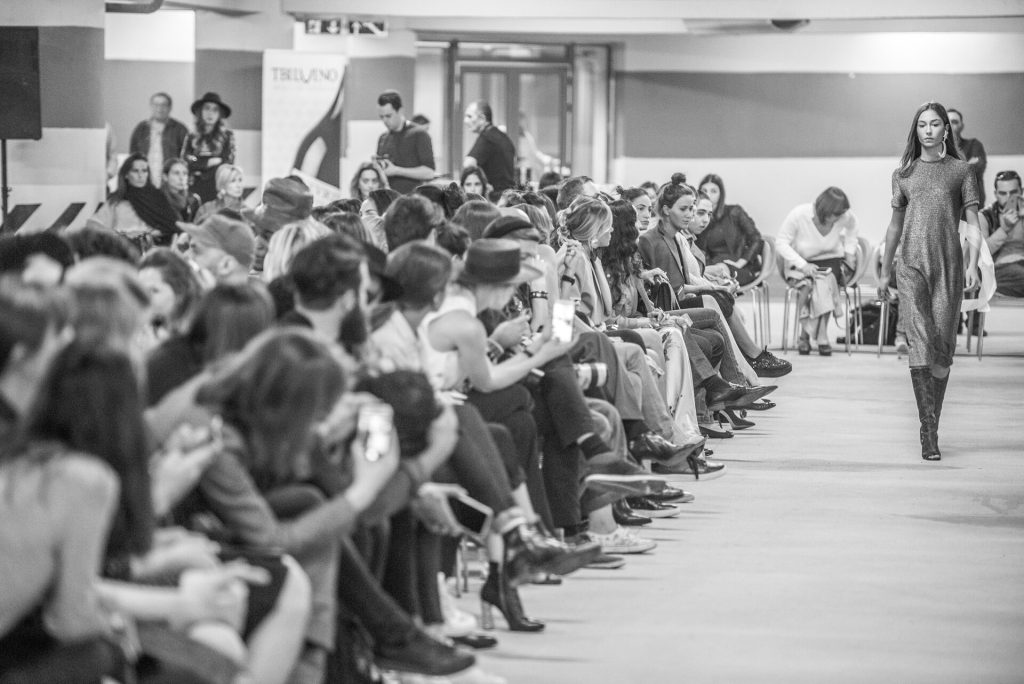
There is no liturgy or folk ritual attached to Fashion Week Tbilisi; its “traditions” are those of the international fashion-week circuit, adapted to a Georgian setting. Shows (p’okazebi, a loanword from Russian/French usage common in local fashion vocabulary) run on a tight schedule in converted factory halls, each slot given to a single designer’s collection. Around the runway programme, the venue’s courtyard typically hosts pop-up stalls from independent labels, concept stores and jewellery makers, along with DJ sets and informal gatherings — the parts of the week open to a wider public rather than only ticket- or invitation-holders.
Georgian fashion vocabulary borrows heavily from international usage: dizaineri (დიზაინერი) for “designer” and dizaini (დიზაინი) for “design” are direct loanwords, while the older Georgian word mkeravi (მკერავი) simply means “tailor” or “seamstress” and still describes the skilled hand-sewing tradition many designers draw on. Collections frequently reference Georgian textile and costume history — wool felt, hand-woven wool and silk, the tailored lines of the historic chokha coat — reworked into contemporary silhouettes rather than presented as costume.
While Tbilisi remains the undisputed centre of the industry, individual Georgian designers increasingly use Batumi‘s summer season to stage smaller capsule presentations and pop-up stores, part of the Adjara coast’s broader effort to diversify its tourism offer beyond beaches. These are informal extensions of the Tbilisi scene rather than a parallel festival, and schedules vary from year to year.
When it happens
Mercedes-Benz Fashion Week Tbilisi is not fixed to a religious or civil calendar date; organisers set exact dates each season and confirm them publicly only a few months in advance. The established pattern is two seasons a year — a spring/summer showcase clustered in late April or early May, and an autumn/winter showcase later in the year — mirroring the rhythm of the international fashion-week circuit rather than any Georgian Orthodox or folk calendar rule.
The spring 2026 edition took place in early May, and the next confirmed edition is scheduled for 6–9 May 2027, though organisers caution that exact dates may still shift and should be checked closer to the event. Fashion Week Tbilisi is not a public holiday: government offices, schools, banks and shops operate normally throughout, and the only closures visitors will notice are at Factory Tbilisi itself, where parts of the complex are given over to ticketed shows during the programme.
Where to experience it
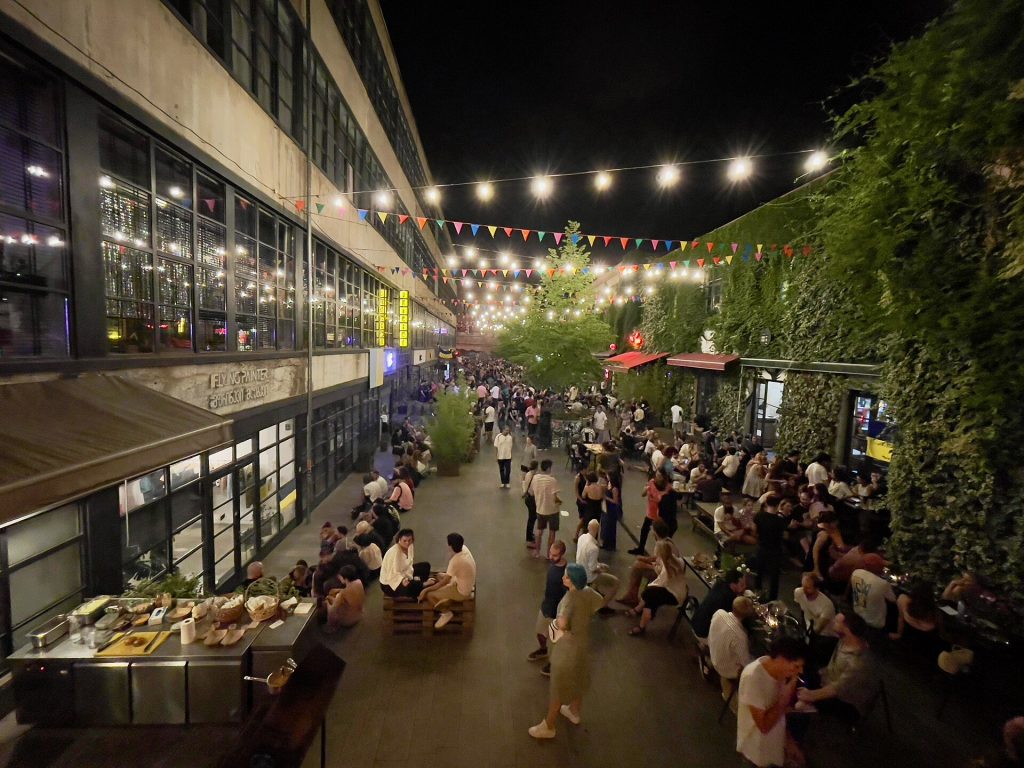
Factory Tbilisi (often marketed as “Fabrika”) sits in the Avlabari district on the left bank of the Kura River, within easy walking distance of Avlabari metro station and the Metekhi and Avlabari church quarter. The complex’s industrial courtyard and converted factory halls host the main runway shows, usually scheduled in the late afternoon and evening across the four days of the programme. Visitors without tickets can still experience much of the week’s atmosphere in the open courtyard, where pop-up stores, exhibitions and informal gatherings run alongside the ticketed schedule.
Runway shows themselves typically require a ticket or industry invitation, arranged in advance through the organisers’ official channels; walk-up access is not guaranteed. Dress for both audience and public areas tends toward smart-casual to fashion-forward, though there is no formal dress code. As with any crowded indoor venue, courtesy applies: follow venue staff instructions on photography (flash photography is usually restricted during shows), do not block aisles or sightlines, and respect designers’ installations and merchandise displays in the pop-up areas.
Travel with GTour
The Tbilisi & Mtskheta — The Essential First Day tour begins in Tbilisi and can be scheduled around 6–9 May to allow time at Factory Tbilisi for the fashion week showcase, while Georgia in 10 Days — Tbilisi to Svaneti to the Sea opens in the capital before heading further afield, leaving room for an early visit to the event. A GTour travel expert designs the route around the guest’s dates.
Did you know
- Tbilisi-born designer Demna Gvasalia, co-founder of the Paris house Vetements and former creative director of Balenciaga, remains the city’s best-known fashion export.
- The event’s venue, Factory Tbilisi, occupies a former Soviet-era garment and footwear factory building in the Avlabari district.
- Mercedes-Benz Fashion Week operates as a licensed format in multiple cities worldwide, with Tbilisi among the host cities outside the traditional “big four” fashion capitals.
- Georgia’s Ministry of Culture and Sport lists design and the creative industries among the sectors supported under national cultural policy.
- International media including the BBC and The Guardian have covered Tbilisi’s fashion scene as part of wider reporting on Georgia’s post-Soviet creative resurgence.
Practical tips for visitors
Factory Tbilisi is reachable on foot from Avlabari metro station or by taxi from anywhere in the city centre within about ten minutes. Early May weather in Tbilisi is generally mild, typically ranging from the mid-teens to low twenties Celsius by day and cooler at night, so pack layers for an outdoor courtyard that can feel different after dark. Book accommodation in central Tbilisi well ahead if visiting during confirmed show dates, since the week can coincide with other spring travel demand. Tickets for runway shows are not sold at the door in the way concert tickets sometimes are; check the organisers’ official announcements and the Factory Tbilisi venue channels in the months before travel, since programming and access details are finalised close to the event rather than far in advance.
Combine it with</h2
Sources
Plan your Georgia
Want to be in Georgia for Mercedes-Benz Fashion Week Tbilisi? A GTour travel expert designs the itinerary around it and calls you back.
Want to be in Georgia for Mercedes-Benz Fashion Week Tbilisi? A GTour travel expert designs the itinerary around it and calls you back.
A packed audience watches a runway show during Tbilisi Fashion Week. · Photo: Giorgi Induashvili / Wikimedia Commons, CC BY-SA 2.0
This page in other languages: Русский
GTour conciergeAsk anything about Georgia · we reply within hours