Archives


Kolga Tbilisi Photo in Georgia: dates, meaning and how to experience it
Next dates
1 May 2027 – 6 May 2027 (to be confirmed) · Tbilisi. See the full events calendar and Georgia today for roads and weather.
What it is
Kolga Tbilisi Photo is an annual photography festival held in Tbilisi, combining public exhibitions, portfolio reviews, talks and workshops with a juried awards ceremony. The name is not a common Georgian word with a fixed dictionary meaning; “Kolga” is the proper name of the independent Tbilisi-based photography platform and collective that founded and continues to run the festival, and “Tbilisi Photo” simply identifies the city and the medium. Unlike the feast days and church holidays of the Georgian Orthodox calendar, this is a secular, contemporary cultural event, and its date is set by its organisers rather than by canon or custom.
The festival is aimed at working photographers, photography students, curators, editors and the general public rather than at a single ethnic, religious or regional community. It draws Georgian photographers alongside visiting professionals from the wider Caucasus, Eastern Europe and further afield, who come to Tbilisi for the portfolio-review sessions and to see the city’s galleries, courtyards and creative hubs given over to photographic work for a week. For visitors, it offers an unusually direct way to see how contemporary Georgian artists and image-makers are looking at their own country, rather than how tourism materials present it.
Historical background
- 1850s–1860s — Studio and itinerant photography reaches Tbilisi, then the administrative capital of the Russian imperial Caucasus, as the city’s multi-ethnic quarters, markets and churches begin to be documented on glass plates.
- Late 19th century — Dimitri Ermakov and Alexander Roinashvili, two of the earliest professional photographers working in Georgia, build large archives of portraits, landscapes and ethnographic scenes; their surviving negatives are now held in Georgian museum and archive collections.
- Early 20th century — Photography in Tbilisi develops alongside the city’s role as a regional print and publishing centre, feeding early photojournalism and postcard production.
- Soviet period — State press agencies and amateur photo clubs structure photographic practice in Georgia, with documentary work largely subordinated to official reportage.
- 1991 — Georgia regains independence; the end of Soviet-era restrictions opens space for independent documentary and art photography addressing conflict, migration and social change.
- Early 2000s — A group of Georgian photographers and editors founds Kolga as an independent photography platform in Tbilisi, publishing work and building connections with international photo editors.
- 2010s — Kolga’s activities grow into an annual festival format in Tbilisi, with public exhibitions, master classes and portfolio-review days bringing visiting international curators to meet Georgian photographers directly.
- 2020s — The festival continues to run each spring in Tbilisi venues, describing itself as the region’s longest-running photography festival, with the 2027 edition provisionally dated 1–6 May.
Georgia’s photographic record is older than many visitors expect. The glass-plate archives of 19th-century photographers working in Tbilisi document a Caucasus capital of churches, caravanserais, Armenian and Georgian merchant families, and visiting Persian and Russian officials, long before photography became a tool of state propaganda in the Soviet era. That depth of visual history is part of what organisers and participants point to when describing Tbilisi as a natural home for a regional photography festival: the city has been photographed, continuously, for over a century and a half, through empire, Soviet rule and independence.
Kolga Tbilisi Photo emerged in the post-Soviet decades as independent Georgian photographers sought venues and networks outside state structures. Its growth into a week-long festival reflects a broader pattern across the former Soviet space, where independent photo collectives in the 2000s became the main channels connecting local documentary and art photographers with international magazines, agencies and curators. The festival’s enduring feature, portfolio reviews that put emerging Georgian photographers in a room with visiting international editors, remains closer to its founding purpose than the public exhibitions that now accompany it.
Meaning and traditions
The festival’s core activities are exhibitions, portfolio reviews, artist talks, workshops and an awards evening. A gamofena (გამოფენა, “exhibition”) typically opens with a short public talk by the photographer or curator, followed by informal viewing; Georgian gallery openings of this kind are generally relaxed, with wine or light refreshments offered, and visitors are welcome to speak directly with exhibiting photographers. Portfolio reviews are closed, scheduled sessions in which a photographer presents printed or digital work to an invited editor or curator for feedback; these usually require advance registration through the festival rather than walk-in attendance.
Workshops (often described using the Georgian word sakhelosno, literally “workshop” in the craft sense) cover technical and editorial skills, from documentary storytelling to editing a photo book. Talks and panel discussions are commonly bilingual, run in Georgian and English, reflecting the mixed local and international audience. The closing awards ceremony recognises a small number of categories that typically include recognition for a single body of work and for an emerging Georgian photographer, though the exact categories and jury composition are set anew each year and announced by the organisers rather than fixed by tradition.
Because the festival is based in the capital, there is little regional variation in the way the smaller folk festivals of the regions have; in some years, satellite exhibitions or related events have extended to other Georgian cities, but Tbilisi remains the centre of the programme. There is no special festival food, song or dress associated with the event, which distinguishes it clearly from church feast days such as Svetitskhovloba or Mariamoba.
When it happens
Kolga Tbilisi Photo does not follow a fixed calendar date; organisers set the week each year, generally clustering around late April or early May, and confirm the exact programme closer to the event. The 2027 edition is provisionally scheduled for 1–6 May 2027, with the main awards evening expected on 1 May, though organisers describe this as “to be confirmed.” Visitors planning travel around this date should check for final confirmation before booking non-refundable transport, since the exact week can shift by several days from year to year.
The festival is not a Georgian public holiday, and 1 May itself is an ordinary working day in Georgia: government offices, banks and most businesses operate as usual. This means the festival does not bring the city-wide closures associated with holidays such as Tbilisoba or Independence Day; galleries and venues keep normal or slightly extended hours for the event, and the rest of the city continues as on any ordinary week in early May.
Where to experience it
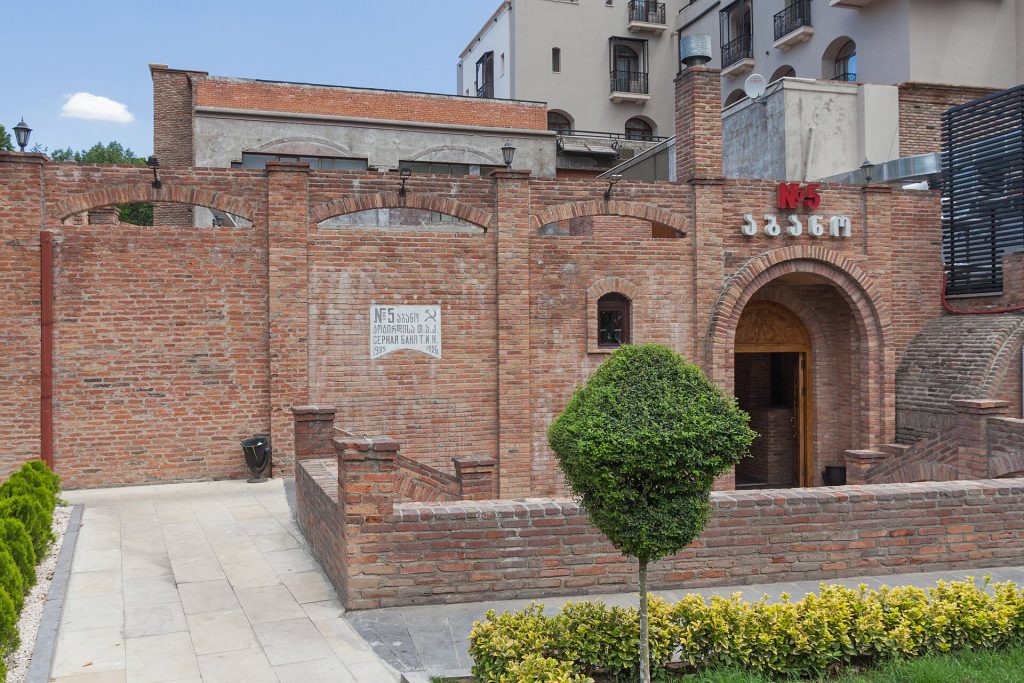
Exhibitions and talks are generally distributed across Tbilisi’s creative and cultural venues rather than concentrated in one building, and the exact venue list changes each year. Visitors can typically expect a mix of established museum and gallery spaces together with the city’s newer creative hubs, such as converted industrial and hotel spaces that regularly host contemporary art and photography events in Tbilisi. Checking the current year’s venue map close to the dates is advisable, since programming can move between the historic Old Town, the Fabrika/Marjanishvili creative district and riverside spaces such as Rike Park.
A visitor typically sees large-format prints hung in converted industrial interiors or courtyards, projection screenings after dark, and informal crowds of photographers, students and journalists moving between venues on foot, since most festival locations sit within walking distance of each other in central Tbilisi. Standard Georgian etiquette for churches does not apply here, as the festival is secular; ordinary gallery etiquette suffices, including asking before photographing other visitors or exhibited work where signage restricts it, and keeping voices low during talks and screenings.
Travel with GTour
The opening days of Kolga Tbilisi Photo, including the 1 May awards, fall within the Tbilisi stretch of Georgia in 10 Days — Tbilisi to Svaneti to the Sea and align naturally with the capital-based Tbilisi & Mtskheta — The Essential First Day. A GTour travel expert designs the route around the guest’s dates, so the festival schedule and city time can be matched without conflict.
Did you know
- Tbilisi has been continuously photographed since the 1850s–1860s, giving Georgia one of the longest unbroken photographic records in the Caucasus.
- Dimitri Ermakov and Alexander Roinashvili, both active in 19th-century Tbilisi, left large glass-plate archives now preserved in Georgian museum collections.
- Portfolio review sessions, pairing local photographers with visiting international editors, have remained the festival’s defining format since its founding as an independent photography platform.
- The festival’s programme is typically bilingual, run in Georgian and English, reflecting an audience that mixes local photographers with international visitors.
- Tbilisi has been recognised internationally for its contemporary creative scene, which has fed a steady growth in independent galleries and creative hubs hosting events such as this festival.
Practical tips for visitors
Central Tbilisi is compact and walkable, and most festival venues can be reached on foot or by the Tbilisi metro, with Freedom Square, Avlabari and Marjanishvili stations convenient for the historic centre and creative districts. Early May weather in Tbilisi is generally mild but variable, with occasional rain; a light jacket and comfortable walking shoes are sufficient for moving between venues. Casual dress is appropriate for exhibitions and talks; no special dress code applies, unlike visits to working churches. Most exhibitions are free to the public, but portfolio review slots and some workshops require advance registration through the festival, and popular talks can fill quickly, so confirming the final programme and booking requested sessions as soon as they open is recommended. Because the exact dates are confirmed only closer to the event, travellers should hold flexible transport bookings until the organisers publish the final schedule.
Combine it with
A spring visit to Tbilisi for the festival pairs naturally with day trips into the surrounding regions. Wine lovers can extend the trip into Kakheti, while those interested in early Georgian Christian architecture can combine the festival with a short excursion to Mtskheta-Mtianeti. Travellers continuing west can add Imereti, home to Kutaisi and further museum and heritage sites, to a longer itinerary built around the festival week.
Questions travellers ask
Is Kolga Tbilisi Photo free to attend?
Most public exhibitions, talks and the opening events are typically free to attend. Some workshops and portfolio review slots require advance registration and may have limited capacity, so checking the current year’s programme is advised.
Do I need to book tickets in advance?
General exhibition viewing usually does not require booking, but structured sessions such as portfolio reviews and workshops generally do, since places are limited and allocated by the organisers ahead of the event.
What language is the festival conducted in?
Programming is typically bilingual, in Georgian and English, reflecting the mix of Georgian photographers and international visitors and jurors who attend.
Can amateur or student photographers take part?
Public exhibitions and talks are open to anyone, and the festival has historically included an emphasis on emerging photographers; specific open calls or submission opportunities, where offered, are announced on the organisers’ own channels each year.
Is this the same as other Tbilisi photography events?
Kolga Tbilisi Photo is one specific, long-running festival organised by the Kolga photography platform; Tbilisi hosts other independent galleries and occasional photography events throughout the year that are organised separately.
What should I wear to the opening events?
Casual, comfortable clothing is appropriate. There is no formal dress code, and the atmosphere at gallery openings in Tbilisi is generally relaxed.
Will the exact 2027 dates change?
They may. The organisers describe the 1–6 May 2027 dates as provisional and confirm the final schedule closer to the event, so travellers should treat early May as the likely window rather than a fixed date until confirmation is published.
Is the festival suitable for children?
Exhibitions are generally open to all ages, though content can include documentary photography addressing difficult social or political subjects, so parents may wish to preview exhibition themes before attending with younger children.
Sources
Plan your Georgia
Want to be in Georgia for Kolga Tbilisi Photo? A GTour travel expert designs the itinerary around it and calls you back.
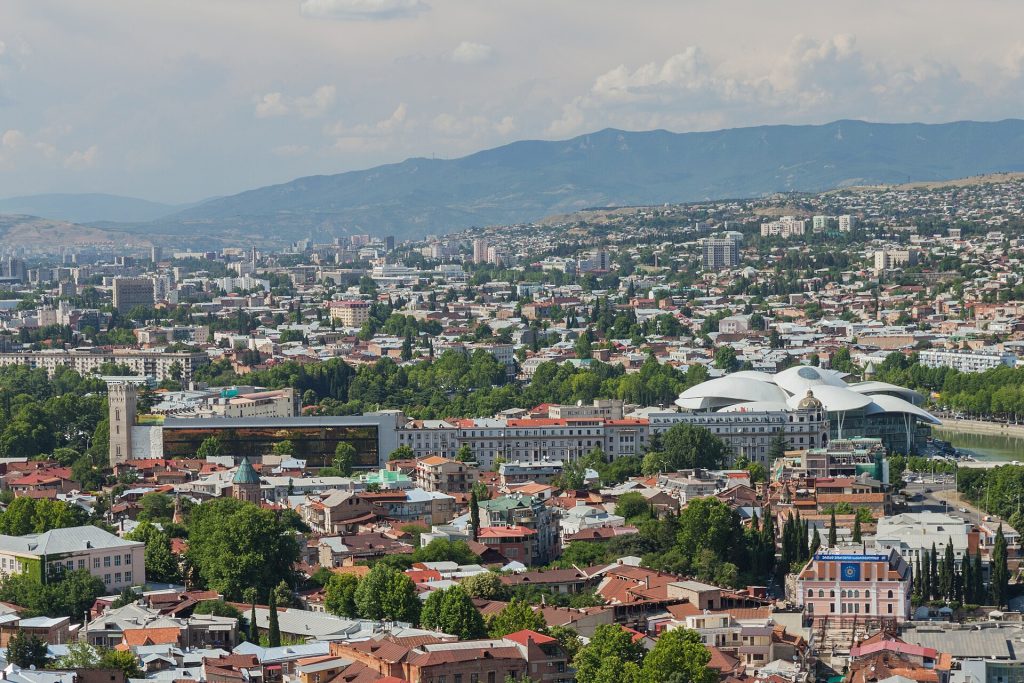
Narikala fortress and the aerial tramway station overlook Tbilisi, host city of the Kolga photo festival. · Photo: Marcin Konsek / Wikimedia Commons, CC BY-SA 4.0
This page in other languages: Русский
GTour conciergeAsk anything about Georgia · we reply within hours