Archives


Erekleoba in Georgia: dates, meaning and how to experience it
Next dates
7 November 2026 · Telavi, Kakheti. See the full events calendar and Georgia today for roads and weather.
What it is
Erekleoba is the municipal holiday of Telavi, the regional capital of Kakheti in eastern Georgia, held each year on the birthday of King Erekle II (1720–1798), the last great monarch of the united kingdom of Kartli-Kakheti. The Georgian word combines the king’s name, Erekle, with the suffix “-oba,” which in Georgian turns a person’s name into the name of their feast day or commemorative occasion — the same construction used for Giorgoba (St. George’s day) or Barbaroba (St. Barbara’s day). Erekleoba therefore means, quite literally, “the day of Erekle.”
Unlike saints’ days, Erekleoba is a secular, civic observance rather than a church feast, though it sits comfortably alongside Georgia’s calendar of name days because Erekle II remains one of the most revered figures in national memory. It is celebrated above all by the people of Telavi and the wider Kakheti region, where Erekle ruled from the fortified royal residence of Batonis Tsikhe, but it draws visitors from across Georgia and increasingly from abroad who come for the concerts, open-air markets, and historical pageantry staged in and around the old palace grounds.
Historical background
- 1720 — Erekle, son of King Teimuraz II, is traditionally said to have been born on 7 November in Telavi, the Kakhetian royal seat.
- 1744 — Erekle becomes King of Kakheti while his father Teimuraz II rules Kartli, beginning decades of close cooperation between the two crowns.
- 1762 — on the death of Teimuraz II, Erekle II unites Kartli and Kakheti into a single kingdom, ruling from both Tbilisi and his Kakhetian base at Telavi.
- 1783 — Erekle II signs the Treaty of Georgievsk with the Russian Empire under Catherine II, placing Kartli-Kakheti under Russian protection.
- 1795 — Persian forces under Agha Mohammad Khan invade and sack Tbilisi at the Battle of Krtsanisi, an event that darkens the final years of Erekle’s reign.
- 1798 — Erekle II dies in January at Telavi and is buried in Svetitskhoveli Cathedral in Mtskheta, the traditional resting place of Georgian kings.
- 19th–20th centuries — Batonis Tsikhe, Erekle’s residence in Telavi, is preserved through the Russian imperial and Soviet periods and gradually converted into a museum complex.
- post-Soviet decades — Telavi municipality formalises Erekleoba as an annual city day, combining historical commemoration with cultural festivities at the palace grounds.
- today — the holiday continues each 7 November with concerts, military-style processions, craft fairs and wine events centred on Batonis Tsikhe.
Erekle II is remembered in Georgian historiography as a soldier-king who spent much of his reign defending a small, fragmented kingdom against larger neighbours. Nicknamed “patara kakhi,” the “little Kakhetian,” for his modest stature and relentless energy on campaign, he fought Persian, Ottoman and Dagestani incursions for decades while also trying to modernise his court and army along European lines. His decision to seek Russian protection through the 1783 Treaty of Georgievsk was intended to secure Kartli-Kakheti’s survival; instead it set in motion a chain of events — including the catastrophic Persian sack of Tbilisi in 1795 and, a few years after his death, the Russian annexation of his kingdom — that historians still debate.
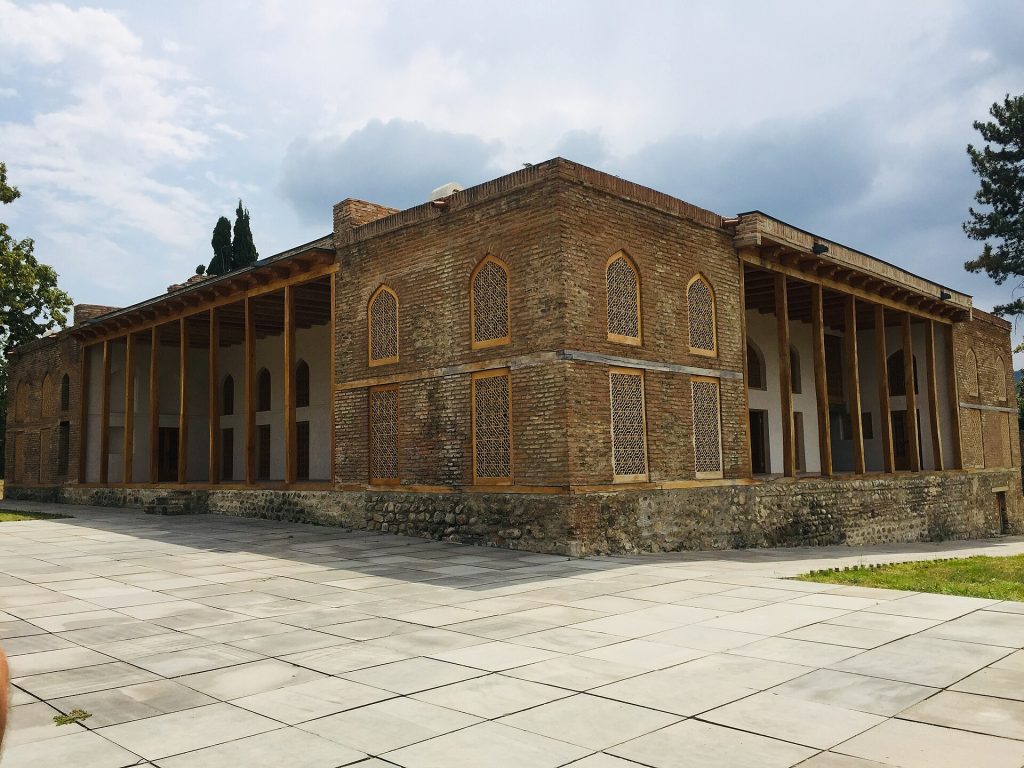
Telavi, his Kakhetian capital, preserves the physical memory of his reign more intimately than Tbilisi does. Batonis Tsikhe, the “Lords’ Castle,” was the residence of Kakhetian kings before and during Erekle’s rule, and it is here, rather than at any single battlefield, that the city chose to anchor its annual tribute to him. The choice of his birthday as the date for Erekleoba reflects a broader Georgian pattern of honouring historical figures on name days rather than death days, treating 7 November as a day of civic pride rather than mourning.
Meaning and traditions
Erekleoba in Telavi blends official commemoration with popular festival. The day typically opens with a formal ceremony at the statue of Erekle II in the city’s central square, where local officials, clergy and sometimes military honour guards lay flowers and deliver short addresses on his legacy. Folk ensembles then perform in the grounds of Batonis Tsikhe, with polyphonic singing (Georgian: simghera) and Kakhetian round dances (perkhuli) drawing crowds into the palace courtyard.
Markets and fairs (bazroba) spread along the streets near the fortress, selling Kakhetian wine, churchkhela (walnuts dipped in grape-must paste), lobiani (bean-filled bread) and local crafts. Equestrian displays and re-enactors in period dress sometimes evoke Erekle’s cavalry, a nod to his reputation as a battlefield commander who personally led charges well into old age. Toasts (sadghegrdzelo) to the king’s memory are common in Kakhetian households and restaurants that day, offered with the region’s own wine rather than any formal liturgical rite, since Erekleoba carries no church calendar status.
Regional variation is limited because the holiday belongs specifically to Telavi rather than to Georgia as a whole; smaller towns in Kakheti may hold modest parallel events, but the principal celebration, including the largest concerts and the fair around the castle walls, remains concentrated in Telavi itself.
When it happens
Erekleoba is fixed to the civil calendar date of 7 November every year, rather than following the movable Georgian Orthodox church calendar, since it commemorates a historical ruler rather than a saint. In 2026 the holiday falls on Saturday, 7 November; in 2027 it falls on Sunday, 7 November. It is not a national public holiday in Georgia — government offices, schools and businesses elsewhere in the country operate normally — but it functions as an informal local holiday in Telavi, where many shops adjust hours around the afternoon and evening programme, and some municipal offices mark the day with closures or reduced hours.
Where to experience it
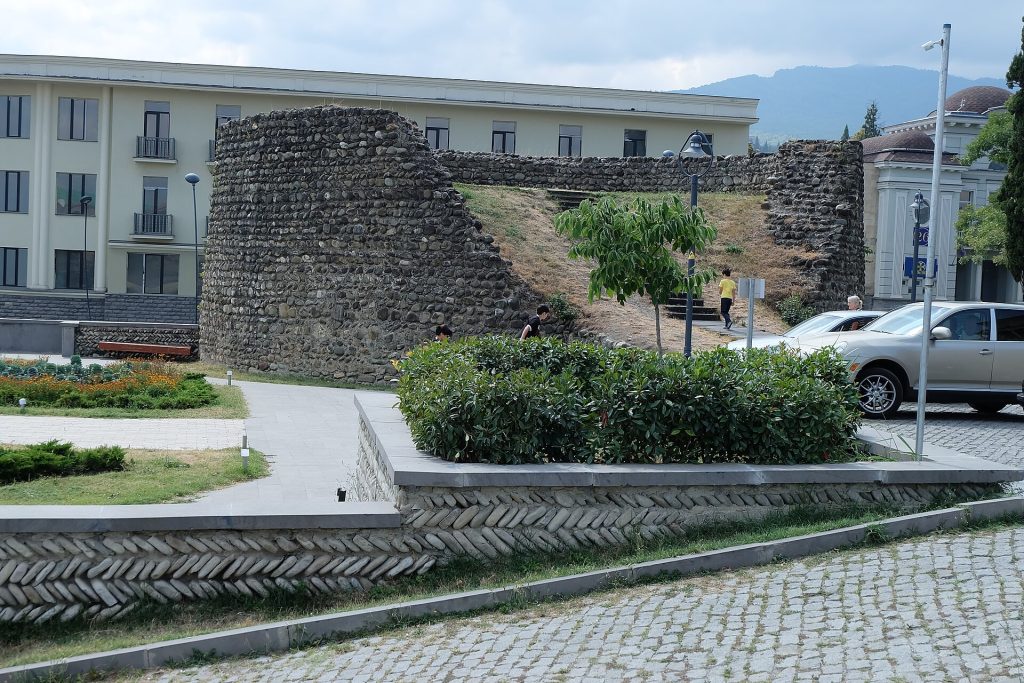
The centre of the celebration is Batonis Tsikhe, the walled royal residence in Telavi that now houses the Telavi History Museum, Erekle II’s palace, a small church and extensive gardens. Visitors arriving in the late afternoon typically find stages set up for concerts, stalls selling Kakhetian produce along the approach roads, and crowds gathering for the evening’s main performances. The adjoining garden contains a massive, centuries-old plane tree long associated with the royal court, a popular photograph point throughout the day.
The statue of Erekle II in Telavi’s central square is the focus of the morning’s official ceremony and a natural starting point for visitors who want to understand the sequence of the day before moving on to the fair and concerts at the castle. Those with more time can combine Erekleoba with a visit to Alaverdi Monastery or the Ikalto Academy ruins nearby, both tied to the religious and intellectual life of the Kakhetian kingdom Erekle ruled. Inside any church visited during the trip, visitors should dress modestly, with shoulders and knees covered and head coverings available for women at the entrance; inside private Kakhetian homes offered hospitality, it is customary to accept at least a small taste of wine when a toast is raised, even if only symbolically.
Travel with GTour
The Georgia in Winter — Gudauri Skiing, Tbilisi & Kakheti (6 Days) tour passes through Telavi on its Kakheti leg, and early November departures can align with the concerts and fairs held around Batonis Tsikhe palace on 7 November. A GTour travel expert designs the route around the guest’s dates, so this timing, along with connections to the Racha — Khvanchkara Wine & Mountain Lakes (2 Days) tour, can be arranged on request.
Did you know
- Erekle II is said to have continued leading cavalry charges personally well into his sixties, a detail widely repeated in Georgian popular history of his reign.
- The nickname “patara kakhi” (“little Kakhetian”) referred to his small stature, in deliberate contrast to his outsized military reputation.
- Erekle II is buried in Svetitskhoveli Cathedral in Mtskheta rather than in Telavi, alongside other Georgian monarchs.
- The Treaty of Georgievsk, which Erekle signed in 1783, is still studied in Georgian schools as a pivotal and contested turning point toward eventual Russian annexation.
- Telavi’s Batonis Tsikhe complex combines fortress walls, a royal palace and a church within a single enclosure, reflecting the combined military and residential functions of a Kakhetian royal seat.
Practical tips for visitors
Telavi lies roughly two hours by road from Tbilisi, and marshrutka minibuses and private transfers run regularly from the capital, with increased traffic expected around the holiday weekend. Visitors planning to attend the evening concerts should book accommodation in Telavi or nearby Kakhetian wine estates well in advance, since rooms fill quickly for the holiday. Early November in Kakheti is cool, often near freezing after dark, so warm layers are advisable for outdoor evening events. Parking near Batonis Tsikhe becomes limited once the fair opens, and arriving on foot from central Telavi is usually the more reliable option.
Combine it with
Erekleoba pairs naturally with a broader visit to Kakheti, Georgia’s principal wine region and Erekle II’s home territory, and with Mtskheta-Mtianeti, where his tomb lies in Svetitskhoveli Cathedral. Travellers extending their trip toward the capital can also connect the holiday to the history of Tbilisi, the city Erekle ruled from and the site of the 1795 Battle of Krtsanisi.
Questions travellers ask
Is Erekleoba a public holiday across Georgia?
No. It is a local city holiday specific to Telavi, not a national public holiday, so offices and businesses outside Kakheti operate as usual on 7 November.
Do I need tickets for the concerts at Batonis Tsikhe?
The main outdoor concerts and fair are generally free and open to the public, though organised seating or special performances in some years may require separate arrangements through the municipality.
Is Erekleoba connected to a church service?
It is not a religious feast day; there is no fixed liturgical observance tied to Erekle II in the Georgian Orthodox calendar, although visitors may still find churches in Telavi open for regular services that day.
What should I wear if I visit a church while in Telavi?
Modest dress is expected: shoulders and knees covered, and a head covering for women, usually available at the church entrance if needed.
How far is Telavi from Tbilisi, and how long does the trip take?
Telavi is about 150 kilometres from Tbilisi, typically a two-hour drive by car or marshrutka along the Gombori or Alazani valley routes.
What food and drink are associated with the day?
Kakhetian wine, churchkhela, and lobiani are common at the fair and in local households, along with toasts raised in Erekle II’s memory.
Can I combine Erekleoba with a wine tour?
Yes; Telavi sits at the centre of Kakheti’s wine country, and many estates near the town hold their own harvest-season tastings around the same period in autumn.
Is accommodation hard to find during the festival?
Rooms in Telavi can book out quickly around 7 November given the concerts and influx of visitors, so reserving in advance is recommended.
Sources
- Georgian National Tourism Administration
- Ministry of Culture, Sport and Youth of Georgia
- Agenda.ge
- Georgia Today
- Civil.ge
Plan your Georgia
Want to be in Georgia for Erekleoba? A GTour travel expert designs the itinerary around it and calls you back.
The equestrian monument to King Erekle II stands above Telavi, the city he ruled from. · Photo: MIKHEIL / Wikimedia Commons, CC BY-SA 3.0
This page in other languages: Русский
GTour conciergeAsk anything about Georgia · we reply within hours