Archives


Tbilisi Marathon in Georgia: dates, meaning and how to experience it
Next dates
17 October 2027 (to be confirmed) · Tbilisi. See the full events calendar and Georgia today for roads and weather.
What it is
The Tbilisi Marathon is an annual long-distance road race through the streets of the Georgian capital, held on a Sunday morning each October. The event’s name needs little translation: in Georgian it is simply Tbilisis Maratoni (თბილისის მარათონი), a direct borrowing of the international word “marathon,” which itself derives from the ancient Greek town of Marathon and the legendary run of the courier Pheidippides to Athens after the battle of 490 BCE. Tbilisi’s race belongs to a worldwide family of city marathons rather than to Georgia’s older religious or agricultural calendar, and it is understood by residents as a civic sporting occasion rather than a feast day.
The race is open to anyone who registers, and in practice it draws a mixed field: competitive Georgian and international runners attempting the full 42.195-kilometre distance, larger numbers running the half marathon or 10-kilometre routes, and families joining shorter fun runs and children’s races. It has become, alongside the autumn city festival Tbilisoba, one of the fixed points of Tbilisi’s October calendar, bringing visiting runners to the city in a season prized for mild weather, grape harvest in nearby Kakheti, and clear mountain views.
Historical background
- 490 BCE — according to the tradition later recorded by Greek writers, the courier Pheidippides ran from the battlefield of Marathon to Athens to announce victory, the legendary episode that gave the marathon race its name and distance myth.
- 1896 — the marathon was included as an event at the first modern Olympic Games in Athens, fixing long-distance road running as an international competitive tradition that cities around the world later adapted into civic races.
- 1908 — the marathon distance was standardised at 42.195 kilometres at the London Olympics, the figure still used by every certified marathon today, including Tbilisi’s.
- 2016 — the first Tbilisi Marathon was organised in the Georgian capital, introducing an annual autumn long-distance race through the city’s central streets.
- 2017–2019 — the event expanded year on year, adding shorter distances alongside the full marathon and attracting a growing number of foreign entrants to Tbilisi each October.
- 2020 — like mass-participation races worldwide, the Tbilisi Marathon was affected by the COVID-19 pandemic, with organisers adjusting the event’s format in line with public-health measures.
- 2021 onward — the race resumed its customary closed-street format, again routing runners along Rustaveli Avenue and across bridges over the Mtkvari river.
- today — the Tbilisi Marathon is held annually, usually in October, with distances ranging from a short fun run to the full marathon, organised with the cooperation of the Tbilisi municipal authorities.
Unlike Georgia’s church feasts or harvest customs, which trace back through centuries of Orthodox and agrarian life, the Tbilisi Marathon is a recent and openly international import, part of a global pattern in which capital cities use a marathon to showcase their streets, bridges and historic quarters to both residents and visiting runners. Its adoption in Tbilisi reflects a broader post-independence trend across Georgian cities toward organised recreational sport, running clubs and charity fundraising events, following patterns already established in Western European and American capitals decades earlier.
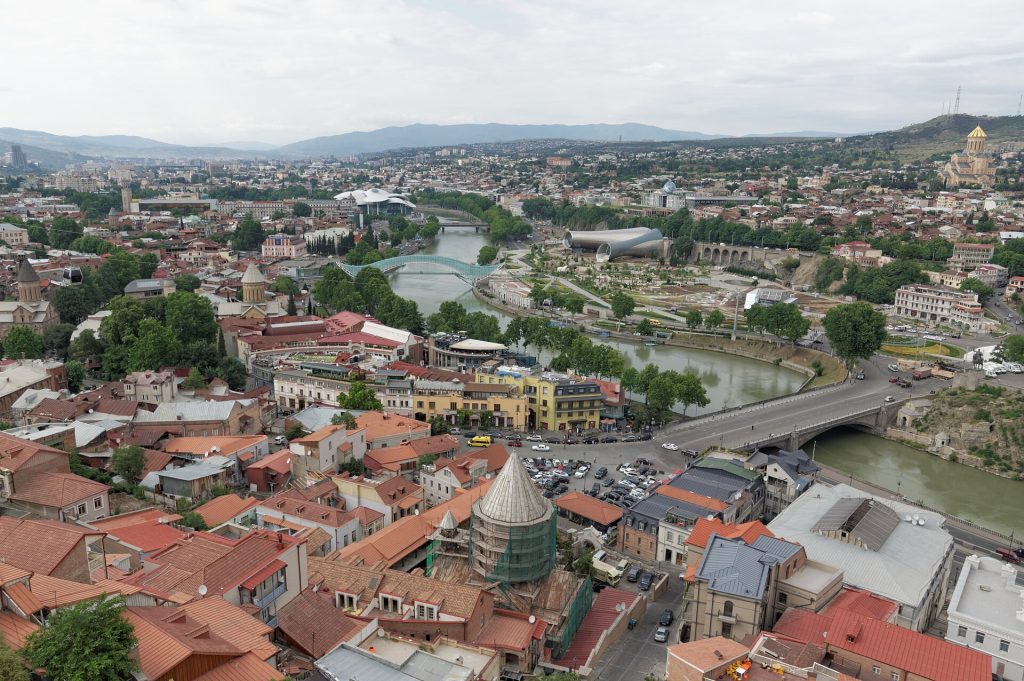
What gives the Tbilisi race its particular character is the setting rather than its age: a compact Old Town, the steep hillsides of Sololaki and Mtatsminda, and a river crossed by bridges old and new, from the stone spans of the historic quarter to the contemporary Bridge of Peace. Organisers have used the race, in part, as a way of presenting this topography to outsiders, timing it for October when temperatures are mild and the grape harvest in the surrounding wine regions gives visitors an additional reason to extend a trip to the capital.
Meaning and traditions
There is no liturgical or folk ritual attached to the Tbilisi Marathon; its “traditions” are those of contemporary mass-participation sport. Runners gather before dawn near the start line, pass through security and bag-drop points, and set off in waves according to distance. Along the course, informal cheering sections form at bridges and squares, with spectators calling out encouragement — k’argad! (“well done”) or simply c’inorebi! (“forward”) — and local running clubs and charities sometimes set up water stations or informal cheer points.
A handful of Georgian terms are useful to know: morbenali (მორბენალი) means “runner”; starti (სტარტი) and finishi (ფინიში) are the Georgian borrowings for “start” and “finish,” reflecting the race’s international vocabulary. There is no special food associated with the day, though many participants and visitors extend the weekend with Georgian hospitality — a post-race supra (feast) of bread, cheese, grilled meat and Kakhetian wine is a common way for running clubs and visiting groups to mark the occasion, drawing on general Georgian table customs rather than anything specific to the marathon itself. Regional variation is limited, since Tbilisi hosts the only full marathon of this scale in the country, though smaller charity runs and fun runs occur in other cities, including occasional events in Batumi.
When it happens
The Tbilisi Marathon does not follow a fixed calendar date; organisers set the race for a Sunday in October each year, generally the third Sunday of the month, and confirm the exact date several months in advance. In 2026 the race fell on Sunday, 18 October; the next edition is provisionally set for Sunday, 17 October 2027, subject to confirmation by organisers closer to the date. The event is not a public holiday: government offices, schools, banks and most shops operate as usual, with the only disruption being the closure of central streets along the race route during the morning hours, typically from early morning until early afternoon.
Where to experience it
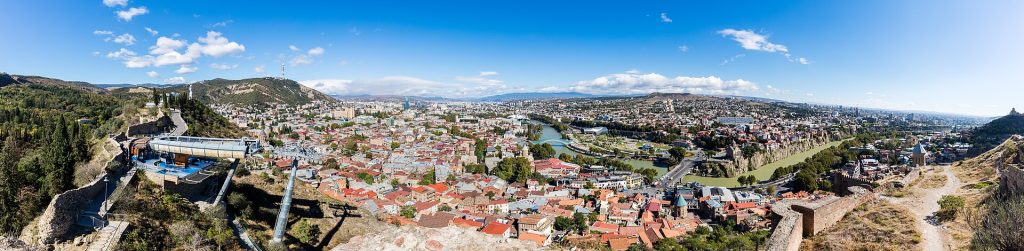
The start and finish areas are generally set up around Tbilisi’s central squares and embankments, with the route in recent editions passing along Rustaveli Avenue, across one or more bridges over the Mtkvari river, and through parts of the Old Town below Narikala fortress. Spectators gather along these stretches from early morning, with some of the best views of runners crossing the river available from the embankments and bridges themselves. Visitors who are not running can watch for free from any public pavement along the closed route; no ticket or reservation is required for spectating. Those visiting churches or monasteries near the route on race morning — Metekhi Church or the Sioni Cathedral, for instance — should observe the usual etiquette of modest dress and quiet behaviour regardless of the activity outside.
Did you know
- The marathon distance of 42.195 kilometres was fixed at the 1908 London Olympics and has been used by every certified marathon since, including Tbilisi’s.
- The word “marathon” comes from the ancient Greek town of Marathon, site of the battle of 490 BCE and the legendary run that inspired the modern race.
- Rustaveli Avenue, a frequent stretch of the Tbilisi Marathon route, is named after the medieval Georgian poet Shota Rustaveli, author of the national epic The Knight in the Panther’s Skin.
- Tbilisi sits at roughly 500 metres above sea level across hilly terrain, giving its marathon course noticeably more elevation change than flat, river-valley marathons elsewhere.
- October in Tbilisi also hosts Tbilisoba, the city’s long-running autumn festival, making the month one of the busiest in the capital’s cultural and sporting calendar.
Practical tips for visitors
Travellers wishing to watch or run should check the organiser’s official announcements for the confirmed date, registration deadlines and exact street closures each year, as these are finalised only a few months ahead. Public transport, including the Tbilisi metro, remains the most reliable way to move around the city on race morning, since private cars and taxis may face long detours near the centre. October weather in Tbilisi is generally mild but can turn cool in the early morning, with daytime temperatures commonly in the range of 12–20°C; layered clothing is advisable for both runners and spectators. Because October coincides with the grape harvest season and Tbilisoba, accommodation in the city centre should be booked well in advance.
Combine it with
Runners and spectators extending their stay often combine race weekend with a day trip into Kakheti to see the autumn grape harvest, or a shorter excursion to Mtskheta-Mtianeti to visit Georgia’s former capital and its ancient churches. Those with more time sometimes extend the trip toward Kartli for its historic cave towns and fortresses.
Questions travellers ask
Is the Tbilisi Marathon a public holiday?
No. It is a civic sporting event, not a public holiday, so government offices, banks and most businesses remain open as usual; only the race route itself is closed to traffic during the morning.
What distances can visitors run?
The event typically offers the full marathon (42.195 km), a half marathon, a 10-kilometre race, a shorter fun run, and children’s races, allowing participants of different fitness levels to take part.
Can foreign visitors register?
Yes, registration is generally open to international participants alongside Georgian runners; prospective entrants should register in advance through the official race channels, as places and start waves are organised ahead of race day.
Which streets close, and for how long?
Central streets along the route, including stretches of Rustaveli Avenue and nearby bridges, are typically closed from early morning until early afternoon on race day; exact timings are published by organisers closer to the event.
What is Tbilisi’s weather like in October?
October is generally mild, with cool mornings and comfortable afternoons, though temperatures can vary; visitors should pack layers for both running and spectating.
Is the course flat or hilly?
Tbilisi’s hilly terrain means the marathon course includes noticeable elevation changes rather than a flat profile, which runners training for the race should take into account.
Where are the best places to watch for free?
Any public stretch of the closed route offers free viewing; bridges over the Mtkvari river and sections of Rustaveli Avenue tend to draw the largest and most enthusiastic crowds.
What happens if the date changes?
Because the race date is set annually rather than fixed by calendar rule, organisers announce the confirmed date for each year in advance; travellers planning a visit around the marathon should verify the current date before booking.
Sources
- Tbilisi Marathon (organiser)
- Tbilisi City Hall
- Georgian National Tourism Administration
- Georgian National Tourism Administration
- Agenda.ge
- Georgia Today
Plan your Georgia
Want to be in Georgia for Tbilisi Marathon? A GTour travel expert designs the itinerary around it and calls you back.
Rustaveli Avenue in central Tbilisi, a main street closed to traffic during the marathon. · Photo: shankar s. from Poona (pune), India, India / Wikimedia Commons, CC BY 2.0
This page in other languages: Русский
GTour conciergeAsk anything about Georgia · we reply within hours