Archives


Tbilisoba in Georgia: dates, meaning and how to experience it
Next dates
2 October 2027 – 3 October 2027 (to be confirmed) · Old Tbilisi, Rike Park. See the full events calendar and Georgia today for roads and weather.
What it is
Tbilisoba is the annual city festival of Georgia’s capital, held each autumn in the old quarters along the Mtkvari river. The name combines “Tbilisi” with the Georgian suffix -oba, a common ending used to turn a place or a saint’s name into the name of a feast day — the same pattern that gives Georgian the words Giorgoba (St. George’s Day) or Mariamoba (the Dormition). Taken literally, Tbilisoba means something close to “Tbilisi-ness” or “the day of being Tbilisi”; in practice it is best translated as Tbilisi City Day or Tbilisi Festival.
Unlike most entries on Georgia’s festive calendar, Tbilisoba is not a church feast but a municipal and civic one, organised by Tbilisi City Hall rather than the Patriarchate. It is celebrated by residents of every background — Georgian, Armenian, Azerbaijani, Russian, Jewish, Greek, Kurdish, Assyrian and others — who together make up the historic population of the city, as well as by visitors who happen to be in town. No faith, nationality or age group is excluded, and the atmosphere is closer to a neighbourhood fair than a religious observance.
Historical background
- 5th century — according to the medieval chronicle compilation Kartlis Tskhovreba, King Vakhtang I Gorgasali founds Tbilisi after a hunting incident at the sulphur springs on the Mtkvari’s bank, the city’s traditional foundation legend.
- 1801 — Tbilisi, then known as Tiflis, is absorbed into the Russian Empire, and over the following century grows into a markedly multiethnic administrative and trading centre for the South Caucasus.
- 1918–1921 — Tbilisi serves as the capital of the short-lived independent Democratic Republic of Georgia before Soviet annexation.
- 1979 — the Georgian SSR inaugurates Tbilisoba as a new annual autumn city holiday, opening Old Tbilisi’s courtyards, balconies and squares to concerts, craft stalls and folk ensembles.
- 1991 — Georgia regains independence; Tbilisoba continues under the newly sovereign city government as a civic rather than Soviet occasion.
- 1990s — the festival is scaled back during the political instability and economic hardship of the early independence years, then gradually restored through the decade.
- 2000s–2010s — Tbilisi City Hall expands the festival footprint to Rike Park, the Dry Bridge, Freedom Square and Meidan, adding wine fairs, book fairs and hot-air balloon displays over the river.
- 2020 — public gatherings are curtailed during the COVID-19 pandemic, and the festival is held in a reduced or partly online format.
- 2020s — Tbilisoba resumes as a full public festival drawing both residents and foreign visitors, with Tbilisi City Hall confirming exact dates each year, usually in late summer.
The city’s own legend ties its name to the word tbili, “warm,” a reference to the sulphur hot springs around which Vakhtang Gorgasali is said to have founded his new capital after a falcon or pheasant fell into the water during a hunt. Across the fifteen centuries that followed, Tbilisi passed through Arab, Persian, Ottoman and Russian spheres of influence, each leaving traders, craftsmen and congregations behind, so that by the nineteenth century the city’s bazaars, churches, mosques and synagogues stood within a few streets of one another. This layered coexistence is the cultural memory that Tbilisoba, created in the late Soviet period, was designed to put on public display.
The Soviet authorities who launched Tbilisoba in 1979 framed it as a showcase of “friendship of peoples,” a theme convenient to the ideology of the time but built on a genuine urban history. After 1991, Georgian city administrations kept the festival rather than discarding it as a Soviet relic, stripping away the political framing while keeping the format: open streets, free concerts, craft and food stalls, and performances by the ethnic communities who still call Tbilisi home. The result is one of the few Soviet-era civic holidays in the former USSR to have been reinterpreted, rather than abandoned, by an independent state.
Meaning and traditions
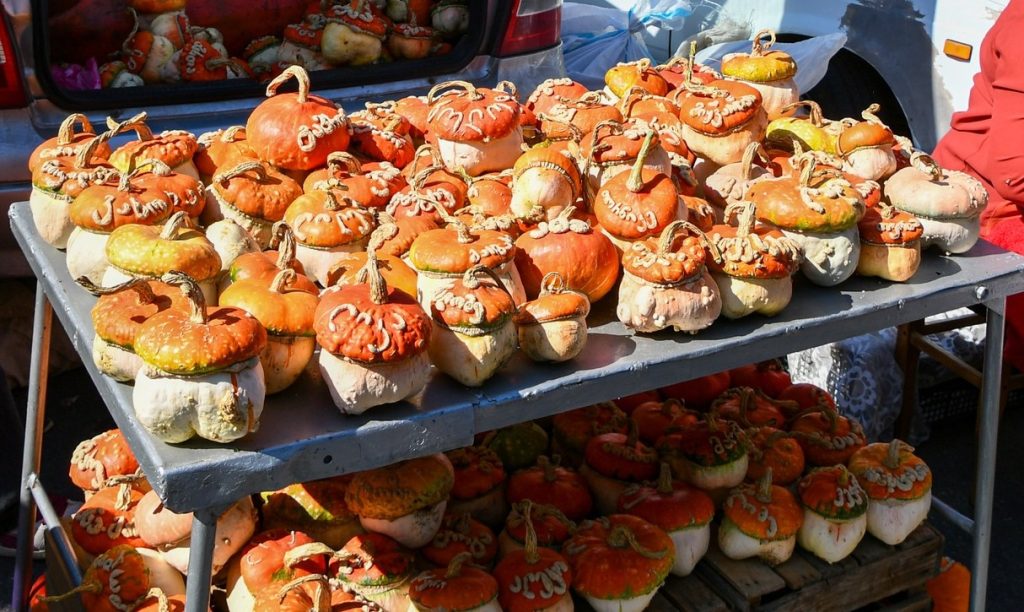
For one weekend, central streets in Abanotubani, around Sioni Cathedral, along Erekle II and Shardeni streets, through the Dry Bridge and Meidan, and across the riverside Rike Park are closed to traffic and filled with stalls, stages and crowds. Craftspeople sell ceramics, enamel jewellery, carpets and wood carving; farmers and small producers pour wine straight from clay qvevri jars; and cooks grill meat and serve khinkali (folded dumplings), khachapuri (cheese-filled bread) and pkhali (vegetable pâtés) alongside strings of churchkhela, the walnut-and-grape-must candy sold everywhere in autumn. A tamada, or toastmaster, may still preside informally over a shared table, and visitors are often invited to raise a glass of chacha, Georgia’s grape brandy.
Music and sport fill the squares: choirs and ensembles perform Georgian polyphonic song, dancers from companies in the tradition of the Sukhishvili ensemble take the stage in national costume, and folk instruments such as the panduri (three-string lute), duduki (double-reed wind instrument) and doli (drum) accompany both. Traditional Georgian wrestling, chidaoba, is sometimes demonstrated in costume, and hot-air balloons occasionally rise over the Mtkvari in the late afternoon. Because Tbilisoba celebrates the city’s plural identity, Armenian, Azerbaijani, Jewish, Greek, Kurdish and Assyrian community associations typically run their own stalls and performances, a detail that distinguishes it from the single-ethnicity church feasts elsewhere on the Georgian calendar. Smaller sister events under similar names occasionally appear in other Georgian towns and among Georgian diaspora communities abroad, but Tbilisoba itself remains specific to the capital.
When it happens
Tbilisoba has no fixed date tied to a saint’s day or a lunar calculation; Tbilisi City Hall sets the dates each year, almost always for the first or second weekend of October, and announces them a few weeks in advance. The 2026 edition was held earlier this month; the 2027 edition is provisionally set for 2–3 October 2027, to be confirmed closer to the date by the city authorities.
Tbilisoba is not a public holiday. Government offices, banks, shops and schools operate on their usual schedule, with the exception of the streets of Old Tbilisi, which are closed to vehicle traffic for the festival footprint itself.
Where to experience it
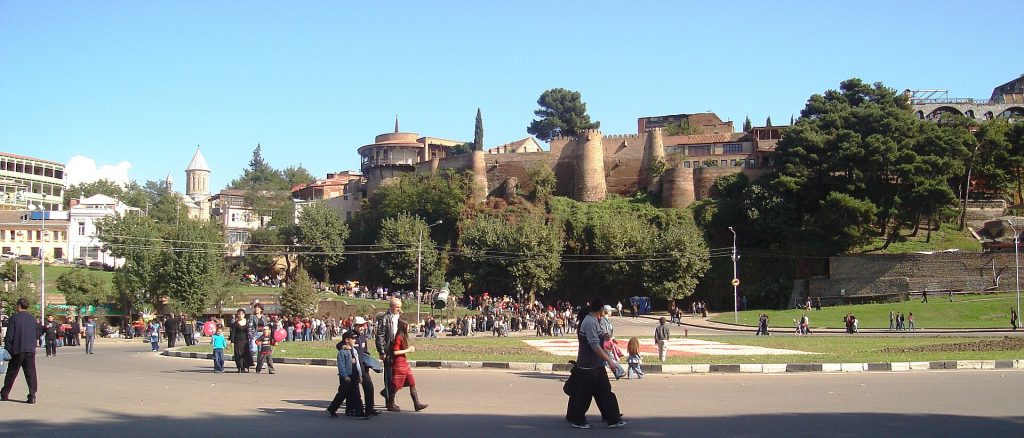
The festival centres on Rike Park, where the main stage hosts evening concerts and, when held, balloon launches; the old sulphur-bathhouse quarter of Abanotubani; the lanes around Sioni Cathedral and the Meidan bazaar; and pedestrian streets such as Erekle II and Shardeni. Saturday afternoon into early evening is the liveliest window for music and dancing; Sunday mornings are quieter and better for browsing craft stalls with children. Visitors entering Sioni Cathedral or other working churches along the route should dress modestly, with shoulders and knees covered and women’s heads covered with a scarf, and should avoid photographing services in progress; outside, in the stalls and squares, normal festival behaviour applies.
Did you know
- Tbilisi’s own name is traditionally derived from the Old Georgian word tbili, “warm,” referring to the sulphur hot springs at the heart of the city’s founding legend.
- Tbilisoba was created in 1979, during the late Soviet period, yet survived Georgia’s transition to independence largely unchanged in form.
- Georgian wrestling, chidaoba, performed at Tbilisoba, has historically been practised at market gatherings and village festivals across the country for centuries.
- Sulphur bathhouses in Abanotubani, one of the festival’s traditional focal points, have been in continuous use since at least the medieval period.
- The ethnic communities that take part in Tbilisoba — Armenian, Azerbaijani, Jewish, Greek, Kurdish and Assyrian among them — reflect settlement patterns in the city that in several cases date back to the nineteenth century or earlier.
Practical tips for visitors
The festival area is best reached on foot or by metro to Avlabari or Liberty Square (Tavisuplebis Moedani) stations, since roads through Old Tbilisi are closed to traffic for the duration. Wear comfortable, flat shoes, as much of the route runs over cobblestones and uneven paving; October evenings in Tbilisi can be cool, so a light jacket is useful even when afternoons are mild. No ticket or booking is required to attend; the festival is free and open-air, though nearby restaurants fill quickly and are worth reserving in advance. Expect large crowds in the late afternoon and evening, and plan church visits for the morning if a quieter atmosphere is preferred.
Combine it with
Tbilisoba falls during the grape harvest season, making it easy to pair with a day trip to the vineyards of Kakheti. Many visitors also combine the festival with a half-day excursion to the historic former capital at Mtskheta-Mtianeti, and of course with further exploration of Tbilisi itself beyond the festival streets.
Sources
- Tbilisi City Hall
- Georgian National Tourism Administration
- Ministry of Culture, Sport and Youth of Georgia
- Agenda.ge
- Georgia Today
- Civil.ge
Plan your Georgia
Want to be in Georgia for Tbilisoba? A GTour travel expert designs the itinerary around it and calls you back.
Tbilisoba festival celebrations held at Rike Park in Old Tbilisi. · Photo: David Osipov / Wikimedia Commons, CC BY 4.0
This page in other languages: Русский
GTour conciergeAsk anything about Georgia · we reply within hours