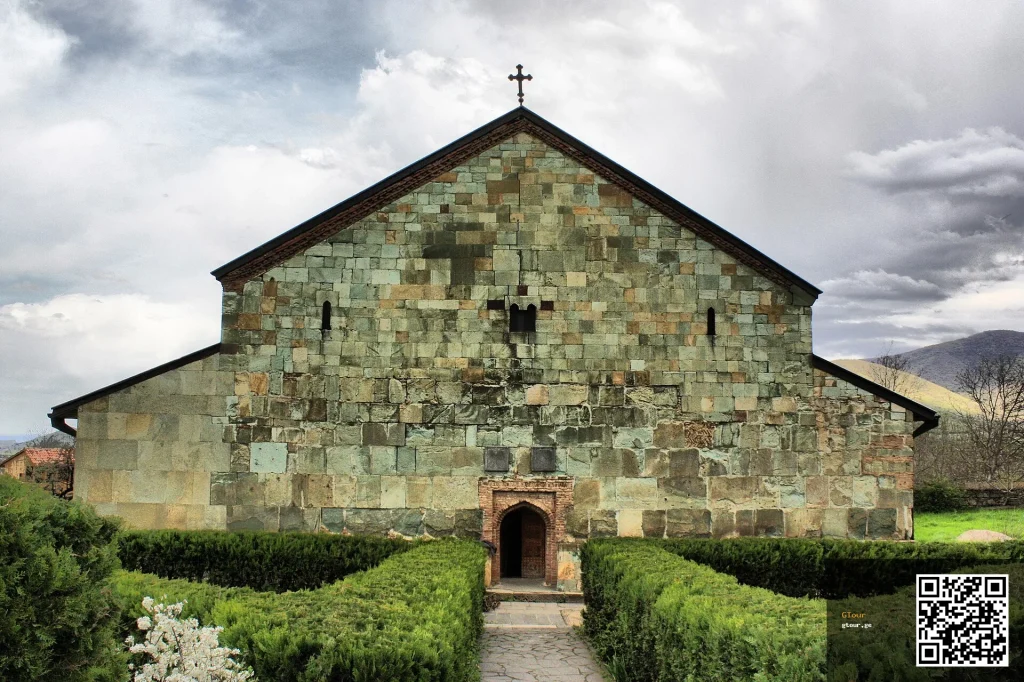
Bolnisi and Dmanisi combine Georgia's oldest dated church with the oldest human fossils found outside Africa, a full day into Kvemo Kartli.
| 08:00 | Pick-up in Tbilisi and drive south into Kvemo Kartli, about one hour to Bolnisi. |
| 09:15 | Bolnisi Sioni basilica, Georgia's oldest precisely dated church, with time to read the carved Georgian inscription on site. |
| 10:15 | Walk through Bolnisi's former Katharinenfeld district, the 19th-century streets and houses built by German colonists. |
| 11:00 | Continue to Dmanisi, roughly one hour further, through the Kvemo Kartli countryside. |
| 12:15 | Dmanisi archaeological site and museum, where the 1.8-million-year-old hominin fossils were excavated (museum season checked at booking). |
| 13:30 | Walk the medieval fortress ruins above the dig site, with views over the Mashavera gorge. |
| 14:30 | Lunch in Bolnisi on the return route, at a local restaurant with regional dishes and wine. |
| 16:00 | Drive back to Tbilisi, arriving around 16:00. |
Is Dmanisi worth the extra drive beyond Bolnisi?
Yes for anyone interested in early human history: the site produced the oldest hominin fossils found outside Africa, dated to 1.8 million years. The museum display and on-site excavation shelter are the main draws; the surrounding fortress adds a medieval layer.
Is the museum at Dmanisi always open?
Opening days and winter hours vary by season, so we check this at booking and confirm before your tour date.
Can we add wine tasting in Bolnisi?
Yes, Bolnisi has a growing number of small producers and we can arrange a tasting alongside lunch if you let us know in advance.
How much walking is involved?
Moderate. The Dmanisi fortress and dig site involve uneven ground and some incline; Bolnisi Sioni and the German quarter are flat and easy.